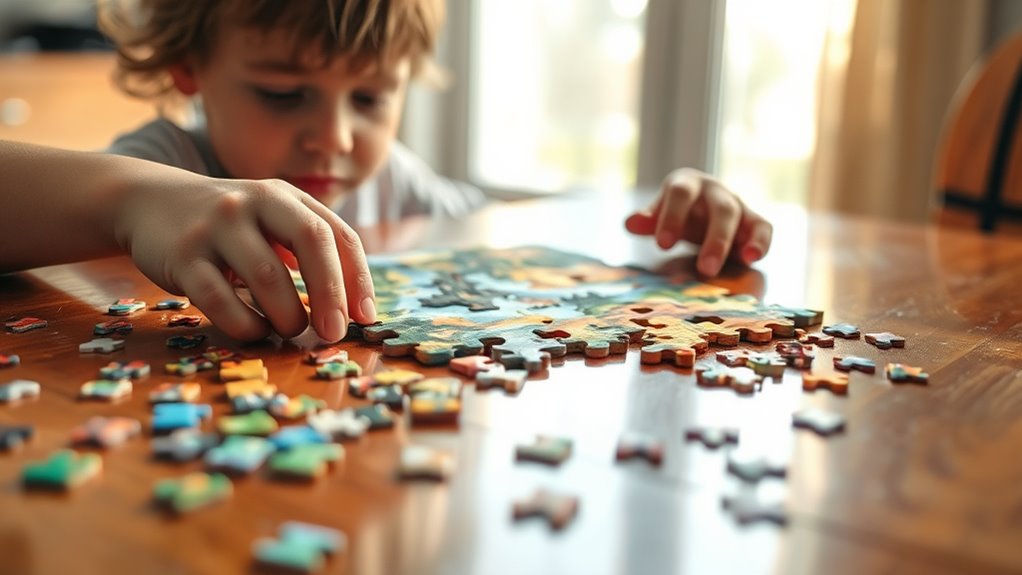

To choose puzzles that build persistence, pick ones that match your child’s skills and interests, offering an achievable challenge without causing frustration. Look for colorful, engaging themes that motivate ongoing effort and celebrate small wins. Gradually introduce more complex designs as their skills grow, encouraging strategic thinking and problem-solving. Supporting steady effort and resilience helps foster a growth mindset. Keep exploring for more tips on selecting puzzles that truly promote perseverance and love for problem-solving.
Key Takeaways
- Select puzzles with appropriate difficulty levels that challenge without causing frustration.
- Incorporate themes and visuals that motivate continued effort and engagement.
- Gradually increase complexity to promote problem-solving skills and patience over time.
- Choose puzzles that match the child’s interests to maintain enthusiasm and perseverance.
- Ensure puzzles are age-appropriate, balancing simplicity and challenge to foster resilience.

When selecting puzzles for your child, it’s important to choose ones that encourage persistence and problem-solving skills. The key is finding puzzles with the right puzzle complexity—those that challenge without overwhelming. Age appropriate challenges are essential because they ensure your child stays engaged and motivated rather than frustrated or bored. If a puzzle is too simple, your child won’t develop persistence; if it’s too difficult, they might give up quickly. Striking the right balance helps foster resilience and a growth mindset.
Start by evaluating your child’s current skills and interests. For younger children, puzzles with larger pieces and fewer parts are ideal—they’re easier to handle and help build foundational problem-solving skills. As your child progresses, gradually increase the puzzle complexity by introducing smaller pieces and more intricate designs. This incremental approach provides a sense of achievement at each stage, encouraging them to persevere through more challenging puzzles. Remember, the goal isn’t just to complete the puzzle but to enjoy the process and learn perseverance along the way.
Evaluate your child’s skills and interests to select appropriately challenging puzzles that promote perseverance and enjoyment.
Pay attention to the themes and images of the puzzles as well. Engaging, colorful pictures motivate your child to keep trying, especially when faced with tricky sections. Puzzles that relate to their interests—such as animals, space, or favorite characters—can boost their enthusiasm and willingness to work through difficulties. When they encounter a challenging part, remind them that persistence pays off, and celebrate small wins to reinforce their effort.
It’s also helpful to choose puzzles designed for their age but with a twist—those that introduce slightly more complexity over time. These puzzles promote problem-solving by requiring your child to think critically and strategize. As they become more skilled, they’ll naturally take on more complex puzzles, which helps build their patience and perseverance. Incorporating appropriate puzzle difficulty ensures they remain challenged without feeling overwhelmed. Be patient and supportive, offering guidance when needed, but avoid rushing to finish. This teaches them that persistence is about steady effort, not just quick results.
Ultimately, selecting puzzles with appropriate puzzle complexity and age appropriate challenges encourages your child to develop persistence naturally. When you provide them with just the right level of difficulty, they learn to enjoy overcoming obstacles and develop skills that will serve them well in many areas of life. The process of tackling increasingly challenging puzzles helps your child build resilience, confidence, and a love for problem-solving that can last a lifetime.

Puzzles for Kids Ages 4-8 Year Old – Underwater World,100 Piece Jigsaw Puzzle for Toddler Children Learning Educational Puzzles Toys for Boys and Girls.
❤Underwater World – kids puzzles ages 4-8
As an affiliate, we earn on qualifying purchases.
As an affiliate, we earn on qualifying purchases.
Frequently Asked Questions
What Age Is Appropriate for Different Types of Puzzles?
You should choose age-appropriate puzzles based on developmental milestones. For toddlers, simple puzzles with large pieces help develop fine motor skills and problem-solving. Around ages 3-4, introduce puzzles with more pieces and varied shapes to challenge their thinking. Older children, ages 5 and up, can handle complex puzzles that build persistence and critical thinking. Always match puzzles to the child’s current skills to make sure they are engaging without feeling frustrated.
How Can Parents Encourage Persistence During Challenging Puzzles?
Ever wonder how you can help your child stick with a tough puzzle? You can motivate them with small rewards for their effort, not just the end result. Praise their persistence and encourage fostering patience by reminding them that challenges are part of learning. Ask yourself, isn’t it more rewarding when they learn to enjoy the process? Your support builds confidence, helping them develop resilience and problem-solving skills.
Are Digital Puzzles Effective for Building Persistence?
Digital puzzles can be effective for building persistence if they engage your child’s cognitive development and keep their attention. By encouraging digital engagement that challenges them just enough, you help them learn to persist through difficulties. Choose interactive puzzles that adapt to their skill level, fostering a sense of achievement. This approach promotes patience, problem-solving, and resilience, making digital puzzles a valuable tool for developing persistence in a fun, modern way.
What Are Signs of Frustration or Burnout in Puzzle-Solvers?
You notice signs of frustration or burnout when emotional cues like clenched fists, sighs, or impatience appear. If you start avoiding problems or skipping steps, it indicates you’re overwhelmed. You might feel restless, lose focus, or become easily irritated. These emotional cues show you’re struggling, and addressing them early helps prevent burnout. Recognizing these signs allows you to take breaks, refocus, and keep building persistence rather than giving up.
How Often Should I Introduce New Puzzles to Maintain Motivation?
You should introduce new puzzles regularly to keep your motivation high, ideally every few days or weekly, depending on your progress tracking. This variety prevents boredom and challenges you differently, helping sustain your interest. Mixing in puzzles of varying difficulty and type keeps your brain engaged. Pay attention to signs of frustration or burnout, and adjust the frequency of new puzzles accordingly to maintain a healthy balance and continuous growth.

Puzzles for Kids Ages 3-5, 16 Piece Colorful Wooden Puzzles for Toddler Children Learning Educational Toys for Boys and Girls (9 Puzzles)
9 Pack Toddler Animal Puzzles – The toddler puzzles can exercise children's hand-eye coordination, spatial imagination and patience,…
As an affiliate, we earn on qualifying purchases.
As an affiliate, we earn on qualifying purchases.
Conclusion
When you choose puzzles that challenge you, you build patience, develop problem-solving skills, and foster resilience. When you work through difficult pieces, you learn to persist, to stay focused, and to keep trying. When you embrace the struggle, you grow stronger, smarter, and more confident. So, pick puzzles that push you, enjoy the process, and celebrate your progress. Because every challenge you conquer shapes your persistence and prepares you for whatever comes next.

Mudpuppy Kindness 4-in-a-Box Puzzle Set – Includes 4 Progressive Jigsaw Puzzles for Kids with 4-12 Pieces – Features Colorful Animal Illustrations for Ages 2-5
4 PUZZLES INCLUDED – The Kindness 4-in-a-Box Puzzle Set from Mudpuppy includes four puzzles with varying difficulty levels…
As an affiliate, we earn on qualifying purchases.
As an affiliate, we earn on qualifying purchases.

FOIMAS 3D Animal Puzzles for Kids,30 Pack Educational Jungle Animal Puzzle Dinosaur Farm Animals for Kids Classroom Prize Gifts Party Favor Supply
Package Includes:30 pack animal puzzles in 30 random styles are included in total;Each pack measures 3.3×2.3 inches.
As an affiliate, we earn on qualifying purchases.
As an affiliate, we earn on qualifying purchases.