Percussion instruments like drums, shakers, and tambourines easily invite you to explore rhythm and spontaneous musical expression. They are tactile, portable, and simple to start, encouraging active participation and improvisation. With techniques like tapping, brushing, or striking, you can create diverse sounds and patterns that feel intuitive. Playing these instruments boosts confidence, creativity, and rhythmic awareness — making music an engaging, personal experience. Keep exploring to discover how these instruments can transform your musical journey entirely.

Turn the school run and nap time into listening time
- Thousands of audiobooks, podcasts and originals
- Listen on your phone, tablet or Echo — also offline
- Cancel anytime
Key Takeaways
- Percussion instruments like drums and shakers promote active participation and tactile exploration of rhythms.
- They are highly portable and easy to learn, encouraging spontaneous musical improvisation.
- Techniques such as finger taps and palm strikes create varied textures and stimulate tactile engagement.
- Percussion instruments facilitate improvisation, allowing expressive, mood-driven rhythmic creation.
- Active percussion playing enhances rhythmic awareness, confidence, and enjoyment in musical play.
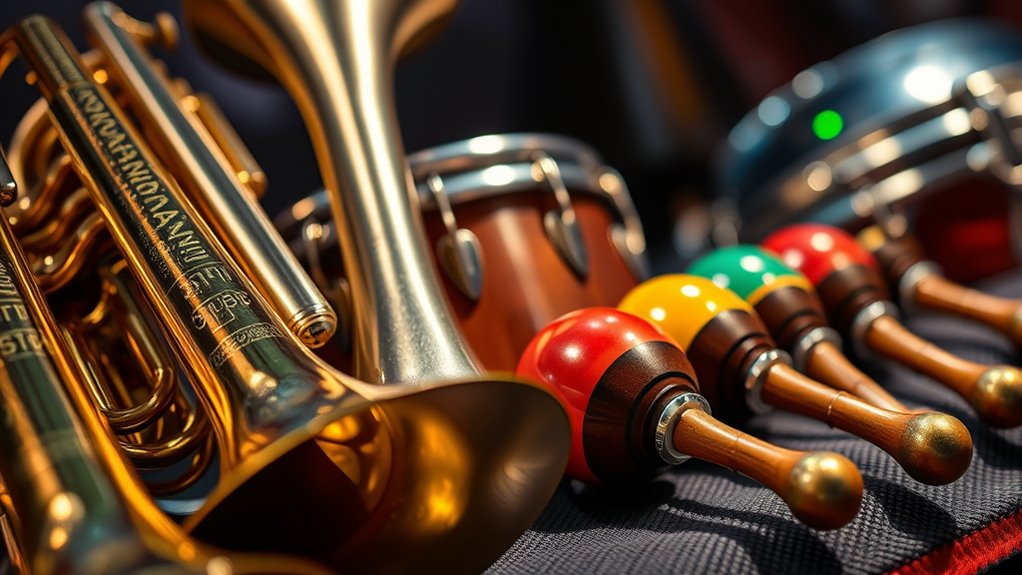
Have you ever noticed how music can instantly lift your mood or energize your day? That’s the power of rhythm and sound, and certain instruments are especially good at inviting you to get involved. Instruments that focus on percussion techniques can transform your experience from passive listening to active participation. When you pick up a drum or shaker, you’re not just hearing the beat—you’re creating it. Percussion instruments are designed to be tactile, inviting you to explore different sounds and patterns, making every session a personal expression of rhythm.
Musical improvisation plays a big role here. It’s about spontaneous creativity, and percussion instruments lend themselves perfectly to this. You don’t need to be a professional musician to enjoy improvising with drums, bongos, or even hand percussion like claves or tambourines. You can experiment with different strokes, dynamics, and rhythms, letting your mood guide your playing. Improvisation isn’t about perfection; it’s about feeling the groove and responding to it naturally. This process helps you develop your sense of timing and musicality while also providing a sense of freedom and joy. You might start with simple beats and gradually build more complex patterns as you become more comfortable. The key is to listen to the sounds you produce and let your instincts lead.
Spontaneous percussion improvisation nurtures creativity, rhythm, and joy—no skills needed, just feel the groove and let your instincts lead.
Engaging with percussion techniques enhances this experience. Whether it’s finger taps, palm strikes, or brushing sticks across drumheads, each technique offers a different texture and feel. You might learn how to maintain a steady beat or experiment with syncopation to add variety. The tactile nature of percussion instruments encourages you to stay present in the moment, feeling the vibrations and adjusting your approach accordingly. This responsiveness makes percussion playing deeply engaging and satisfying. Plus, many percussion instruments are portable and easy to learn, so you can take your rhythm practice anywhere—at home, outdoors, or even during a jam session with friends.
Getting involved with percussion and improvisation not only deepens your appreciation for music but also boosts your confidence and creativity. As you explore different instruments and techniques, you’ll find yourself more in tune with your own sense of rhythm. Incorporating organized practice can help you improve steadily and enjoy the process more fully. It’s a rewarding experience that invites you to express yourself through sound, making music something you actively create rather than just listen to. So, pick up that drum or shaker, and let your rhythmic journey begin. The more you experiment, the more you’ll discover how powerful and fun percussion can be in your musical play.
Products Worth Considering

Hyperice Hypervolt Go 3 Percussion Massage Gun with Carry Case

Oral-B iO Series 3 Rechargeable Electric Toothbrush for Adults, Black, with 2 Brush Heads and Travel Case

Hyperice Hypervolt 3 Percussion Massage Gun with Heated Head and Premium Carry Case
As an affiliate, we earn on qualifying purchases.
Frequently Asked Questions
What Are the Origins of Popular Rhythm Instruments Worldwide?
You might find that popular rhythm instruments worldwide have roots in ancient percussion, developed thousands of years ago. These instruments often arose from cultural rhythms, reflecting local traditions and social practices. For example, drums in Africa, bongos in Latin America, and tablas in India all have rich histories tied to their regions. Their origins show how human communities used rhythm instruments to connect, celebrate, and communicate across generations.
How Can Beginners Start Learning to Play Rhythm Instruments?
Back in the days of vinyl, you can start learning rhythm instruments by choosing a beginner instrument like a cajón or bongos. Focus on simple practice techniques such as counting beats and tapping along with songs. Consistent practice helps develop your timing and coordination. Don’t rush—start slow, keep a steady rhythm, and gradually increase complexity. With patience, you’ll be jamming in no time!
What Are the Health Benefits of Playing Percussion Instruments?
Playing percussion instruments offers health benefits like stress relief and cognitive enhancement. As you hit drums or shake shakers, you release tension and boost your mood, helping reduce anxiety. Plus, rhythm practice sharpens your focus, improves coordination, and stimulates brain activity. Engaging regularly in percussion playing not only makes you feel good physically but also enhances mental clarity, making it a fun way to support both your body and mind.
Which Instruments Are Best Suited for Children’s Musical Development?
You should choose musical toys and beginner percussion instruments like tambourines, shakers, or small drums for children’s musical development. These instruments are easy to handle, fun to play, and help develop their sense of rhythm and coordination. They encourage active participation and boost confidence. Introducing simple, colorful, and lightweight instruments keeps children engaged and nurtures their love for music early on, laying a strong foundation for future musical skills.
How Do Different Cultures Incorporate Rhythm Instruments Into Traditional Music?
You’ll notice how different cultures incorporate rhythm instruments with vibrant energy and deep cultural significance. In Africa, drums symbolize community and tradition, while in Asia, gongs and cymbals mark ceremonial events. Regional variations shape how instruments like bongos, cajóns, or djembe drums become central to celebrations. These instruments not only create rhythm but also connect people to their heritage, making each musical piece a reflection of cultural identity.
Conclusion
As you explore these rhythmic instruments, you’ll discover how they effortlessly connect us through sound. Did you know that the percussion instrument industry is valued at over $10 billion globally? This highlights how deeply ingrained rhythm is in cultures worldwide. Whether you’re tapping on drums or clapping hands, embracing these instruments can boost your mood and enhance your musical skills. So, pick up an instrument today and let rhythm transform your daily life.