Wooden play kitchens still matter because they offer a durable, realistic environment that fosters cultural understanding, social skills, and cognitive growth. Their natural materials support safe, eco-friendly play, while the sturdy design guarantees lasting use. Kids can explore creativity, learn about food customs, and develop fine motor skills through role-play. The inviting appearance encourages sustained engagement and imaginative scenarios. Keep exploring to discover how these kitchens support your child’s development in many meaningful ways.

Turn the school run and nap time into listening time
- Thousands of audiobooks, podcasts and originals
- Listen on your phone, tablet or Echo — also offline
- Cancel anytime
Key Takeaways
- Wooden play kitchens promote realistic, immersive role-playing that enhances cultural understanding and social awareness.
- Their durable, natural materials support safe, long-lasting engagement in imaginative scenarios.
- They help develop fine motor skills, hand-eye coordination, and sequencing through interactive features.
- Wooden kitchens foster emotional intelligence, cooperation, and teamwork in social play.
- Their timeless aesthetic complements various environments, encouraging ongoing, versatile pretend play.
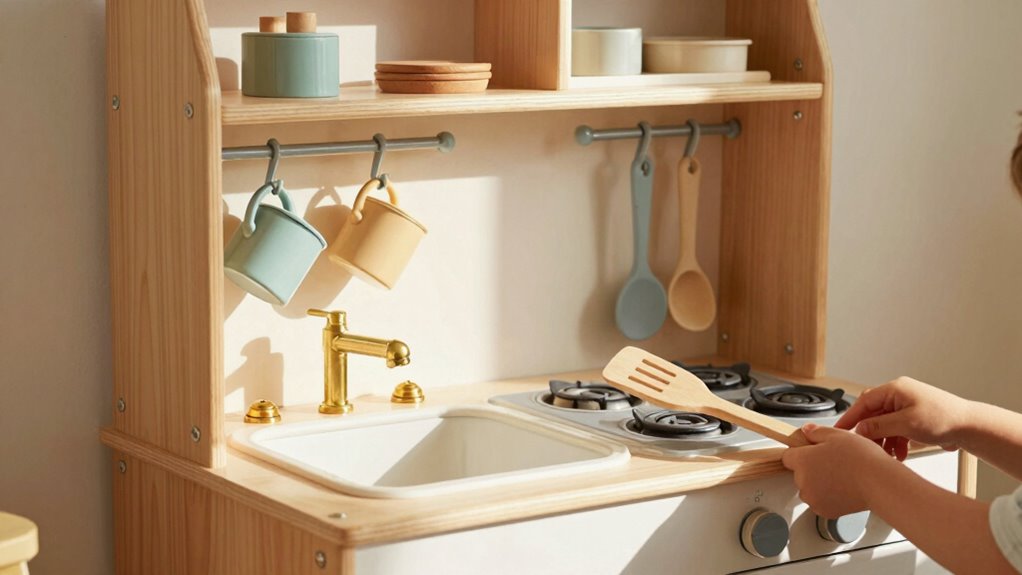
Wooden play kitchens have become a favorite choice for children engaging in pretend play, offering a durable and realistic setting for imaginative culinary adventures. These kitchens are more than just toys—they serve as tools for cultural understanding and personal growth. When you introduce a wooden play kitchen to a child, you’re not only providing entertainment but also fostering an appreciation of different cultural traditions associated with food and cooking. For example, children might pretend to prepare a traditional meal from another country, helping them develop awareness of diverse customs. This cultural significance enhances their social awareness and broadens their worldview, making pretend play a meaningful learning experience. Additionally, the realistic design of wooden kitchens helps children immerse themselves fully in their role-play scenarios, enhancing engagement and learning. The tactile nature of wooden toys also supports sensory development, enriching the pretend play experience.
Beyond cultural learning, wooden play kitchens support a wide range of developmental benefits. They encourage fine motor skills as children manipulate utensils, turn knobs, and open cabinets. These actions improve hand-eye coordination and dexterity, laying a foundation for later skills like writing and problem-solving. Engaging with these toys also promotes an understanding of cause and effect, as children see how their actions produce different outcomes. The open-ended nature of pretend play with these kitchens also nurtures creativity and cognitive flexibility. Kids can invent recipes, plan meals, or role-play as chefs, which boosts imaginative thinking and decision-making abilities. As they engage in these scenarios, they learn about sequencing, cause and effect, and social interactions—skills essential for their overall development. Incorporating educational value into play helps children develop critical thinking alongside their creative skills. Recognizing the importance of durability in their construction ensures these toys remain a safe and lasting investment for years to come.
The sturdy construction of wooden play kitchens makes them a long-lasting investment, often becoming a treasured part of childhood. Their realistic design invites children to immerse themselves fully in pretend scenarios, promoting sustained engagement. When you see a child cooking, cleaning, or serving pretend food, you’re witnessing the development of social skills like sharing, negotiation, and cooperation. These interactions are fundamental for emotional intelligence and teamwork, as children learn to navigate roles and responsibilities within their pretend environment. The natural materials used in wooden kitchens also reduce exposure to potentially harmful plastics, contributing to safer play.
Furthermore, wooden kitchens often carry a timeless aesthetic appeal that complements various home decors. Their natural look can blend seamlessly into a child’s play area, making the space inviting and warm. This visual appeal encourages more frequent play, which in turn amplifies the developmental and cultural benefits. As children grow, these kitchens can evolve with their interests—adding accessories or adapting to new imaginative themes—making them a versatile toy that remains relevant over the years. The eco-friendly aspect of wooden toys is another benefit, supporting sustainable and environmentally conscious choices.
In essence, wooden play kitchens matter because they do more than entertain; they serve as platforms for cultural understanding, skill development, and emotional growth. Their durability, realistic design, and educational value make them a meaningful addition to any child’s playroom. When you choose a wooden kitchen, you’re investing in a toy that nurtures creativity, fosters cultural awareness, and supports your child’s holistic development.
wooden play kitchen set for kids
As an affiliate, we earn on qualifying purchases.
As an affiliate, we earn on qualifying purchases.
Frequently Asked Questions
Are Wooden Play Kitchens More Durable Than Plastic Ones?
Yes, wooden play kitchens tend to be more durable than plastic ones. Wooden durability means they can withstand rough play and last for years, making them a better investment. In comparison, plastic kitchens may break or crack more easily over time, especially with frequent use. You’ll find that wooden kitchens provide sturdiness and longevity, offering a safe, lasting space for your child’s imaginative play.
How Safe Are Wooden Play Kitchens for Young Children?
You can breathe easy knowing wooden play kitchens are generally safe for young children. They meet strict safety standards, ensuring sturdy construction and smooth edges, like a gentle giant. Plus, the material’s non-toxicity means no worries about harmful chemicals or paints. These kitchens are crafted with care, making pretend cooking fun and safe, giving you peace of mind while your little chef explores and creates.
Do Wooden Play Kitchens Require Assembly?
Most wooden play kitchens do require assembly, but it’s usually straightforward with clear assembly tips included. You’ll need basic tools and a little patience. As you build, consider storage solutions like adding shelves or hooks for accessories. Once assembled, your play kitchen becomes a sturdy, imaginative space, and keeping it organized with smart storage helps maintain its charm and functionality for endless pretend play adventures.
Can Wooden Kitchens Be Customized or Personalized?
Can wooden kitchens be personalized or customized? Absolutely! You can add personalized accessories, like custom nameplates or themed decals, to make the kitchen uniquely yours. Plus, many brands offer custom paint options, allowing you to choose colors that match your child’s room decor or personal style. Wouldn’t you love a play kitchen that feels one-of-a-kind? Customizing enhances the play experience and makes the kitchen a cherished keepsake.
What Age Range Is Best for Wooden Play Kitchens?
You’ll find that wooden play kitchens are best suited for children aged 3 to 8 years old. They feature age-appropriate design and safety features that match your child’s developmental stage. As your child grows, they’ll enjoy exploring pretend play with realistic details, encouraging creativity and social skills. Always check the play kitchen’s design to make sure it offers suitable features that match your child’s age, making play both fun and safe.
Conclusion
So, next time you see a wooden play kitchen, ask yourself: isn’t it amazing how a simple piece of wood can spark endless creativity and learning? These timeless toys aren’t just about pretend cooking—they help develop social skills, imagination, and fine motor abilities. In a world full of digital distractions, doesn’t it feel special to see your child engaging in meaningful, hands-on play? Wooden kitchens truly matter—they’re more than just toys; they’re gateways to a world of growth and discovery.
Fall Picks
fall essentials
As an affiliate, we earn on qualifying purchases.