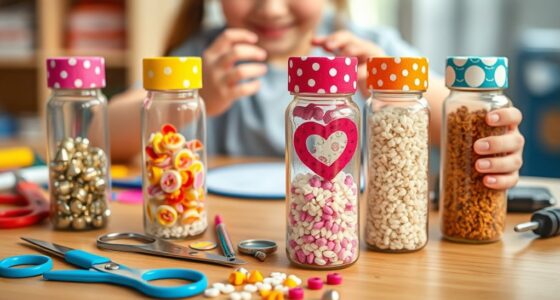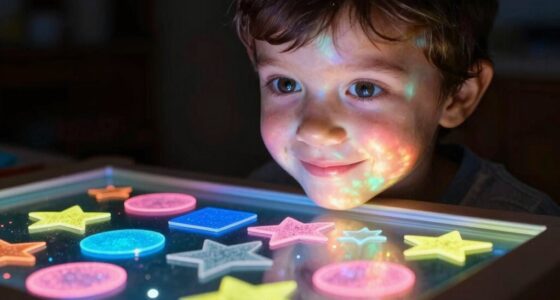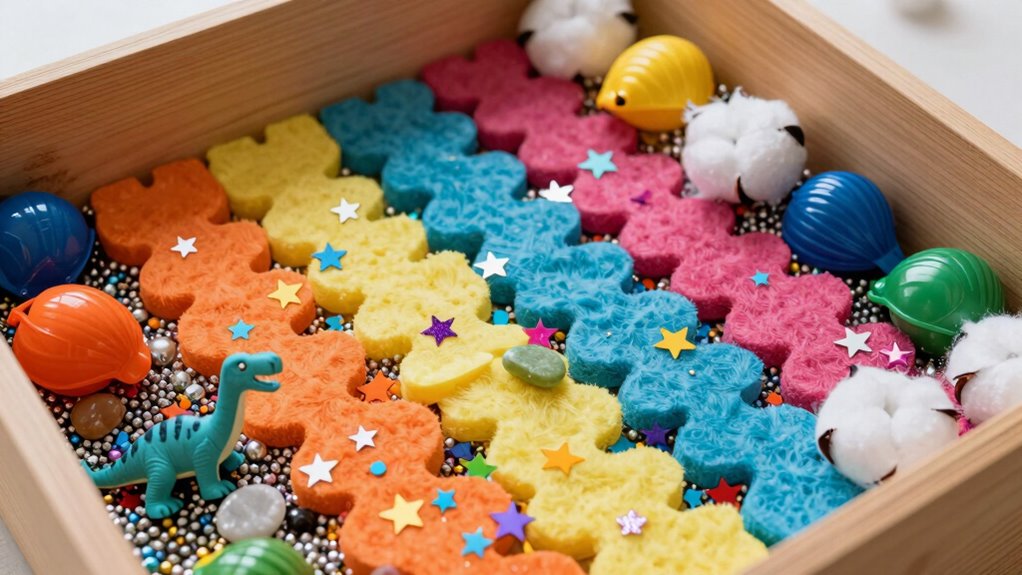

You can create a fun sensory bin for preschoolers using safe, manageable items like stones, pinecones, leaves, and natural elements such as shells or water beads. Add tactile materials like cooked pasta, rice, or dried beans, and include colorful options to boost visual interest. Incorporate small tools like cups or tweezers to develop fine motor skills. Rotating themes and materials keeps exploration fresh and engaging. Keep exploring to discover more ideas and tips to make your sensory bin even more exciting.

Turn the school run and nap time into listening time
- Thousands of audiobooks, podcasts and originals
- Listen on your phone, tablet or Echo — also offline
- Cancel anytime
Key Takeaways
- Use safe, manageable, and age-appropriate items like stones, leaves, and natural objects to encourage tactile exploration.
- Incorporate textured materials such as dried beans, rice, or pasta for sensory variety.
- Add colorful and themed items like water beads, shells, or small toys for visual stimulation and engagement.
- Include tools like scoops, cups, or tweezers to promote fine motor skills and hand-eye coordination.
- Rotate materials regularly and choose natural, calming elements to keep play fresh and support emotional regulation.
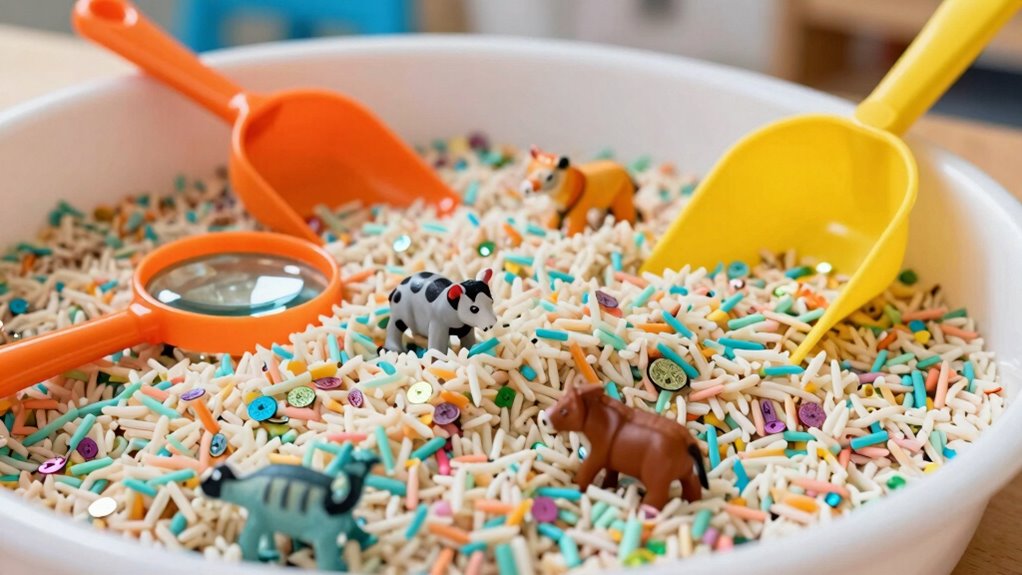
Sensory bins are a fantastic way to engage preschoolers in hands-on learning and play. When you create a well-designed sensory bin, you tap into the many sensory play benefits that help children develop fine motor skills, improve focus, and foster creativity. To get started, it’s essential to use age-appropriate materials that are safe, manageable, and engaging. This ensures your child stays curious and protected while exploring different textures and objects.
Choosing the right materials is key. For preschoolers, avoid small items that could pose a choking hazard, and steer clear of anything overly fragile or sharp. Instead, opt for larger, durable objects that can withstand enthusiastic exploration. For example, if you’re making a nature-themed bin, include smooth stones, pinecones, and leaves. If you want a more tactile experience, you consider using cooked pasta, rice, or dried beans, which are safe and easy to handle for little hands. The goal is to include a variety of textures—soft, rough, smooth, and squishy—that encourage children to explore through touch and manipulation. Incorporating sensory-rich materials can further enhance the engagement and learning potential of the bin. Additionally, incorporating natural elements can create a calming and grounding sensory experience that benefits emotional regulation.
Colorful and themed materials can make the sensory bin more inviting. Brightly colored items like colored rice or pasta not only stimulate visual senses but also make cleanup easier, as kids can quickly identify what belongs in the bin. Incorporating small toys, like plastic animals or figures, can add a storytelling element that sparks imagination. You might also add scoops, cups, or tweezers to promote fine motor development as preschoolers practice grasping and pouring. These tools make the experience more interactive and help strengthen hand-eye coordination. Using age-appropriate materials is crucial to ensure safe and effective sensory play.
Another tip is to rotate the materials periodically to keep the sensory experience fresh and engaging. For example, one week you might include seashells and sand for a beach theme, while the next week, you could add cotton balls and blue water beads for a cloud or sky theme. This variety keeps your child excited to explore new textures and themes while reinforcing learning concepts. Rotating materials also introduces children to new textures, expanding their sensory vocabulary and experiences. Remember, the most important aspect is to keep the materials safe, manageable, and fun. Incorporating knowledge about sensory play benefits can help you select materials that enhance emotional regulation and concentration, making the experience both enjoyable and educational. By doing so, you ensure that your preschooler gains maximum benefits from sensory play, including improved concentration, emotional regulation, and a love for discovery.
sensory bin toys for preschoolers
As an affiliate, we earn on qualifying purchases.
As an affiliate, we earn on qualifying purchases.
Frequently Asked Questions
How Often Should I Change the Contents of the Sensory Bin?
You should change the contents of your sensory bin every one to two weeks to keep sensory exploration invigorating and engaging. Regularly renewing the materials encourages creative play and prevents boredom. Pay attention to how your preschooler interacts with the bin—if they seem less interested or if the materials become dirty or worn, it’s time to swap out or add new items. This keeps their sensory experience stimulating and fun.
Are There Any Safety Concerns With Specific Sensory Materials?
You must prioritize safety, as even tiny risks can turn into major issues. Always choose non-toxic materials and check for allergy considerations before including items in your sensory bin. Avoid small or sharp objects that could cause choking or injury. Regularly inspect contents for damage or contamination. By taking these precautions, you create a safe, engaging environment where your preschooler can explore confidently without worry.
What Are Budget-Friendly Sensory Bin Filler Options?
You can find budget-friendly sensory bin fillers by using DIY fillers and recycled materials. Fillers like dried beans, rice, pasta, or oats are inexpensive and versatile. Recycled materials, such as paper clips, bottle caps, or fabric scraps, add texture and interest without extra cost. Get creative by blending these items, ensuring they’re safe and suitable for preschoolers. This approach saves money while providing engaging sensory experiences.
How Can I Encourage Sharing During Sensory Play?
You can encourage sharing during sensory play by using sharing strategies like setting clear rules, taking turns, and praising cooperative behavior. Create opportunities where children naturally need to share materials, fostering social skills. Remember, sensory play benefits include enhancing fine motor skills and promoting exploration. By modeling sharing and guiding interactions, you help kids develop patience and teamwork, making the experience enjoyable and educational for everyone involved.
Is There an Ideal Size for Sensory Bins for Preschoolers?
Think of a sensory bin as a treasure chest waiting to be explored. The best sensory bin dimensions usually range from 12 to 24 inches in length and width, with a depth of 4 to 8 inches. A perfect bin shape is rectangular or square for easy access and visibility. This size allows preschoolers to comfortably explore without feeling overwhelmed, making play both fun and manageable.
Conclusion
Creating a sensory bin is a fantastic way to boost your preschooler’s development and curiosity. Did you know that multisensory activities like these can improve a child’s fine motor skills and cognitive growth by up to 25%? By incorporating simple items like rice, beans, or pasta, you’re not just offering fun—you’re nurturing essential skills that lay the groundwork for lifelong learning. So, get creative and watch your child’s senses and skills flourish!
Cold & flu season Picks
humidifiers
As an affiliate, we earn on qualifying purchases.