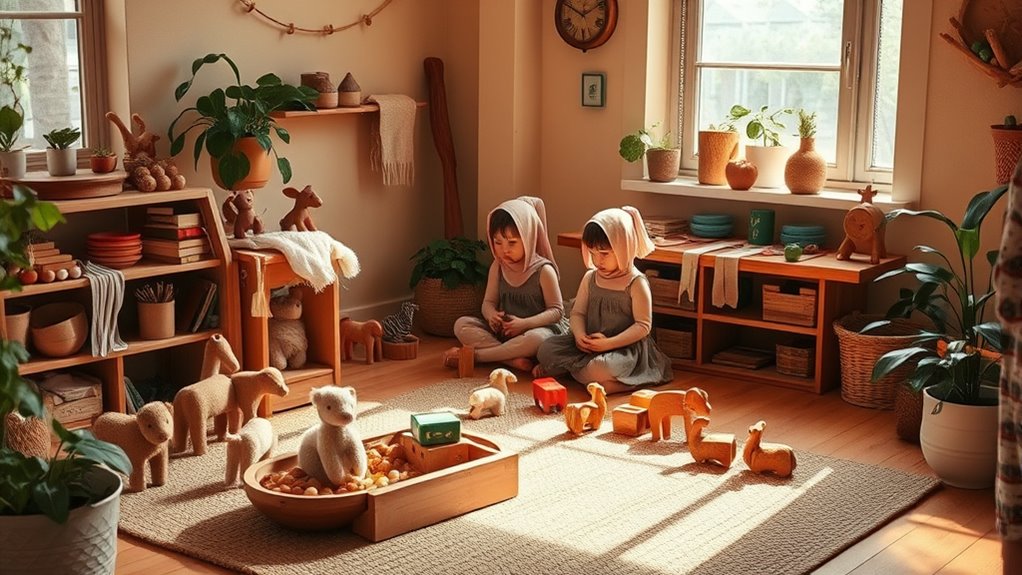

In a Waldorf Kindergarten at home, you focus on play, creativity, and nature instead of early academics. You encourage your child to explore outdoors, gather natural materials, and express themselves through arts and storytelling. These activities build confidence, imagination, and emotional skills naturally, fostering a love for learning. By honoring your child’s developmental pace and making learning fun, you create a nurturing environment where curiosity thrives—exploring these principles further will help you enrich your approach.
Key Takeaways
- Prioritize outdoor play and nature-based activities to foster curiosity and connection with the environment.
- Use storytelling to develop language skills and spark imagination through expressive, engaging narratives.
- Incorporate natural materials like leaves, stones, and flowers for creative, hands-on art projects.
- Focus on holistic, organic learning that respects the child’s developmental pace and natural rhythms.
- Emphasize joy, confidence, and emotional growth through playful exploration before introducing academic concepts.

Creating a Waldorf kindergarten at home allows you to bring the gentle, holistic approach of Waldorf education directly into your child’s daily life. This method emphasizes play, creativity, and a deep connection to nature, rather than rushing into academic concepts. You’ll find that integrating simple, meaningful activities like nature crafts and storytelling activities can lay a strong foundation for your child’s development. These activities foster imagination, language skills, and emotional intelligence while respecting their natural rhythms and curiosity.
When you focus on nature crafts, you encourage your child to explore their environment with their hands and senses. Collect leaves, stones, flowers, or sticks during outdoor walks, then use these natural materials to create art projects. For instance, they might make leaf collages or decorate rocks with paint or colored pencils. These crafts are more than just fun; they teach patience, observation, and appreciation for the natural world. They also help develop fine motor skills and creativity, all within a relaxed, unpressured setting. The act of gathering materials and creating with them connects your child to nature, fostering a sense of wonder and stewardship that’s central to Waldorf philosophy.
Storytelling activities are equally essential, serving as a bridge between imagination and language development. Instead of relying on textbooks or worksheets, you can tell stories that evoke emotions and provoke thought. Use your voice and expressive gestures to bring fairy tales, folktales, or personal anecdotes to life. Encourage your child to participate by adding their own ideas or by retelling stories in their own words. This approach boosts vocabulary, listening skills, and emotional literacy. It also nurtures their imagination, helping them see the world beyond concrete facts and into the domain of possibilities. These storytelling sessions become treasured moments of connection, nurturing their inner worlds and sparking a lifelong love of stories and learning.
In a Waldorf-inspired home, play is the primary activity, and these gentle, creative pursuits naturally lead to a more holistic development. By prioritizing nature crafts and storytelling activities, you create a nurturing environment where your child’s curiosity is valued and their sense of wonder is cultivated. This approach respects their developmental pace, allowing learning to unfold organically through engaging, meaningful experiences. Additionally, understanding the importance of developmental pace in Waldorf education ensures that your child’s growth remains joyful and unpressured. As a result, your child will develop confidence, creativity, and a joyful attitude toward learning — qualities that serve as a sturdy foundation for future academic pursuits. Ultimately, at-home Waldorf education isn’t about rushing through lessons but about fostering a deep love for discovery, rooted in the natural world and the stories we share.
Frequently Asked Questions
How Can I Adapt Waldorf Practices for a Limited Space?
You can adapt Waldorf practices for limited space by incorporating indoor gardening, which offers hands-on nature experiences, and taking nature walks around your home or neighborhood. Use small pots and vertical gardens to create a mini indoor garden, and explore your neighborhood for outdoor nature walks. These activities nurture a love of nature and creativity, even in tight spaces, fostering Waldorf’s emphasis on experiential learning and connection to the natural world.
What Are Some Budget-Friendly Materials for Waldorf Activities?
You can create budget-friendly Waldorf activities with simple materials like DIY crafts using natural items. For example, imagine you gather leaves, stones, and twigs during a nature walk to make art or storytelling props. These natural elements inspire creativity and connection with nature, all while keeping costs low. Incorporate regular nature walks and homemade crafts to foster sensory development and imaginative play without spending much.
How Do I Balance Free Play and Structured Learning at Home?
You should balance free play and structured learning by setting aside dedicated times for creative outdoor play and artistic expression, which naturally foster imagination and motor skills. Incorporate unstructured moments where your child explores freely, while also guiding them with gentle, engaging activities. This way, they develop independence and curiosity, blending learning seamlessly with play. Keep a flexible schedule to guarantee both aspects complement each other and nurture your child’s holistic growth.
What Are Typical Daily Routines in a Waldorf At-Home Setting?
In a typical day, you craft morning rituals like gentle greetings and singing to start peacefully. Then, you incorporate outdoor exploration routines, encouraging your child to connect with nature through walks or simple gardening. Afterward, balance free play with gentle, structured activities like crafting or storytelling. This rhythm nurtures your child’s natural curiosity, fostering a calm, joyful environment that emphasizes hands-on experiences and meaningful routines over rigid schedules.
How Can I Involve Siblings in Waldorf-Inspired Activities?
To involve siblings in Waldorf-inspired activities, encourage cooperative play and shared projects. You can set up art stations, storytelling, or nature walks that everyone participates in, fostering siblings bonding. Assign roles suited to each child’s age and interests, making it fun and inclusive. This approach promotes teamwork, connection, and a deeper understanding of Waldorf principles, helping siblings forge meaningful relationships while engaging in enriching, play-based learning together.
Conclusion
By embracing Waldorf kindergarten at home, you’re planting seeds of imagination and joy that bloom into lifelong love for learning. Think of your child’s curiosity as a gentle stream, flowing freely and shaping their unique path. When you prioritize play over academics, you nurture a vibrant garden where creativity and wonder grow naturally. Remember, you’re not just teaching—they’re blossoming before your eyes, painting a beautiful masterpiece of childhood filled with wonder and discovery.