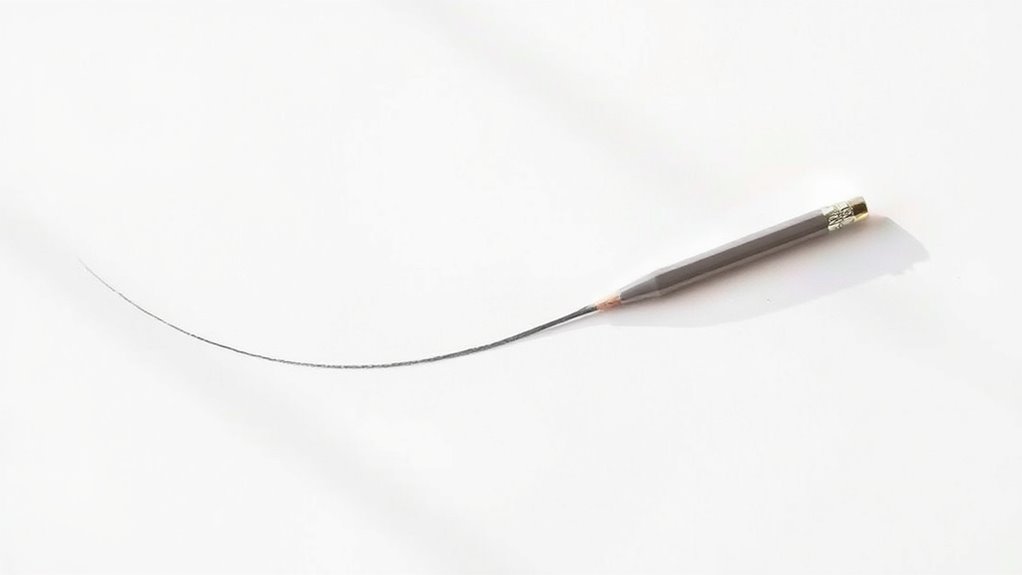

To master form drawing with lines and curves, you need to focus on gesture exploration to loosen your hand and develop confidence. Sharpen your observation skills by studying simple forms and noticing subtle differences in structure. Practice connecting your eye and motor skills as you focus on movement, flow, and energy. Building patience and consistency will enhance your precision and creativity, so if you keep practicing, you’ll improve your ability to express form with focus and spontaneity.
Key Takeaways
- Practice freehand gesture drawing to develop natural lines, curves, and confident mark-making.
- Observe forms closely to capture subtle variations in shape, structure, and movement.
- Focus on the flow and energy of lines, emphasizing spontaneity over perfection.
- Use observational techniques to refine your understanding of form dynamics and relationships.
- Integrate gesture exploration with detailed observation for expressive and accurate form drawing.
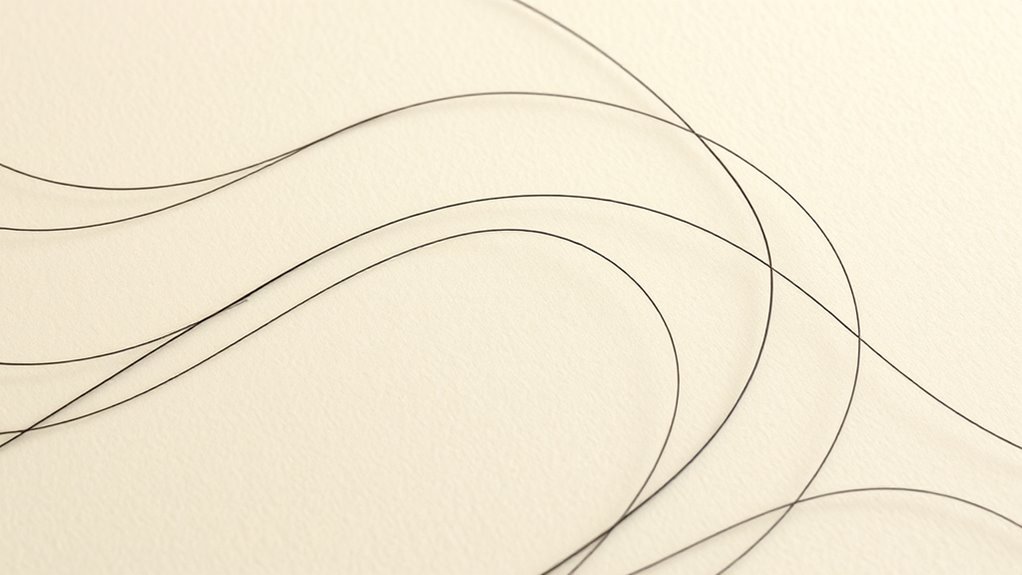
Have you ever wondered how simple lines and shapes can develop your focus, coordination, and creativity? When you engage in form drawing, you’re not just making marks on paper; you’re training your mind and body to work together harmoniously. At the core of this practice lies gesture exploration, a fundamental technique that encourages you to loosen up and draw freely, letting your hand move naturally without overthinking each line. This approach helps you observe your hand’s movements and develop a more intuitive connection between your eye and your motor skills. By practicing gesture exploration, you learn to trust your instincts, which enhances your ability to produce accurate and expressive forms. It’s about capturing the essence of what you see or feel, rather than obsessing over perfection.
Alongside gesture exploration, observational techniques play a vital role in sharpening your awareness. When you focus on observing the lines and shapes around you, you train your eye to notice the subtle curves, angles, and relationships between objects. This heightened observation makes your drawing more precise and intentional. You might start by studying simple forms—an apple, a chair, or a plant—and then attempt to replicate their contours with mindful attention. As you become more skilled at observing, you’ll notice how your lines become more deliberate and confident. Observational techniques also involve pausing to analyze your work, making adjustments, and understanding how different lines convey movement, weight, or light. These practices deepen your understanding of form and improve your ability to translate what you see onto paper. Incorporating visual perception exercises can further enhance your ability to discern subtle differences in form and structure.
In form drawing, the combination of gesture exploration and observational techniques creates a dynamic process that nurtures both your technical skills and your creative expression. As you draw, focus shifts from producing perfect shapes to understanding the flow and structure behind each line. You learn to appreciate the beauty in imperfections and the energy behind spontaneous strokes. This mindset encourages patience and persistence, qualities that translate well beyond drawing into everyday problem-solving and creative endeavors. Over time, your hand becomes more agile, your eye more discerning, and your mind more open to new possibilities. Whether you’re sketching freeform curves or precise geometric shapes, these core practices help you develop a focused, coordinated approach to drawing that fosters ongoing growth and artistic confidence.
Frequently Asked Questions
How Can I Integrate Form Drawing Into Daily Creative Practice?
To integrate form drawing into your daily creative practice, start with mindful sketching each morning or evening. Set aside a few minutes for simple lines and curves, focusing on the process rather than perfection. Make it a daily ritual, allowing your hand to flow freely. Over time, this habit sharpens your focus, enhances your drawing skills, and deepens your connection to your creative flow.
What Materials Are Best Suited for Beginner Form Drawing Exercises?
You might think you need fancy tools, but beginner form drawing is best with simple pencil sketches on plain, smooth paper. Opt for easy-to-handle materials like standard sketchbooks or loose sheets, avoiding overly textured or glossy paper that resists your pencil. These humble supplies let you focus on mastering lines and curves without distraction, proving that great art often starts with the basics—no fancy gear required.
How Does Form Drawing Influence Emotional Well-Being?
Form drawing helps you express emotions and find stress relief through creative movement. As you focus on drawing lines and curves, you channel your feelings into artistic expression, which can boost emotional well-being. This practice encourages mindfulness, reduces anxiety, and offers a calming outlet. By engaging in form drawing regularly, you can enhance your emotional resilience and develop a deeper connection with your inner self, fostering overall mental health.
Are There Specific Techniques to Improve Hand-Eye Coordination?
To improve your hand-eye coordination, focus on exercises that build muscle memory and enhance visual focus. Practice drawing precise lines and curves regularly, paying close attention to your hand movements and the target. You can also try activities like tracing or sketching from images to develop better control. Consistency is key, so keep practicing, and over time, you’ll notice improvements in coordination and accuracy.
Can Form Drawing Be Adapted for Digital Art Tools?
A stitch in time saves nine, and the same goes for adapting form drawing to digital art tools. You can easily incorporate digital adaptation by using software tools like tablets, styluses, and drawing programs. These tools help you practice lines, curves, and focus just like traditional methods, but with added flexibility. Embrace digital options to refine your skills, making your art more precise and dynamic while keeping the essence of traditional form drawing.
Conclusion
As you master lines and curves, you’re weaving a visual symphony that brings your ideas to life. Think of your drawings as a dance—each stroke a step that guides the eye and captures focus. With practice, your form drawing becomes a powerful language, speaking boldly without words. Keep experimenting, and watch as your art transforms into a enthralling story, drawing viewers in like a magnet pulling them into the heart of your creative world.