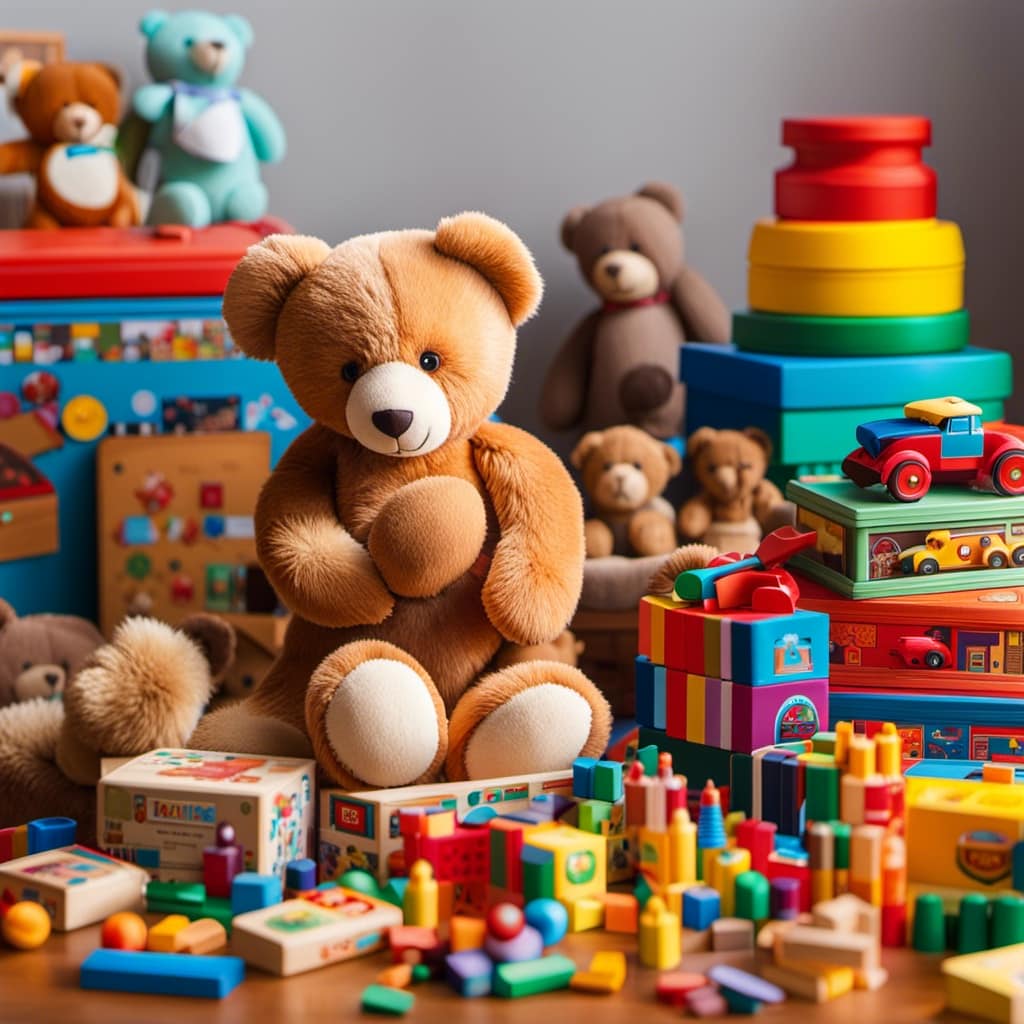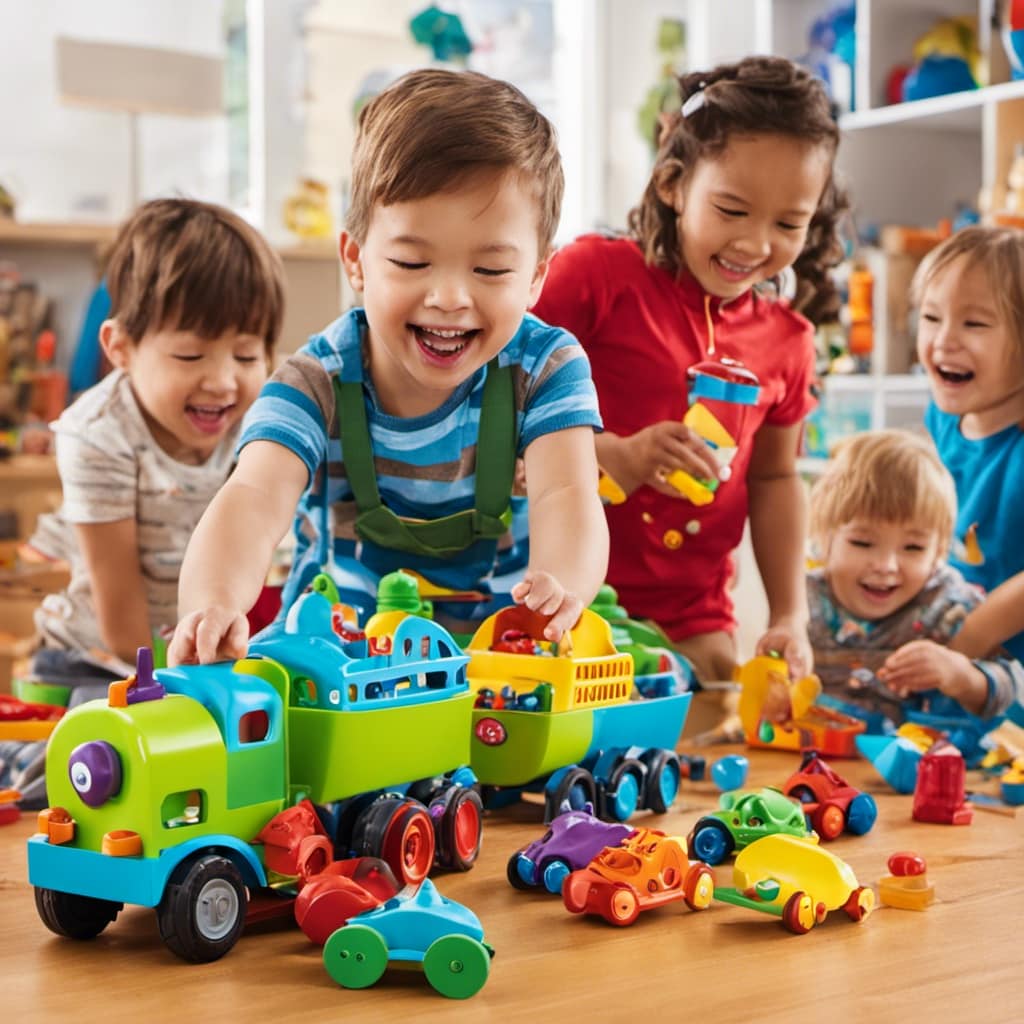
Fewer open-ended toys are powerful tools because they spark your child’s creativity and problem-solving skills. With less clutter, your child can explore freely, invent new uses, and develop confidence in their decisions. These toys foster emotional growth, social skills, and independence, making play more meaningful and engaging. By limiting toys, you encourage deeper exploration and longer-lasting interest, leading to richer developmental benefits. Keep exploring to discover how fewer toys can unleash endless possibilities for your child’s growth.

Turn the school run and nap time into listening time
- Thousands of audiobooks, podcasts and originals
- Listen on your phone, tablet or Echo — also offline
- Cancel anytime
Key Takeaways
- Fewer open-ended toys reduce overstimulation and allow children to focus more deeply on their creative exploration.
- Limited toys encourage children to use their imagination and problem-solving skills more extensively.
- Simplified toy choices foster independence, decision-making, and confidence in play.
- Less clutter promotes meaningful engagement, making playtime more educational and enjoyable.
- Fewer versatile toys support developmental growth across cognitive, emotional, and social skills.

Have you ever wondered why some toys spark endless creativity? It’s often because they’re open-ended, giving children the freedom to explore their imaginations without strict rules or limitations. Open-ended toys aren’t designed for a specific purpose or a single outcome. Instead, they act as versatile tools that encourage creative play, letting kids turn a simple block into a castle or a stick into a magic wand. These toys foster a sense of ownership and experimentation, inspiring children to think outside the box and come up with their own ideas. As a result, they’re more than just fun—they’re powerful catalysts for learning and growth.
Open-ended toys ignite creativity, encouraging children to explore, invent, and grow through limitless play and imagination.
When you choose open-ended toys, you’re providing opportunities for a wide range of developmental benefits. For starters, they promote problem-solving skills, as children figure out how to manipulate and combine different parts to create their desired outcome. They also support fine motor development because kids pick up, stack, and shape objects, honing their hand-eye coordination. Cognitive growth is another key benefit; children learn about spatial relationships, balance, and cause-and-effect through unstructured play. Because the play is self-directed, kids develop confidence in their abilities, learning to make decisions and adjust their plans as they go.
Moreover, open-ended toys nurture emotional skills. When children invent stories or role-play with these toys, they practice expressing feelings and understanding different perspectives. This type of play often involves collaboration, encouraging social skills like sharing, negotiating, and teamwork. Since there’s no “right” way to play, children learn to embrace their individuality and develop resilience when faced with challenges or setbacks during their creative pursuits. Additionally, the use of versatile materials in toys enhances their adaptability and encourages children to think creatively about how to use different objects in play.
Fewer rules and limitations mean children aren’t bound by predefined outcomes. Instead, they’re guided by their curiosity and interests, which makes play more engaging and meaningful. This kind of play supports lifelong learning because it teaches children how to think critically, adapt to new situations, and pursue their passions. It also helps them develop a growth mindset, understanding that effort and creativity lead to new ideas and solutions. As a parent or caregiver, encouraging the use of open-ended toys shows that you value imagination over perfection, helping kids build confidence and independence.
In the end, choosing fewer, more versatile toys isn’t just about simplifying playtime; it’s about enriching your child’s development. These toys open up a world of possibilities, supporting creative play that nurtures cognitive, emotional, and social skills. And because children can use them in endless ways, they stay engaged longer, making every moment of play both enjoyable and educational.
Frequently Asked Questions
How Do Open-Ended Toys Support Different Age Groups?
Open-ended toys support different age groups by promoting child development through adaptable play. You can see how younger children explore basic concepts, while older kids engage in more complex play differentiation. These toys encourage creativity and problem-solving at all stages, allowing each child to develop skills at their own pace. You’ll notice that open-ended toys grow with them, making them versatile tools that foster growth across various ages and developmental levels.
Are Open-Ended Toys More Educational Than Traditional Toys?
Think of open-ended toys as your child’s modern-day Pandora’s box—more than just fun, they spark imaginative exploration and boost cognitive development. Unlike traditional toys with fixed functions, these toys encourage creative thinking, problem-solving, and adaptability. You’ll see your child invent new games, explore ideas, and learn at their own pace. So yes, open-ended toys are more educational because they nurture curiosity and critical skills that last a lifetime.
What Materials Are Safest for Open-Ended Toys?
You should prioritize open-ended toys made from safe materials like natural wood, BPA-free plastics, or organic fabrics. Look for material safety certifications and verify they use non-toxic finishes, so your child isn’t exposed to harmful chemicals. Non-toxic finishes protect against chipping or peeling, keeping playtime safe. Always check labels for safety standards, and choose toys that are free from small parts to prevent choking hazards.
How Can Parents Encourage Creative Play With Open-Ended Toys?
Think of open-ended toys as blank canvases—your child’s imagination is the paintbrush. To encourage creative play, set aside dedicated time and join in their exploration. Offer diverse materials that promote sensory exploration, like clay, fabric, or natural objects. Share stories or challenges that spark their ideas. This active engagement nurtures their imaginative development, helping them see endless possibilities in simple toys and fostering confidence in their creative abilities.
Do Open-Ended Toys Require More Storage Space?
Open-ended toys generally need more storage space because they often come in various sizes and shapes. To manage clutter, you should implement smart storage solutions like bins, shelves, or baskets that keep toys organized and easily accessible. By maintaining a clutter management system, you can maximize space and *guarantee* your child’s play area remains tidy, encouraging creative play without the chaos of excess toys.
Conclusion
Open-ended toys are like a blank canvas waiting for your child’s imagination to paint vibrant, endless stories. By choosing fewer, more versatile toys, you give their creativity room to grow and flourish. Think of these toys as seeds—plant them and watch as your child’s ideas blossom into unique masterpieces. So, embrace simplicity and watch how a single toy can unseal worlds of wonder, making playtime both meaningful and limitless.
Halloween Picks
halloween
As an affiliate, we earn on qualifying purchases.