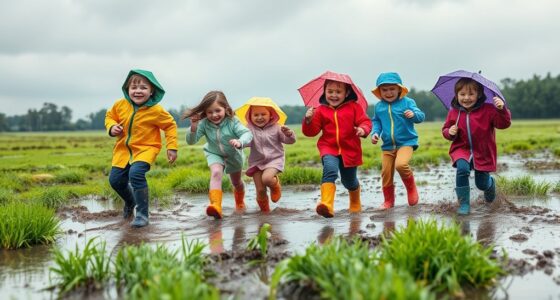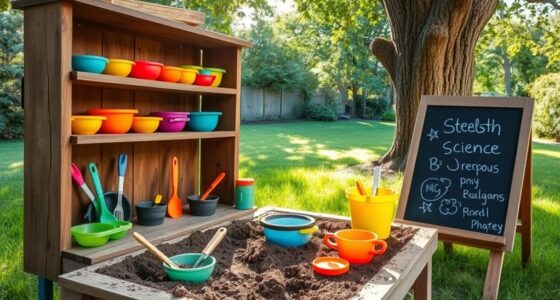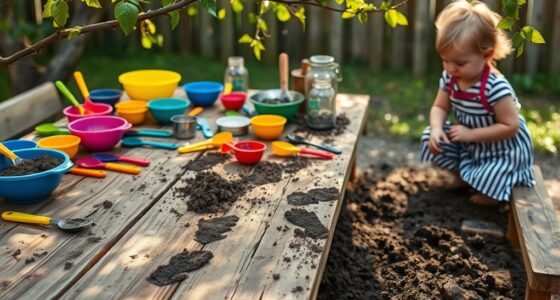
Urban nature play involves incorporating natural elements into parks, balconies, and courtyards to create vibrant, animal-friendly spaces. By planting native flowers, building small habitat patches, and maintaining green corridors, you support local ecosystems and invite wildlife into your environment. Engaging with these features not only enriches your outdoor experience but also helps urban areas become more resilient and lively. Stay with us to discover simple ways to bring more nature into your city space.
Key Takeaways
- Integrate native plants and habitat patches in parks, balconies, and courtyards to support urban biodiversity.
- Design play areas that include natural elements, such as trees, water features, and soil for outdoor exploration.
- Use community gardening to create interactive spaces that connect residents with urban ecosystems.
- Incorporate wildlife-friendly features to attract pollinators and small animals within urban recreational areas.
- Employ data-driven planning to optimize green space layouts for maximum ecological and social benefits.
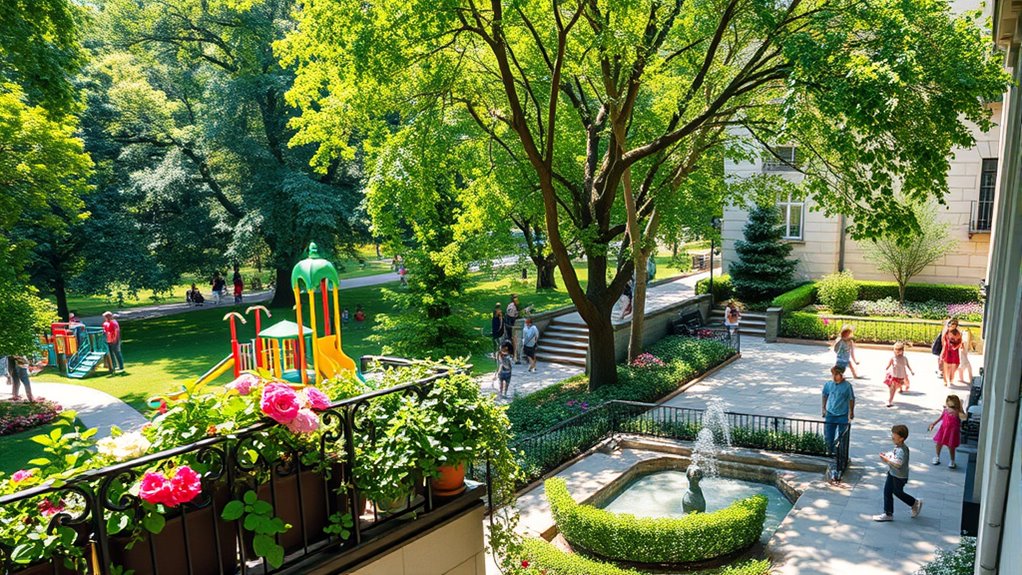
Have you ever wondered how city life can become more connected to nature? It’s a question many urban dwellers ask as they seek ways to bring greenery and wildlife into their daily routines. One effective approach is integrating wildlife corridors into city planning. These corridors act as green pathways that link parks, natural reserves, and other green spaces, allowing animals to move safely across busy neighborhoods. By designing streets and landscapes with these corridors in mind, you help preserve local ecosystems and support urban biodiversity. It’s a simple yet powerful way to make your city more alive and resilient. Additionally, community gardening plays a essential role in fostering this connection. When residents come together to cultivate shared plots, they not only grow fresh produce but also create pockets of nature within the city’s fabric. These gardens serve as mini ecosystems, attracting pollinators like bees and butterflies, which are essential for healthy plant growth. As you participate in community gardening, you contribute to creating a network of green spaces that benefit both people and wildlife. These gardens often become centers for environmental education, encouraging neighbors to learn about native plants, sustainable practices, and the importance of conserving local habitats. When combined with wildlife corridors, community gardens become more than just spaces for growing food—they turn into essential links that support the movement of birds, insects, and small mammals through urban environments. This synergy minimizes human-wildlife conflicts and enhances the overall ecological health of your city. You might also consider advocating for the inclusion of wildlife-friendly features in local parks and public spaces, such as native plantings and habitat patches. These small efforts, along with the development of wildlife corridors and community gardens, create a web of green connections that make the city feel more natural and welcoming. Through active participation, you help shape a cityscape that balances urban development with ecological preservation. Whether it’s planting flowers in your balcony, supporting local green initiatives, or encouraging city planners to prioritize green infrastructure, your involvement matters. The more you engage with these strategies, the more natural elements become integrated into your daily environment. This not only benefits wildlife but also enhances your quality of life, offering peaceful retreats amid concrete surroundings. Incorporating technology and data analysis into urban planning can further optimize these green networks for greater ecological impact. In the end, connecting city life to nature isn’t just about creating beautiful spaces; it’s about fostering a sustainable, thriving community where humans and wildlife coexist harmoniously. Every effort counts, and your role in supporting wildlife corridors and community gardening can spark a broader movement toward truly urban nature play.
Frequently Asked Questions
How Can Urban Dwellers Create Sustainable Natural Play Spaces?
You can create sustainable natural play spaces by choosing native plants that thrive locally, reducing water needs and supporting local ecosystems. Incorporate water conservation techniques like rain gardens and drip irrigation to minimize waste. Use natural materials for play structures, and design areas that encourage children to explore and connect with nature. This approach guarantees your play space is eco-friendly, easy to maintain, and enriching for kids and the environment alike.
What Safety Precautions Are Recommended for Urban Nature Play Areas?
You should conduct hazard identification regularly to spot potential dangers early. Install clear safety signage to warn about risks like slippery surfaces or sharp objects. Guarantee play areas have soft, impact-absorbing ground materials, and keep equipment well-maintained. Supervise children closely, and establish rules for safe play. These precautions help prevent accidents, making your urban nature play space safe and enjoyable for everyone.
How Does Urban Nature Play Benefit Mental Health and Well-Being?
Imagine your mind as a tangled garden; urban nature play gently prunes away stress, allowing mental health to flourish. As you connect with greenery, sunlight, and fresh air, stress reduces like fog lifting at dawn. This natural interaction revitalizes your well-being, offering a calming sanctuary amidst city chaos. You feel more centered, happier, and resilient, as nature’s quiet therapy restores your mind’s balance and boosts your overall mental health.
Are There Age-Specific Activities Suitable for Urban Outdoor Play?
Yes, there are age-appropriate activities suited for urban outdoor play. For young children, consider simple games like tag or sandbox play, following outdoor play guidelines for safety. Older kids might enjoy scavenger hunts or sports like soccer. Tailoring activities to their age guarantees engagement and safety, while also encouraging physical activity and social interaction. Always follow outdoor play guidelines to keep play safe and enjoyable for every age group.
What Are Cost-Effective Ideas for Transforming Small Balconies Into Nature Zones?
Why settle for a concrete box when you can turn your balcony into a lush paradise? You can easily create a nature zone with vertical gardening and DIY planters, transforming tiny spaces into vibrant green retreats. Use recycled materials for planters, hang them creatively, and plant herbs or flowers. It’s budget-friendly, fun, and makes your outdoor space a personal oasis—without breaking the bank or needing a green thumb.
Conclusion
By embracing urban nature play, you turn your cityscape into a vibrant canvas of life and discovery. Whether you’re exploring parks, balconies, or courtyards, you’re planting seeds of curiosity and joy in your daily routine. Think of these green spaces as the lungs of your city, breathing fresh energy into your world. So, step outside, get your hands dirty, and let nature’s artwork transform your urban experience into a lively, breathing masterpiece.