To make toy storage easy for kids, use colorful, durable bins that fit comfortably in their reach. Add simple, clear labels with fun colors to help your kids identify and organize different toys independently. Encourage them to decorate or choose label colors, which builds responsibility and confidence. Keep the system flexible so they can swap out labels as interests change. Want to discover more tips for creating an organized and kid-friendly play space?
Key Takeaways
- Use colorful, durable storage bins that are easy for kids to handle and fit into existing shelves or closet spaces.
- Implement color-coded labels or stickers for quick identification of toy categories, making cleanup fun and intuitive.
- Involve children in choosing label colors and decorating bins to foster ownership and responsibility for organization.
- Opt for stackable, flexible storage solutions that can be easily reconfigured as toy collections and interests change.
- Position storage bins at child’s eye level to promote independence and ease of access during play and cleanup.
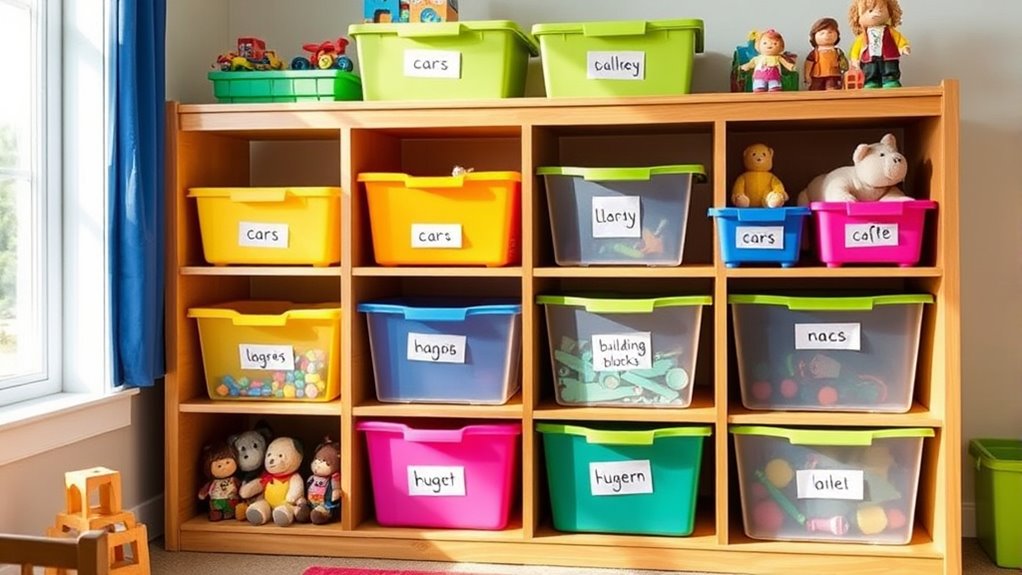
Keeping your kids’ toys organized can be a challenge, but with the right storage solutions and labels, it becomes much easier for children to find and put away their belongings. One effective approach is to use crafting storage bins, which come in various sizes, shapes, and colors, making it simple to assign specific bins for different toy types. These bins are sturdy, easy to stack, and fit well into shelves or closets, helping to keep clutter contained. When children see their toys neatly stored in designated bins, they’re more likely to develop good habits around cleanup and organization.
Using storage bins helps kids develop tidy habits and keeps play areas organized and clutter-free.
To make things even clearer, incorporate color coded labels on each storage bin. Color coding provides visual cues that are especially helpful for younger children who may not yet be able to read. For example, you might assign blue labels for action figures, red for art supplies, and green for building blocks. These labels can be made with simple printable stickers or purchased pre-made, and they turn organization into a fun, engaging activity. When kids recognize the color associated with each category, they can quickly identify where their toys belong, which reduces the frustration of searching through clutter.
Using crafting storage bins paired with color coded labels also encourages independence. As your children learn to match colors and recognize labels, they gain confidence in managing their own space. You can involve them in the setup process by letting them choose the colors or decorate the labels with stickers or drawings. This involvement makes the organization system feel personalized and more likely to be maintained over time. Plus, it helps children build a sense of responsibility and pride in keeping their play area tidy.
Another benefit of this system is its flexibility. As your kids grow and their interests change, you can easily swap out labels or reassign bins. If they develop new hobbies or start collecting different types of toys, simply add new color labels or create additional storage bins. This adaptability keeps the storage system functional and engaging for years to come.
Finally, make certain that the storage bins and labels are accessible at your child’s eye level. When kids can reach and see their storage options easily, they’re more inclined to put their toys away without needing constant reminders. The combination of crafting storage bins and color coded labels creates a simple, effective, and kid-friendly organization system that promotes independence and keeps your home tidy. With a little effort upfront, you’ll find that maintaining an organized play area becomes a much smoother, even enjoyable, task. Additionally, selecting storage solutions designed for child-friendly use ensures safety and durability while fostering good organizational habits.
Frequently Asked Questions
How Can I Encourage Kids to Maintain Their Toy Organization?
You can encourage kids to keep their toys organized by implementing reward systems that motivate them to tidy up regularly. Make cleaning part of their routine, so it becomes a habit rather than a chore. Praise their efforts and offer small rewards to reinforce positive behavior. By establishing routine cleaning and rewarding their responsibility, you help kids develop good organization skills and keep their space neat effortlessly.
What Are the Safest Materials for Children’s Storage Containers?
Imagine your child’s toy chest as a fortress of safety. You should choose storage containers made from childproof materials, like durable, non-toxic plastics that resist breakage and leaks. These safe options act as guardians, protecting little hands from harm. Always look for products labeled as non-toxic plastics, ensuring that even if kids explore or chew, they stay safe. This way, their play space remains a secure haven for endless adventures.
How Do I Update Labels as Toy Collections Change?
When toy collection changes, you should regularly update labels to keep everything organized. Start by removing old labels or covering them with new ones, then write or print labels that reflect the current toys. Use clear, easy-to-read labels and attach them securely to storage containers. This way, you help your kids easily find and put away toys, making clean-up simpler and more efficient as their collection evolves.
Are There Eco-Friendly Options for Toy Storage and Labeling?
Yes, you can choose eco-friendly options like biodegradable containers and plant-based labels for toy storage. These alternatives reduce plastic waste and are safe for the environment. You simply replace traditional plastic bins with biodegradable ones, and update labels with plant-based, removable options that are easy to change as toy collections evolve. This way, you promote sustainability while keeping your storage functional and organized.
How to Handle Disagreements Over Toy Storage Among Siblings?
Like Athena mediating disputes, you should encourage your kids to share chores and resolve conflicts peacefully. When disagreements over toy storage arise, calmly listen to each sibling’s perspective, then guide them toward compromise. Reinforce that teamwork and communication are key, helping them understand that working together leads to harmony. Praise their efforts in sharing and resolving, teaching valuable lessons about cooperation that last far beyond toy organization.
Conclusion
Creating toy storage and labels that kids can use transforms clutter into clarity, making cleanup feel less like a chore and more like a game. When you involve your children in labeling and organizing, you turn chaos into a well-orchestrated symphony of order. With simple, kid-friendly systems, you empower them to take responsibility and develop independence. Think of your storage solution as the foundation of a well-tended garden—nurturing growth, independence, and a sense of pride in their space.