To support longer attention spans, choose toys that stimulate multiple senses with textures, bright colors, and sounds, keeping your child engaged without overwhelming them. Opt for simple, age-appropriate options like building blocks or sorting games that balance challenge and accessibility. Rotate toys regularly to maintain novelty and prevent boredom. Incorporate sensory-rich toys and manage play sessions with short, focused intervals. If you keep these tips in mind, you’ll discover effective ways to encourage sustained concentration and curiosity.

Turn the school run and nap time into listening time
- Thousands of audiobooks, podcasts and originals
- Listen on your phone, tablet or Echo — also offline
- Cancel anytime
Key Takeaways
- Select age-appropriate toys that balance challenge and accessibility to prevent frustration and maintain interest.
- Incorporate multisensory toys with textures, sounds, and colors to actively engage multiple senses simultaneously.
- Use short, frequent play sessions and rotate toys to keep the environment stimulating and prevent boredom.
- Choose open-ended toys like building blocks to encourage creativity and longer sustained play.
- Observe focus duration and tailor toy choices to gradually expand attention spans over time.
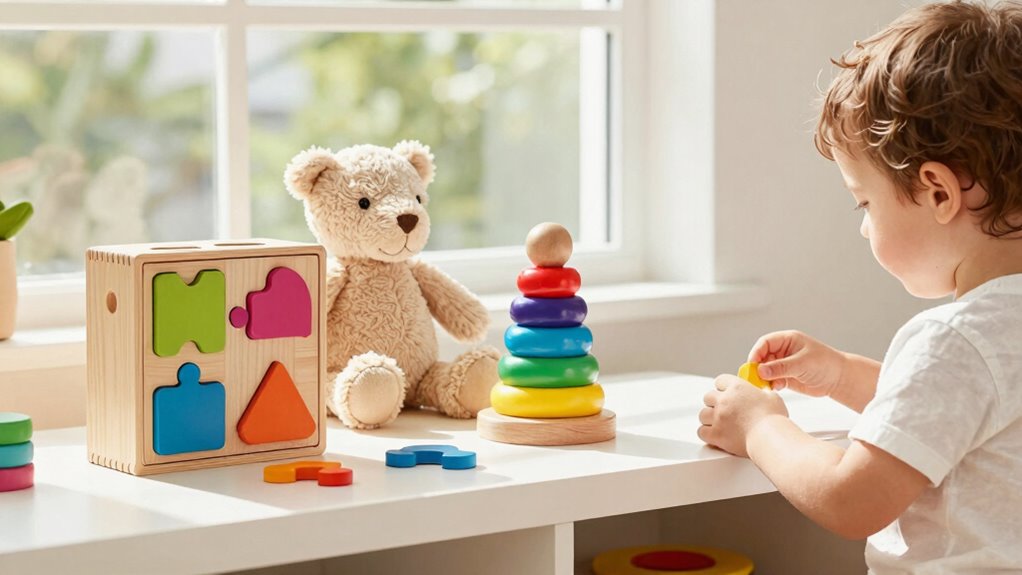
Choosing the right toys for children with shorter attention spans can considerably boost their engagement and development. When you select toys that cater to their needs, you’re not only helping them stay focused longer but also supporting their overall growth. One of the key aspects to take into account is how a toy promotes sensory development. Toys that stimulate multiple senses—such as textured fabrics, bright colors, or sounds—capture a child’s interest more effectively. These sensory-rich options keep children engaged without overwhelming them, encouraging them to explore and interact at their own pace. For example, a soft fabric book with different textures can invite tactile exploration, which in turn helps improve focus and fine motor skills.
Imaginative play is equally important, especially for children with shorter attention spans. Toys that inspire creativity, like building blocks or pretend play sets, provide opportunities for children to invent stories and scenarios. When your child can imagine and create, they become more invested in the activity, often extending their attention span naturally. Instead of a toy that quickly loses its appeal, choose open-ended options that can evolve over time. This way, your child can revisit the toy multiple times, discovering new ways to play, which reinforces their interest and concentration. Additionally, incorporating multisensory toys can further enhance their engagement by actively stimulating multiple senses simultaneously.
Another way to support longer attention spans is by offering toys that are simple yet engaging. Overly complicated toys can frustrate children, causing them to lose interest quickly. Instead, opt for items that strike a balance between challenge and accessibility. For instance, puzzles with a few large pieces or sorting games with vibrant colors can hold their attention just long enough to develop patience and problem-solving skills. Keeping the toy’s complexity appropriate ensures your child remains engaged without feeling overwhelmed. Introducing developmentally appropriate toys can also help ensure that your youngster is neither bored nor frustrated during play. Moreover, selecting toys that are age-appropriate can significantly contribute to maintaining their interest and motivation.
Timing and presentation also matter. Break play sessions into shorter, frequent intervals, and introduce different toys to keep the environment stimulating and fresh. Rotating toys prevents boredom and encourages children to revisit familiar items with renewed interest. When you observe what captures their focus longer, you can tailor future toy choices to better support their attention development. Incorporating sensory-rich toys can also enhance their engagement, as they actively stimulate multiple senses simultaneously. Setting up a designated play area can further help children associate that space with focused activity, fostering longer attention spans over time.
As an affiliate, we earn on qualifying purchases.
Frequently Asked Questions
How Does Toy Texture Influence Attention Span?
Toy texture influences attention span by providing sensory stimulation that keeps your child engaged. When a toy offers varied tactile exploration, it encourages your child to focus longer, as they enjoy the different textures they can feel. This tactile engagement helps develop their sensory skills and sustains interest, making playtime more enthralling. By choosing toys with diverse textures, you support your child’s ability to concentrate and enjoy extended periods of focused attention.
What Role Does Age-Appropriate Complexity Play in Engagement?
Age-appropriate complexity helps your child stay engaged by matching toys to their cognitive development, preventing sensory overload. When toys are just challenging enough, they stimulate curiosity without overwhelming, encouraging longer attention spans. As children grow, increasing complexity promotes cognitive development and keeps their minds active. You should choose toys that challenge without causing frustration, supporting sustained focus and healthy development.
Can Outdoor Toys Improve Sustained Attention More Than Indoor Toys?
Imagine your child trapped inside, gazing at dull walls, or outside, surrounded by endless sensory stimulation and opportunities for imaginative play. Outdoor toys often boost sustained attention more than indoor ones, because fresh air and nature inspire focus. They engage multiple senses, making play more enthralling. As a result, your kid can stay attentive longer, developing patience and concentration through stimulating adventures that indoor toys simply can’t match.
How Frequently Should Toy Options Be Rotated to Maintain Interest?
You should rotate toy options every one to two weeks to keep your child’s interest high. Durable toys guarantee they withstand frequent use, while switching them offers fresh sensory stimulation. Regular rotation prevents boredom and encourages longer attention spans. By introducing new textures, colors, or sounds, you stimulate your child’s senses, helping them stay engaged. Keep an eye on which toys captivate them most, and rotate based on their preferences and durability.
Do Electronic Toys Affect Attention Span Differently Than Traditional Toys?
Electronic toys often impact attention spans differently than traditional toys. They can lead to digital distractions and sensory overload, making it harder for kids to focus on single tasks. While traditional toys promote sustained attention and creativity, electronic toys provide quick stimulation that may reduce patience and concentration over time. You should balance both types to help your child develop longer attention spans and avoid the pitfalls of constant digital distractions.
Conclusion
So, next time you’re shopping, toss aside those flashy, noisy gadgets. Instead, pick toys that whisper “focus,” like puzzles or building blocks—because who needs instant gratification when you can foster patience? Remember, supporting longer attention spans isn’t about endless entertainment; it’s about nurturing tiny minds to enjoy the art of concentration. So, go ahead—be the hero who saves attention spans, one thoughtful toy at a time. Your kid (and their future) will thank you—probably with a calmer, more focused “thanks.”
Halloween Picks
halloween
As an affiliate, we earn on qualifying purchases.