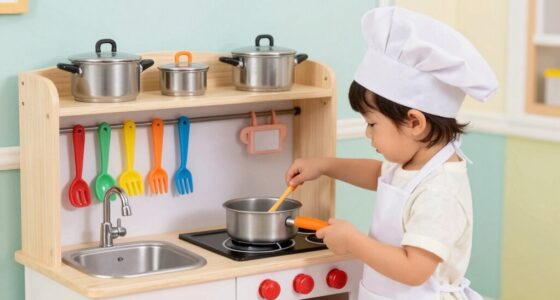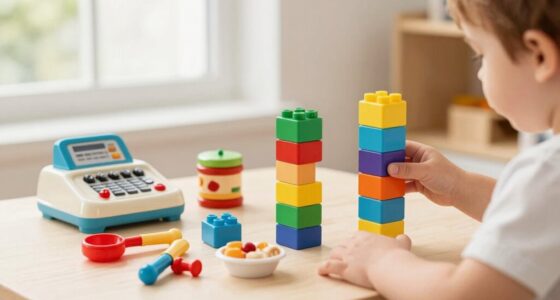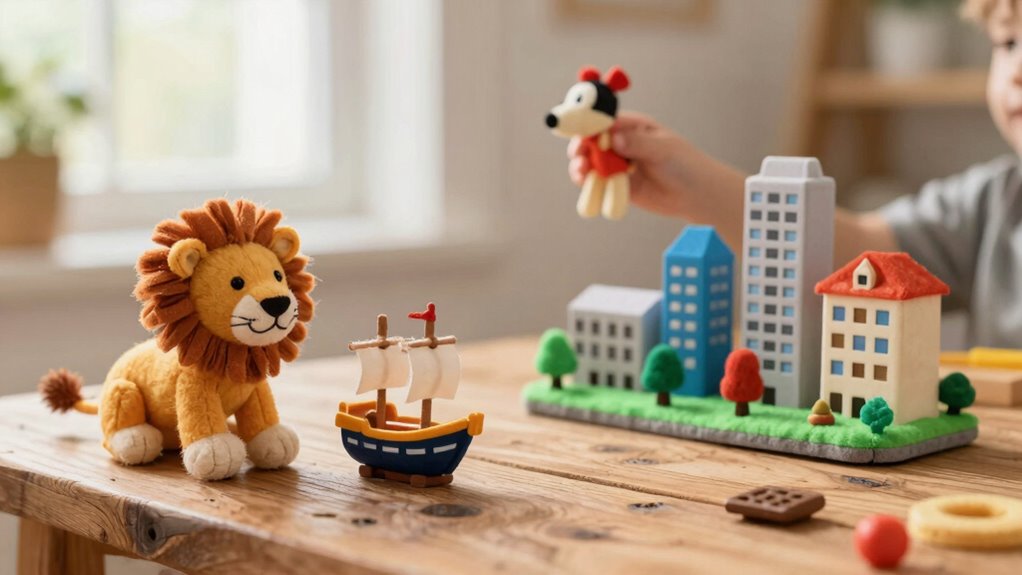

To build storytelling skills with toys and props, actively engage children by encouraging them to create stories around their favorite objects. Ask questions like “What’s happening here?” and guide them to develop plots, characters, and settings. Use diverse props from different environments to spark creativity and explore new themes. As you support their play, you’ll help boost their confidence, communication, and imagination—if you keep exploring, you’ll find even more ways to nurture their storytelling talents.

Turn the school run and nap time into listening time
- Thousands of audiobooks, podcasts and originals
- Listen on your phone, tablet or Echo — also offline
- Cancel anytime
Key Takeaways
- Use a variety of toys and props from different environments to inspire diverse and imaginative stories.
- Actively participate in play by asking questions and guiding scenarios to encourage storytelling.
- Encourage children to create stories around their toys, developing scene-setting, conflicts, and resolutions.
- Introduce new themes and challenges through props to expand storytelling ideas and critical thinking.
- Promote expressive language and communication by discussing and elaborating on the stories children create with toys.
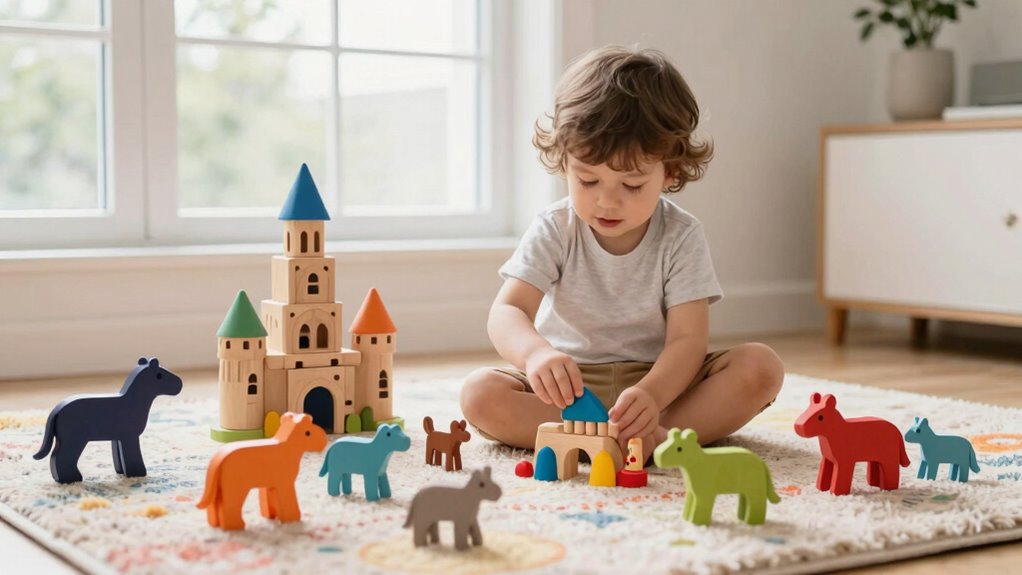
Have you ever noticed how toys and props can spark a child’s imagination and bring stories to life? These simple tools are more than just entertainment—they’re powerful catalysts for developing storytelling skills. When you encourage a child to use toys in imaginative play, you’re inviting them to create entire worlds, characters, and adventures from their own ideas. This process nurtures their creative expression, helping them learn to communicate their thoughts, feelings, and stories in a vivid, engaging way.
Imaginative play with toys and props allows children to step into different roles and scenarios. As they pick up a doll, a car, or a set of animal figurines, they begin to craft narratives that mirror their understanding of the world or explore new ideas. You can support this by providing a variety of props—costumes, miniature furniture, or everyday objects—so they have the freedom to invent. When children are free to experiment and invent, they develop confidence in their storytelling abilities, learning how to structure a story, develop characters, and build suspense or humor naturally. Engaging in imaginative play helps children practice storytelling techniques that are foundational to effective communication. Incorporating diverse props and scenarios further sparks their creativity and encourages them to think beyond conventional stories.
Encourage children to invent stories with diverse props, boosting confidence and creativity in storytelling skills.
To build storytelling skills through toys and props, actively participate in their play. Join in by asking questions like, “What’s happening here?” or “Who is this character?” This encourages them to elaborate on their story, strengthening their language skills and their ability to think creatively. Use the toys as prompts to introduce new themes or scenarios, guiding them to think beyond the obvious. For example, if they’re playing with animals, ask what adventures the animals might go on or what challenges they might face. This helps them learn the art of storytelling—setting scenes, creating conflict, and resolving issues—all through play. Recognizing the importance of storytelling as a fundamental skill is essential in nurturing their communication and cognitive development. Additionally, engaging with biodiversity themes can further enrich their understanding of the natural world and inspire stories about different species and ecosystems. Exploring props and scenarios from different environments can also expand their imagination and deepen their storytelling abilities.
imaginative play toys for storytelling
As an affiliate, we earn on qualifying purchases.
As an affiliate, we earn on qualifying purchases.
Frequently Asked Questions
What Age Is Best for Developing Storytelling Skills With Toys?
You can start developing storytelling skills through toys at around age three, as children begin engaging in more sophisticated imaginative play. During this stage, your child benefits from thoughtful toy selection—such as dolls, animals, or pretend tools—that inspire creativity. Encourage their storytelling by asking questions and joining in the play, helping them expand their vocabulary and narrative skills through interactive, imaginative play with age-appropriate toys.
How Can I Encourage Creativity With Diverse Toy Types?
You can encourage creativity with diverse toy types by emphasizing toy versatility, allowing your child to explore different roles and stories. Introduce creative prompts that challenge them to imagine new scenarios, combining various toys to craft unique narratives. Encourage experimentation, and praise their originality. This approach helps your child see toys as tools for endless storytelling possibilities, fostering their imagination and creative thinking through varied, versatile play.
Are There Specific Props That Enhance Storytelling Effectiveness?
Think of props as keys to open imagination. Specific props like miniature animals or costumes turn simple play into immersive stories. During interactive play, these items help create vivid, engaging scenarios that spark your child’s creativity. Studies show that children develop stronger storytelling skills when they use props that facilitate role-playing. So, choose versatile props that encourage your child to craft rich, imaginative scenarios, making storytelling both fun and effective.
How Do I Assess a Child’s Storytelling Progress Over Time?
You assess a child’s storytelling progress by observing how their storytelling techniques evolve, such as their ability to use more detailed plots and expressive language. Pay attention to how they incorporate toy selection into their stories, making their narratives more engaging. Regularly ask open-ended questions to gauge understanding and creativity. Keep notes on their improvements over time, noting increased confidence, vocabulary, and imaginative use of toys and props.
Can Storytelling With Toys Improve Language Skills?
Storytelling with toys acts like a key releasing language skills, turning simple play into rich learning. Toys as prompts stimulate imagination development, encouraging kids to form words and sentences as they craft stories. This active engagement helps expand vocabulary and improves communication skills naturally. As your child explores stories with toys, you’re nurturing their language abilities in a fun, interactive way that makes learning feel like an adventure rather than a task.
Conclusion
By incorporating toys and props into your storytelling, you create a vivid world where imagination takes flight. Think of these tools as the spark that ignites your storytelling fire, making your stories more engaging and memorable. Just like a painter uses colors to bring a canvas to life, you use toys and props to turn simple tales into enthralling adventures. Keep experimenting, and soon you’ll find your stories blossoming with creativity and confidence.
Cold & flu season Picks
humidifiers
As an affiliate, we earn on qualifying purchases.