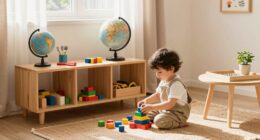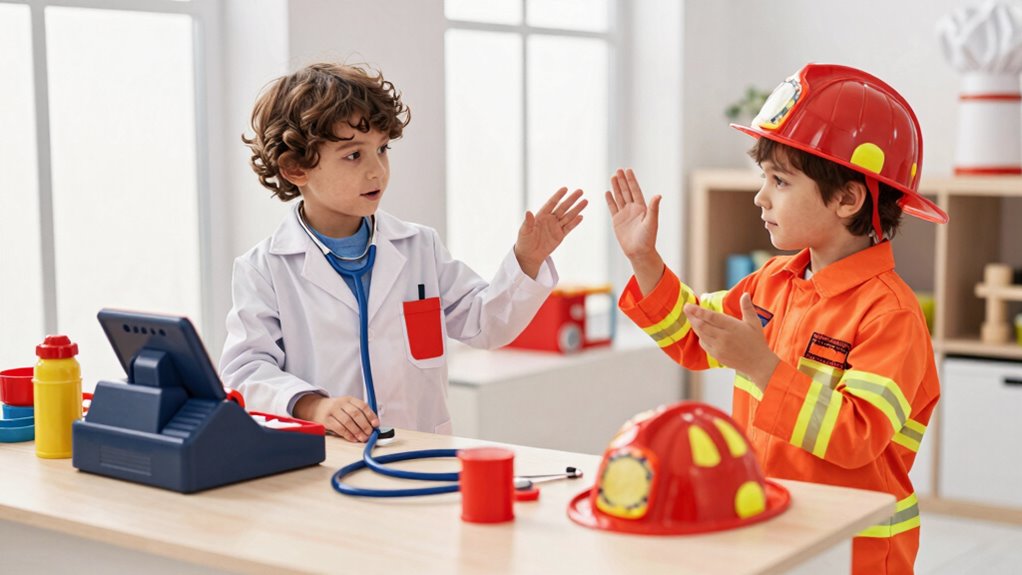

Role play toys help your child practice real-life scripts by providing a safe space to learn social skills, communication, and problem-solving. They encourage your kid to explore different roles, giving them confidence to handle routines like visiting the doctor or shopping. Through pretend scenarios, children develop emotional intelligence, teamwork, and independence. By exploring themes like environmental awareness or digital safety, they prepare for everyday situations. Keep going to discover even more ways these toys support your child’s growth.

Turn the school run and nap time into listening time
- Thousands of audiobooks, podcasts and originals
- Listen on your phone, tablet or Echo — also offline
- Cancel anytime
Key Takeaways
- Role play toys allow children to rehearse real-life routines and social interactions in a safe, controlled environment.
- They help kids practice language and communication skills needed for everyday conversations.
- Role playing with toys builds confidence and prepares children for unfamiliar or challenging situations.
- They encourage understanding of social norms, expectations, and appropriate behaviors through simulated scenarios.
- Role play toys foster emotional awareness and empathy by exploring different perspectives and feelings.
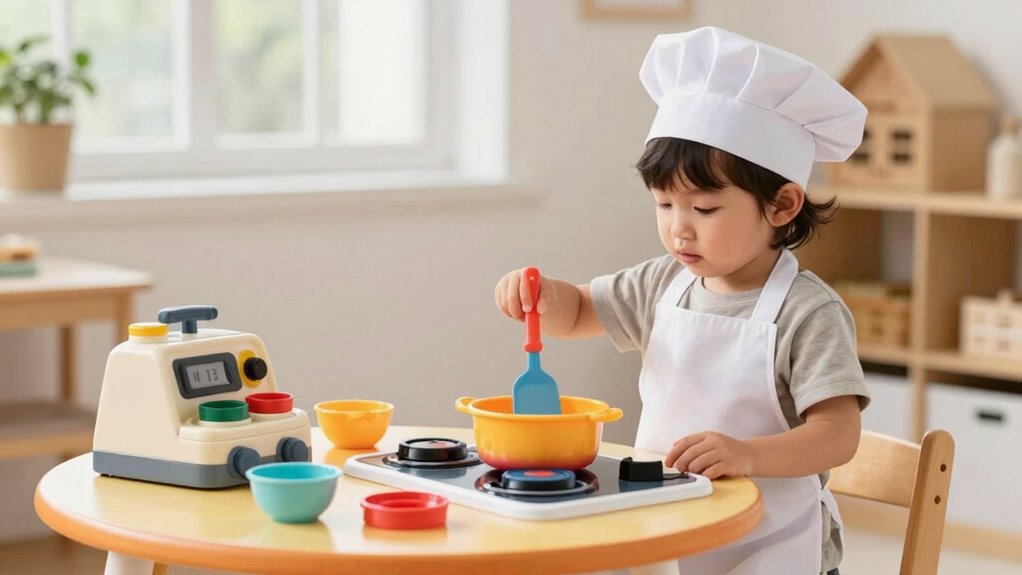
Have you ever wondered how kids develop their creativity and social skills? When they engage with role play toys, you’re giving them a powerful tool to explore and practice real-life scripts. These toys aren’t just about fun; they’re about building essential skills that form the foundation for their future interactions. As your child immerses themselves in pretend scenarios—whether they’re playing house, pretending to be a doctor, or running a store—they actively stimulate their cognitive development. They learn to think critically, solve problems, and understand different perspectives, all while steering their imaginative worlds. This kind of play pushes them to process complex ideas and develop language skills, making it a natural way to boost their mental growth.
Role play toys also serve as a mirror for real-life experiences, allowing children to rehearse social interactions in a safe environment. They practice taking turns, sharing, and expressing their needs, which helps refine their social skills. When your child pretends to be a chef or a teacher, they’re not just copying adult roles—they’re learning the social cues, communication styles, and problem-solving strategies that come with those roles. This type of play encourages empathy, as they step into different characters’ shoes and understand their feelings and motivations. Over time, these experiences translate into better social understanding and more confident interactions with peers and adults alike.
By practicing these scripts in a playful setting, kids become more comfortable handling real-world situations. For instance, they might simulate a visit to the doctor or a trip to the grocery store, which prepares them for actual visits and errands. This rehearsal helps reduce anxiety, making new or challenging situations feel less intimidating. It also teaches them the importance of following routines and understanding social expectations, fostering independence and self-regulation. Engaging in pretend play can also help children understand the importance of biodiversity and conservation by exploring different environments and roles related to nature and sustainability. Additionally, role play can help children develop a sense of emotional intelligence, which is crucial for navigating social relationships. Recognizing the significance of environmental awareness in play can further deepen their understanding of sustainable practices and their role in protecting the planet.
Furthermore, incorporating themes from cybersecurity into pretend scenarios can subtly introduce children to the importance of safe online behavior, preparing them for the digital world. In essence, role play toys are much more than simple entertainment. They are essential tools that support a child’s cognitive development and social skills by allowing them to practice real-life scripts. Through imaginative play, your child learns to think, communicate, and interact with confidence. This active engagement helps them build critical skills that will serve as a foundation for lifelong learning and social success.
As an affiliate, we earn on qualifying purchases.
Frequently Asked Questions
How Do Role Play Toys Support Emotional Development in Children?
Role play toys support your child’s emotional development by helping them practice emotional regulation and empathy development. When they act out real-life scenarios, they learn to manage their feelings and understand others’ emotions more effectively. These toys encourage your child to step into different roles, fostering compassion and patience. As they navigate these pretend situations, they build essential social skills that promote healthier emotional responses in everyday life.
What Age Is Best Suited for Introducing Role Play Toys?
You should introduce role play toys when your child is around 2 to 7 years old, as this is their prime time for exploration and imagination. Think of it as planting seeds in a fertile garden, where age appropriateness and toy variety nurture growth. At this stage, kids thrive on diverse roles—doctor, chef, parent—building social skills and confidence while they navigate the world through play.
Can Role Play Toys Improve Social Skills Effectively?
Yes, role play toys can improve your child’s social skills effectively. When they engage in fantasy scenarios, they learn to navigate different roles and develop empathy. These toys encourage peer interaction, helping them practice sharing, cooperating, and communicating. By acting out real-life situations, your child gains confidence and social understanding, making future interactions smoother. This playful approach builds essential social skills in a fun and engaging way.
How Do Role Play Toys Boost Creativity and Imagination?
Role play toys open a gateway to a world where your child’s imagination takes flight like a vibrant kite. They boost creativity by inviting kids to explore fantasy scenarios, turning simple toys into magical tools. As children create stories around these toys, their storytelling enhancement flourishes, encouraging inventive thinking and problem-solving skills. This playful exploration fosters a limitless landscape for your child’s mind to grow and innovate.
Are There Any Safety Concerns With Role Play Toys?
You’re right to take safety concerns with role play toys seriously. Always check that they meet safety standards to guarantee they’re free from harmful materials. Be mindful of choking hazards, especially with small parts that might come loose. Supervise young children during play, and choose age-appropriate toys. By doing so, you help your child explore and learn safely, turning playtime into a positive and secure experience.
Conclusion
Role play toys truly boost your child’s social skills and creativity, helping them practice real-life scenarios in a fun way. Some might think these toys are just playthings, but they’re powerful tools for learning. They prepare your kids for future challenges, build confidence, and foster empathy. So, don’t underestimate the value of pretend play—it’s an investment in their development that pays off long-term, making them more prepared and confident for the world ahead.
Evergreen bestsellers Picks
bestsellers
As an affiliate, we earn on qualifying purchases.