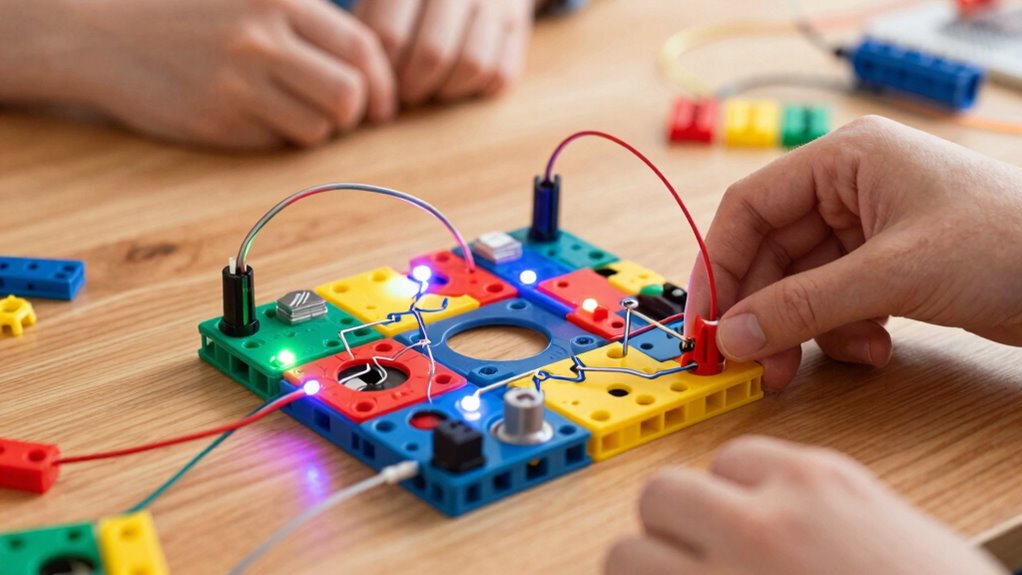

Snap Circuits help you explore systems thinking by guiding you to build and troubleshoot circuits, showing how each component connects and impacts the whole system. As you experiment, you see how changing one element influences the entire circuit, fostering an understanding of cause-and-effect. This hands-on play promotes analyzing connections, diagnosing issues, and understanding system behavior. Keep exploring, and you’ll discover how these skills develop your ability to think about complex systems in everyday life.

Turn the school run and nap time into listening time
- Thousands of audiobooks, podcasts and originals
- Listen on your phone, tablet or Echo — also offline
- Cancel anytime
Key Takeaways
- Snap Circuits enable hands-on experimentation, illustrating how individual components interact within a larger system.
- They demonstrate cause-and-effect relationships by showing how changing one component affects the entire circuit.
- The modular design promotes iterative testing and refinement, fostering a systems thinking approach to problem-solving.
- Users learn to troubleshoot and analyze connections, understanding the interconnectedness of system parts.
- The activity encourages viewing circuits as integrated wholes, reinforcing holistic understanding of system dynamics.
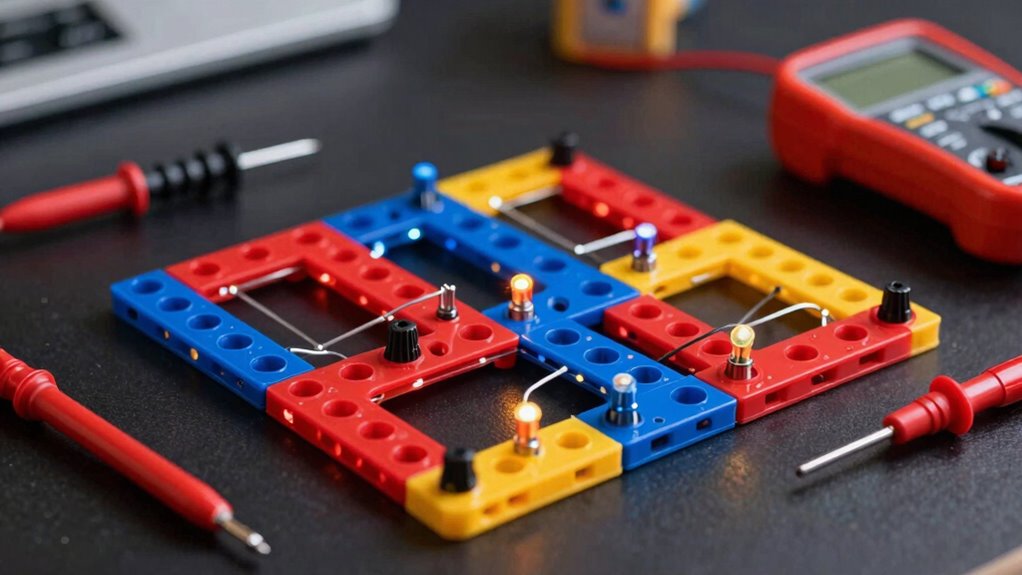
Snap Circuits are a fantastic way to introduce systems thinking to learners of all ages. When you start exploring with these kits, you quickly realize how they promote interactive learning through hands-on experimentation. Instead of passively absorbing information, you actively build circuits that demonstrate how different components work together within a system. This approach helps you see the bigger picture of how electrical engineering principles come to life through your own creations.
Snap Circuits foster hands-on learning, showing how components work together within a system for a deeper understanding of electrical engineering.
As you connect the snap-together components, you begin to understand that each piece plays a specific role in the overall circuit. Whether it’s a switch, a motor, or a light, every part depends on others to function properly. This interconnectedness is at the core of systems thinking, and Snap Circuits make it intuitive. You learn to identify how changing one element impacts the entire system, fostering a deeper comprehension of cause and effect. This kind of learning encourages you to think beyond isolated components and view the circuit as an integrated whole.
Playing with Snap Circuits also emphasizes the importance of design and troubleshooting, which are essential aspects of systems thinking. When a circuit doesn’t work as expected, you’re prompted to analyze each connection and component, honing your problem-solving skills. This process mirrors real-world electrical engineering challenges, where engineers must diagnose issues within complex systems. By repeatedly experimenting and iterating, you develop a mindset that values testing, adjustment, and continuous improvement. Additionally, understanding how interconnected parts influence system stability enhances system resilience, which is vital in real-world applications. Recognizing how components interact within a system aligns with the broader concept of interconnectedness, a fundamental principle in systems thinking emphasized in various fields. The hands-on nature of Snap Circuits helps solidify this understanding by making abstract concepts tangible and observable.
Furthermore, engaging with Snap Circuits helps you grasp the dynamic nature of systems. You see firsthand how voltage, current, and resistance interact, and how adjusting one parameter affects the entire circuit’s behavior. This experiential learning makes abstract electrical concepts more concrete, enabling you to grasp the fundamental principles of systems operation. It’s a playful yet effective way to build foundational knowledge that can be transferred to more advanced engineering topics later on. Incorporating these hands-on experiences makes it easier to understand complex systems and their underlying principles.
Understanding how parts work together within a system also enhances systems thinking skills, which are valuable across many disciplines. The iterative process of building, testing, and refining circuits reflects the problem-solving methods used in tackling complex issues in various fields, fostering a mindset adaptable to diverse challenges.
In essence, Snap Circuits turn the process of learning electrical engineering into an interactive, engaging experience. They foster critical thinking, creativity, and an understanding of systems as a whole. As you manipulate components and see immediate results, you develop a mindset that’s essential for tackling complex problems in technology and engineering. Playing with these kits isn’t just about building circuits; it’s about cultivating a systems perspective that will serve you well in countless fields.
Snap Circuits electrical engineering kit
As an affiliate, we earn on qualifying purchases.
As an affiliate, we earn on qualifying purchases.
Frequently Asked Questions
What Age Groups Are Best Suited for Snap Circuits?
You’ll find Snap Circuits best suited for children aged 8 and up. They offer excellent educational benefits, helping kids develop skills in problem-solving, critical thinking, and understanding systems. Plus, they encourage creative exploration by allowing kids to build various electronic projects. This hands-on play makes learning fun and engaging, making it ideal for young learners enthusiastic to explore technology and engineering concepts in a playful way.
How Long Does It Typically Take to Complete a Project?
While project complexity varies, most Snap Circuits projects take about 15 to 45 minutes to complete. If you’re worried about time constraints, remember that more complex projects naturally require longer. Your goal is to encourage exploration and learning at a comfortable pace. By breaking down bigger projects into smaller steps, you help your child develop patience and problem-solving skills, making the process both educational and enjoyable.
Are There Digital or Online Resources Available for Learning?
Yes, you can find plenty of digital resources for learning with Snap Circuits. Virtual simulations let you experiment with circuits online, providing a hands-on experience without physical components. Additionally, online tutorials guide you step-by-step through various projects, making it easier to understand systems thinking concepts. These resources are perfect for practicing anytime, helping you deepen your understanding and enhance your skills in a flexible, interactive way.
Can Snap Circuits Be Used in Classroom Settings?
You can definitely use Snap Circuits in classroom settings, and they’re a perfect tool for interactive learning. With these kits, students immerse themselves in creative experimentation, building circuits that make learning fun and engaging. It’s like hitting two birds with one stone—encouraging teamwork while fostering curiosity and understanding of electrical systems. Teachers love how Snap Circuits turn complex concepts into hands-on activities, making lessons memorable and inspiring future engineers.
What Safety Precautions Should Be Followed During Use?
When using Snap Circuits, you should always wear safety gear like goggles to protect your eyes from potential sparks or debris. Always follow safety instructions to avoid electrical hazards, such as not touching exposed wires or components while powered on. Make certain to work in a dry area, keep your workspace organized, and unplug the circuits when making adjustments. These precautions help ensure safe, enjoyable learning experiences with Snap Circuits.
Conclusion
By exploring Snap Circuits, you open the door to a world where ideas connect like a web of stars. As you build and troubleshoot, you’re weaving the threads of systems thinking, understanding how parts work together to create something greater. Play becomes a journey through a garden of interconnected blooms, each piece essential to the whole. Embrace this hands-on adventure, and watch your understanding of complex systems blossom like a sunrise on the horizon.
Cold & flu season Picks
humidifiers
As an affiliate, we earn on qualifying purchases.