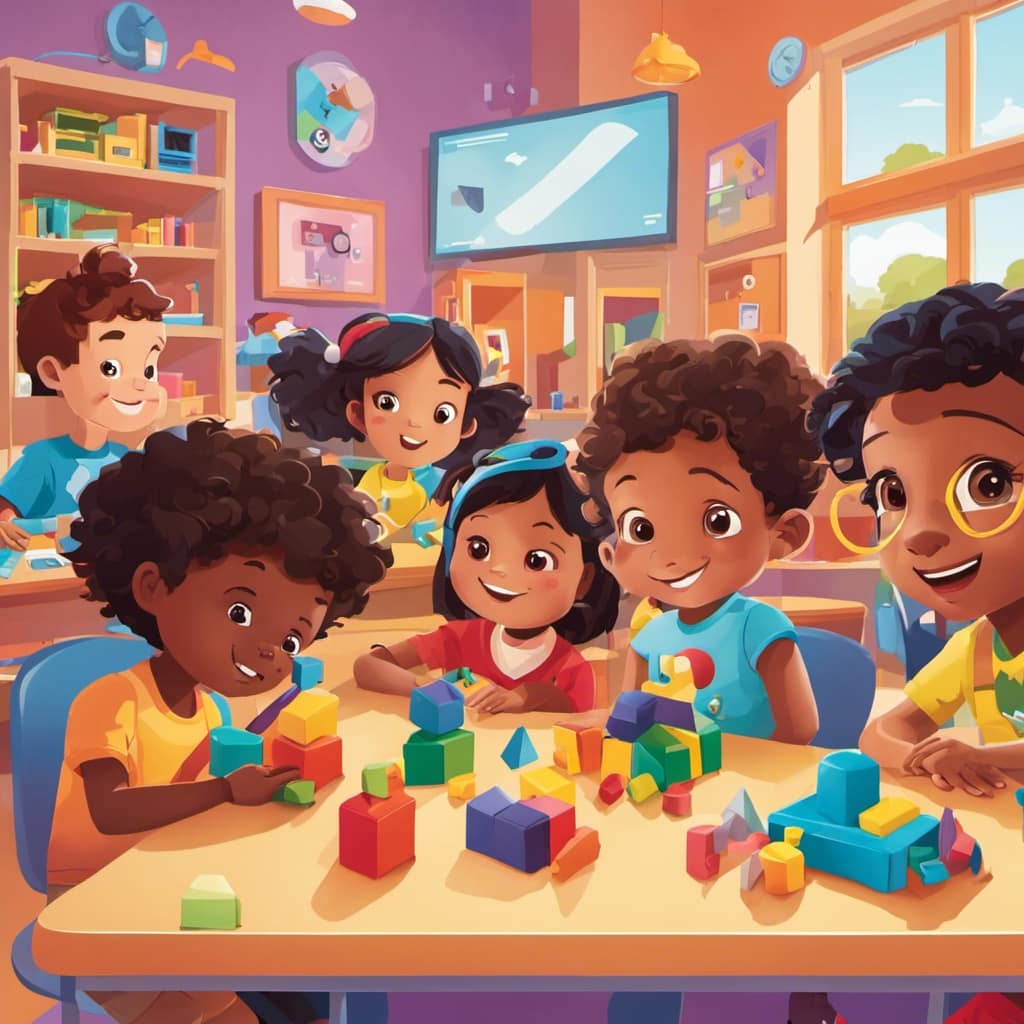
To use storytelling more naturally in daily play, blend it into your conversations and activities without formal setups. Respond spontaneously to what’s happening, letting characters evolve based on unfolding events. Use vivid descriptions and ask open-ended questions to spark imagination. Embrace improvisation, stay flexible, and let the story flow organically with genuine reactions. Pay attention to details and use playful twists to keep it lively. Keep exploring these techniques, and you’ll discover even more ways to make storytelling seamless.

Turn the school run and nap time into listening time
- Thousands of audiobooks, podcasts and originals
- Listen on your phone, tablet or Echo — also offline
- Cancel anytime
Key Takeaways
- Integrate storytelling seamlessly into everyday interactions, focusing on authentic character development and spontaneous contributions.
- Use improvisational techniques like responding enthusiastically and embracing twists to keep stories dynamic and engaging.
- Stay flexible and responsive to the flow of play, allowing stories to evolve naturally through spontaneous moments.
- Incorporate meaningful themes, such as conservation or biodiversity, to add depth and educational value.
- Employ vivid descriptions and open-ended questions to invite imagination and collaborative storytelling.

Have you ever noticed how a simple game can turn into a mesmerizing story? It’s almost like a magic trick, where a few words and actions transform a basic play into a fascinating narrative. The key lies in embracing storytelling as an organic part of your daily interactions, rather than a formal performance. When you weave storytelling seamlessly into play, you engage others more deeply and make the experience memorable. One way to do this naturally is by focusing on character development. Instead of sticking rigidly to predefined roles, allow characters to evolve with the story. For example, if you’re playing a game of pretend, let your character’s personality shift based on the unfolding events. Maybe your brave knight becomes slightly more cautious after facing a tough challenge, or your curious explorer develops a new sense of confidence. This fluid approach makes stories feel authentic and alive, encouraging everyone to contribute their ideas and reactions spontaneously.
Incorporating improvisational techniques is another powerful way to make storytelling feel effortless. Improvisation isn’t about perfection; it’s about being present and adaptable. When you’re in the moment, respond to others’ cues with enthusiasm and curiosity. If someone introduces a twist, go with it rather than resisting or overthinking. This keeps the story dynamic and engaging, and it also models flexibility for everyone involved. By trusting your instincts and encouraging others to do the same, you create an environment where stories grow naturally from shared play. It’s important to stay attentive to the flow, picking up on small details and hints that can serve as storytelling seeds. Whether it’s a character’s forgotten backstory or an unexpected obstacle, these improvisational moments add depth and spontaneity, making the narrative richer. Recognizing storytelling as an organic process helps you remain flexible and responsive, enhancing the authenticity of your play. Additionally, understanding the importance of biodiversity and conservation can inspire stories that highlight the significance of respecting nature and living sustainably, adding an educational layer to your play. Embracing this broader educational potential can make your storytelling more meaningful and impactful.
To seamlessly incorporate storytelling into your daily play, you should also embrace a conversational style. Speak as if you’re naturally telling a story, using vivid descriptions and expressive language that draw others in. Ask open-ended questions that invite imagination and collaboration, like “What do you think happens next?” or “How does your character feel about that?” This encourages others to participate actively, turning the game into a shared storytelling adventure. Remember, the goal isn’t to craft a perfect story but to enjoy the process of creation together. When you treat play as an opportunity to explore ideas, develop characters, and experiment with improvisation, storytelling becomes a natural extension of your daily interactions. Practicing imaginative play regularly helps develop your storytelling skills and makes the process feel more effortless. The more you practice this approach, the more effortless and authentic your stories will become, transforming ordinary moments into extraordinary tales.
As an affiliate, we earn on qualifying purchases.
Frequently Asked Questions
How Can I Encourage My Child to Share Their Stories?
You can encourage your child to share their stories by creating a supportive environment that values creative expression. Ask open-ended questions and listen actively, showing genuine interest in their tales. Celebrate their ideas and emotions, helping boost their emotional development. By making storytelling fun and stress-free, you foster confidence and encourage them to share more naturally, turning everyday moments into opportunities for creative expression and emotional growth.
What Are Simple Storytelling Prompts for Everyday Play?
Research shows that creative prompts spark children’s imagination during play. Use simple storytelling prompts like “What if you found a magical key?” or “Imagine you’re an astronaut on a new planet.” Ask imaginative questions such as “What’s your favorite animal’s secret adventure?” or “Can you pretend you’re a superhero saving the day?” These prompts encourage your child to think creatively and share stories naturally, making playtime more engaging and fun.
How Do I Balance Storytelling With Independent Play?
You balance storytelling with independent play by weaving a creative narrative into your child’s activities without taking over. Encourage their playful imagination by suggesting story elements that complement their play, then step back to let them lead. Use gentle prompts to spark their creativity while respecting their independence. This approach nurtures their storytelling skills and supports their imaginative growth, creating a seamless blend of guided and independent play.
When Is the Best Time to Introduce Storytelling Into Daily Routines?
You should introduce storytelling during natural routine integration moments, like during bath time, mealtime, or bedtime. These moments naturally lend themselves to storytelling because your child is relaxed and receptive. Timing is key—wait for a calm, unhurried moment to tell a story, making it feel seamless and enjoyable. By consistently embedding storytelling into daily routines, you’ll foster a love for stories without it feeling forced or out of place.
How Can Storytelling Improve My Child’s Language Skills?
You’ll be surprised to learn that children who engage in storytelling often experience a 20% boost in language skills. When you tell stories, you support your child’s narrative development and vocabulary expansion, making words more meaningful. This natural practice encourages them to think creatively, express ideas clearly, and learn new words effortlessly. Incorporate storytelling into daily play, and you’ll see your child’s language skills grow confidently and quickly.
Conclusion
As you weave stories into your daily play, imagine the vibrant colors and lively sounds swirling around you. Each moment becomes a canvas, where your words paint adventures and spark imagination. Feel the warmth of connection grow as your stories breathe life into ordinary days. With each shared tale, you’re building a world where creativity blossoms effortlessly. Embrace the magic of storytelling, and watch as your everyday moments transform into unforgettable memories, rich with wonder and joy.
Cold & flu season Picks
humidifiers
As an affiliate, we earn on qualifying purchases.