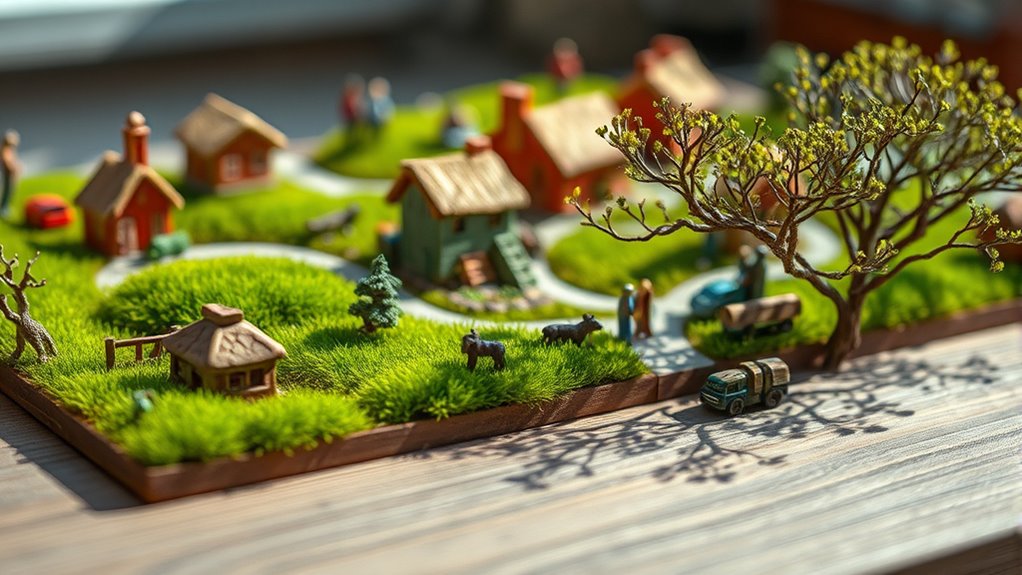

Small world play involves creating mini worlds with figures, vehicles, and natural materials, sparking your child’s imagination and storytelling skills. You can support their play by providing versatile materials and allowing them to lead, which fosters confidence and independence. This type of play nurtures social understanding, empathy, and language development while encouraging exploration. If you want to discover more ideas on building engaging and creative mini worlds, keep exploring how these activities can enrich your child’s growth.
Key Takeaways
- Use diverse materials like figures, animals, and natural elements to create engaging, imaginative miniature worlds.
- Encourage child-led construction, supporting their ownership and creative control over the scene.
- Incorporate storytelling prompts and questions to enhance language development and narrative skills.
- Utilize headphones and focused play to deepen engagement and facilitate focused storytelling.
- Foster social understanding and empathy by exploring different roles and scenarios within the mini worlds.

Small world play is a hands-on activity that sparks children’s imagination and helps them develop critical social and cognitive skills. When you set up a small world, you give children the opportunity to create their own stories, explore different roles, and experiment with various scenarios. The key to successful small world play lies in offering imaginative scenarios that inspire children to think creatively. These scenarios can be as simple as a farm, a busy city, or a magical kingdom, but the more open-ended they are, the more children can use their imagination to expand the story. As they manipulate the setting, they learn to think critically about cause and effect, problem-solving, and storytelling.
To support this imaginative play, providing a range of creative materials is essential. These materials could include miniature figures, animals, vehicles, buildings, and natural elements like rocks and trees. When children have access to diverse, versatile materials, they gain the freedom to assemble and reassemble their worlds in countless ways. This flexibility encourages them to experiment with different roles and narratives, deepening their understanding of social interactions and empathy. For example, a child might create a bustling marketplace with tiny people, animals, and market stalls, then invent stories about trades and friendships. The more varied the materials, the more rich and dynamic the stories become.
Additionally, understanding headphones and their features can be a helpful tool for children to engage in focused storytelling or listen to shared stories during play. As you facilitate small world play, remember that the focus is on the process, not just the finished scene. Encourage children to share their stories and describe what’s happening in their mini worlds. Ask questions that prompt them to think about what might happen next or how characters might feel. This approach helps develop their language skills and boosts their confidence in storytelling. You should also allow children to take the lead, offering support rather than directing their play. When kids are free to explore their ideas, they develop a sense of ownership and agency over their stories.
Incorporating imaginative scenarios and creative materials into small world play isn’t just about fun—it’s a powerful way to nurture essential skills. By giving children the tools and space to build their own worlds, you’re helping them enhance their social understanding, improve their language, and foster a love for storytelling. This type of play taps into their natural curiosity, making learning an engaging, meaningful experience. As they build, explore, and narrate, children are laying the foundation for lifelong creativity, empathy, and critical thinking skills that will serve them well across all areas of life.
Frequently Asked Questions
How Can Small World Play Support Language Development?
Small world play boosts your child’s language development by encouraging narrative skills and vocabulary expansion. As they create stories within mini worlds, they practice sequencing, describing actions, and expressing ideas clearly. You can support this by asking open-ended questions and introducing new words related to their play. This active engagement helps your child build confidence, develop richer language, and become more comfortable sharing their stories and experiences.
What Safety Considerations Are Important for Small World Play Setups?
When setting up small world play, you should focus on childproofing hazards by securing loose parts and removing sharp objects. Use only non-toxic materials for toys and scenery to guarantee safety if children put items in their mouths. Regularly check the setup for wear and tear, and supervise play closely. These steps help prevent accidents and create a safe environment where children can explore freely and creatively.
How Can I Encourage Imaginative Storytelling During Play?
To encourage imaginative storytelling, you should introduce fantasy scenarios that spark curiosity and invite role playing dialogues. Ask open-ended questions, like “What happens next?” or “Who are these characters?” to inspire kids to create stories. Provide versatile props and encourage them to explore different roles, helping them immerse in their mini worlds. Your enthusiasm and gentle guidance will make storytelling engaging and fun, fueling their creativity.
What Are Budget-Friendly Materials for Creating Mini Worlds?
You can create budget-friendly mini worlds using DIY accessories and recycled materials. Use cardboard boxes, bottle caps, and fabric scraps for landscapes and structures, adding details with buttons or beads. Get creative with egg cartons, shoeboxes, and paper towel rolls to build trees, animals, and buildings. These sustainable materials make your mini worlds unique and engaging, encouraging imaginative storytelling without spending much money.
How Does Small World Play Benefit Social Skills in Children?
Ever wonder how small world play boosts social skills? You’ll see that it encourages emotional expression as children act out feelings and scenarios. This creates a safe space for peer interaction, helping them develop communication and empathy. As they navigate their mini worlds, they learn cooperation, turn-taking, and problem-solving, all crucial for social growth. Watching their confidence blossom is a rewarding reminder of play’s powerful role in childhood development.
Conclusion
As you watch children create their tiny worlds, it’s funny how a simple box or a few figurines can spark endless stories. Sometimes, it’s a lost button or a stray leaf that becomes the perfect prop, reminding you that small things often hold the biggest magic. In those moments, you realize that the tiniest details can open a universe of imagination, making every play session feel like a delightful coincidence of creativity and wonder.