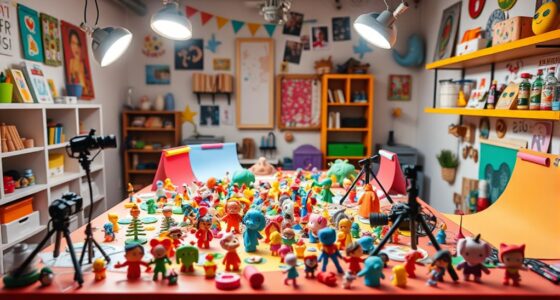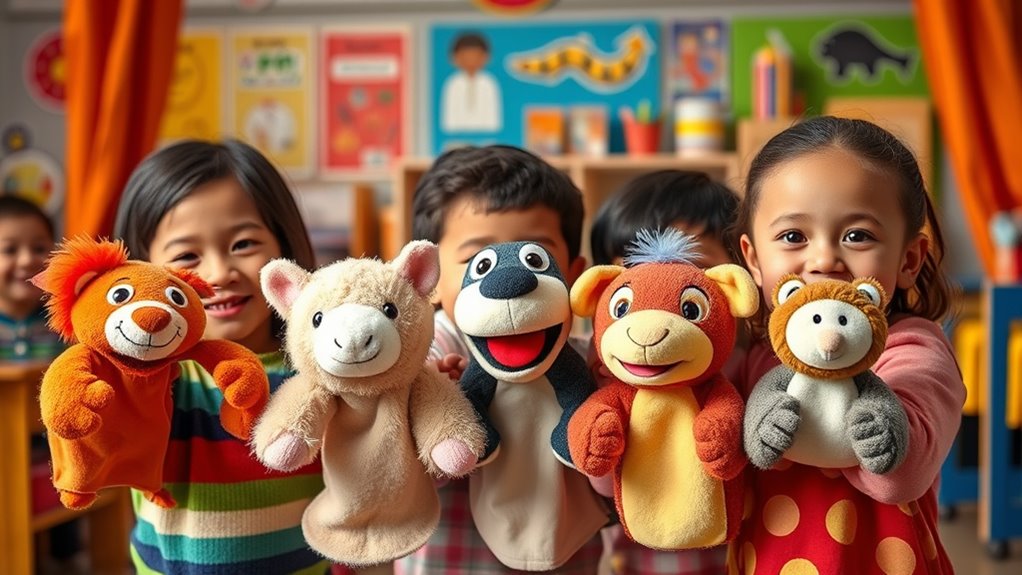

To foster social-emotional learning through puppet play, try creating puppets with vibrant colors and expressive features to capture children’s attention. Use them for role-playing scenarios that model empathy, understanding emotions, and practicing kindness. Incorporate storytelling with open-ended questions, pauses, and animated gestures to encourage emotional reflection. Engage children by involving them in making puppets and stories, making lessons relatable and memorable. Keep exploring these ideas for more effective ways to nurture emotional skills.
Key Takeaways
- Create puppet scenarios that model empathy and understanding to teach children recognizing and expressing emotions.
- Use puppets in role-playing activities to explore social skills like sharing, kindness, and conflict resolution.
- Encourage children to develop their own puppet characters and stories to foster ownership and emotional reflection.
- Incorporate puppet storytelling during routines to facilitate open conversations about feelings and perspectives.
- Use expressive puppets with vibrant colors and gestures to engage children and make emotional lessons memorable.
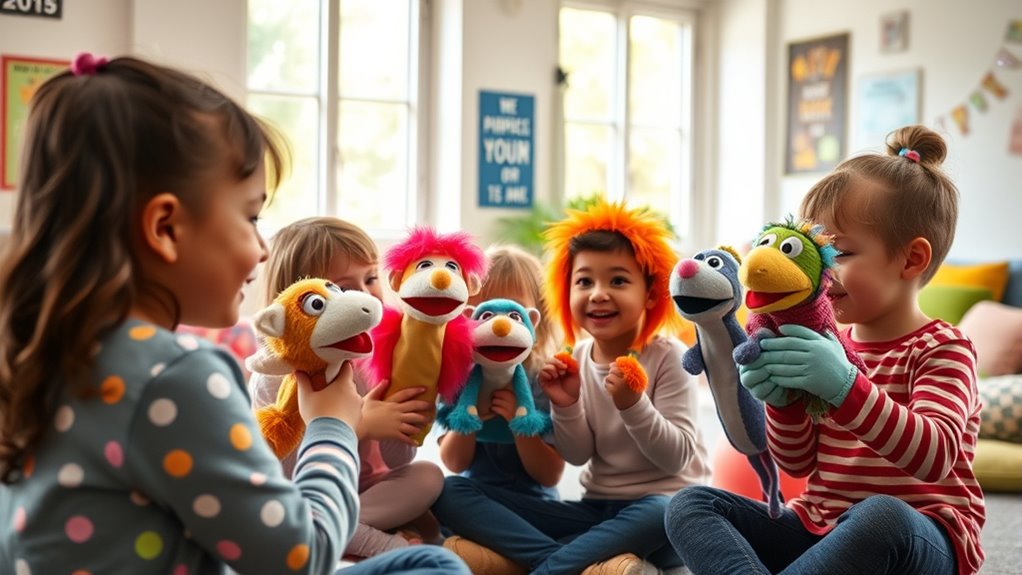
Are you looking for fun and engaging ways to bring puppets to life? Using puppets to teach social-emotional skills can be incredibly effective, especially when you master storytelling techniques that captivate your audience. To start, focus on how you craft your puppet’s personality—think about its voice, gestures, and expressions. These details help create a believable character that kids can connect with emotionally. When designing your puppets, keep in mind some puppet design tips: use vibrant colors to grab attention, select comfortable materials for easy manipulation, and ensure the puppet’s size fits well in your hand. A well-designed puppet isn’t just visually appealing; it’s also easier to animate naturally, which makes storytelling more expressive and engaging.
Once you have your puppet ready, consider how storytelling techniques can enhance social-emotional learning. Use the puppet to model empathy by role-playing scenarios where the puppet listens, understands, and responds compassionately. For instance, you can create a story where the puppet comforts a friend who’s feeling sad or celebrates someone’s achievements. This not only demonstrates positive behaviors but also invites children to reflect on their own emotions and reactions. Incorporate pauses and expressive voices to emphasize feelings, helping kids recognize and label emotions more effectively. You can also use the puppet to ask open-ended questions, encouraging children to share their thoughts and feelings, which fosters emotional awareness and communication skills. Additionally, integrating cybersecurity awareness into storytelling can introduce children to safe online behaviors in a relatable way.
Use puppets to model empathy and encourage emotional sharing through storytelling and open-ended questions.
Integrating puppet storytelling into daily routines makes social-emotional lessons more relatable and memorable. For example, during circle time, you could introduce a puppet that shares a personal story about feeling nervous or excited, prompting children to discuss similar experiences. This approach promotes self-awareness and understanding others’ perspectives. To deepen engagement, involve children in creating their own puppet characters and stories, giving them a sense of ownership and reinforcing lessons about empathy and kindness. Remember, the key is to keep your puppet lively and expressive—use different voices, facial expressions, and gestures to make the story resonate emotionally.
Incorporating puppets into your social-emotional curriculum isn’t just about entertainment; it’s a powerful tool for teaching essential life skills. By combining storytelling techniques with thoughtful puppet design tips, you create a dynamic environment where children can explore emotions safely and openly. With practice, you’ll discover how puppets can become your most effective allies in nurturing empathy, resilience, and emotional intelligence in young learners.
Frequently Asked Questions
How Can Puppets Help Children Develop Empathy?
Puppets help children develop empathy by allowing them to step into different characters’ shoes, fostering emotional understanding. As you watch children create stories and voice puppets, they learn to recognize feelings and respond compassionately. By engaging in puppet play, you encourage kids to explore diverse perspectives, which enhances their empathy development and emotional skills. This active participation makes learning about emotions both fun and impactful.
What Materials Are Safest for Puppet Creation?
Think of safe materials as the sturdy bones of your puppet, holding everything together without risking harm. You should choose non-toxic supplies like cotton, felt, or natural fabrics that breathe life into your creation safely. Avoid glues and paints with harsh chemicals, opting instead for water-based, non-toxic options. This way, your puppet stays vibrant and safe, allowing your children to explore and learn without worry, nurturing their empathy and social skills.
At What Age Is Puppet Play Most Effective?
You’ll find puppet play most effective with children aged 3 to 8, aligning with key developmental stages like language development and social skills. At this age, kids actively explore emotions and relationships through imaginative play. Younger children benefit from simple puppets, while older ones enjoy more complex stories. Engaging in puppet play at these age groups helps foster empathy, communication, and emotional understanding, making it a valuable tool for social-emotional learning.
How Do I Encourage Shy Children to Participate?
Imagine shy children as quiet seeds needing gentle sunlight. To encourage participation, you can create a safe space where they build confidence gradually. Use puppets as friendly bridges to peer interaction, allowing shy kids to express themselves indirectly. Offer roles they feel comfortable with, and praise their efforts. This nurturing approach helps them blossom, fostering social skills and easing their progression into active participation.
Can Puppet Play Be Adapted for Different Cultures?
Yes, you can adapt puppet play for different cultures by incorporating cultural storytelling and language diversity. Use puppets that reflect various cultural backgrounds and stories that highlight different traditions. This approach helps children see themselves and others in the play, fostering inclusion. You’ll engage children more effectively when they recognize familiar stories and languages, promoting empathy and understanding across cultural boundaries.
Conclusion
Now that you have these puppet play ideas, you can bring social-emotional learning to life just like a colorful tapestry woven with empathy and understanding. Imagine your students as curious explorers, steering feelings with their puppet friends as guides. These activities will help them develop essential skills, making emotional growth feel as natural as a gentle breeze. With your creativity, you’ll turn every puppet play into a meaningful journey that leaves a lasting impression on their hearts.