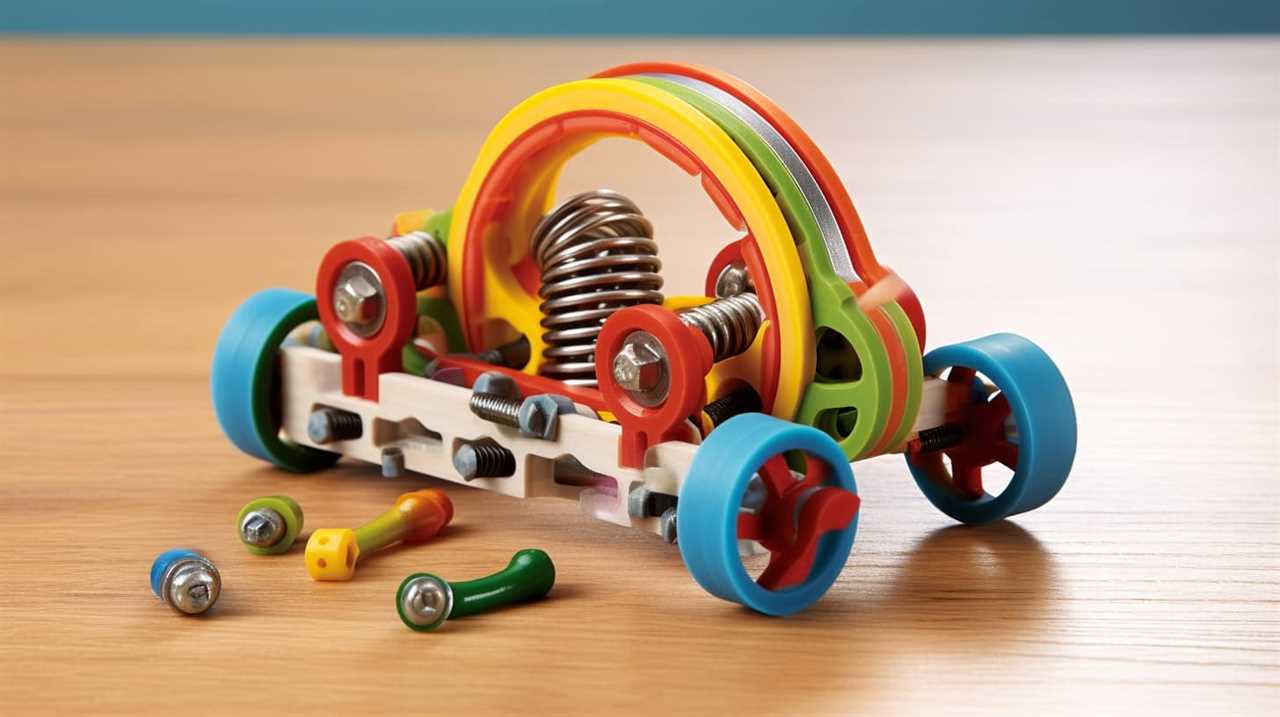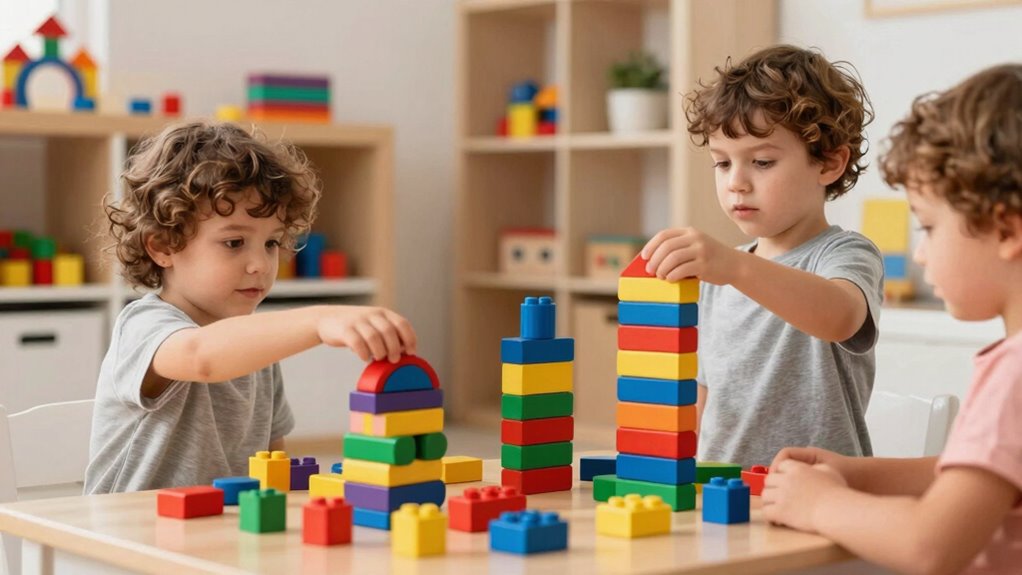
Encourage problem-solving during building play by offering a variety of materials and avoiding overly detailed instructions, which promotes exploration and experimentation. Ask open-ended questions to guide children through challenges, and support them as they test and refine their ideas. Let them experience trial and error, helping them develop resilience. Fostering a safe environment and emphasizing the process over perfection boosts confidence. Keep exploring these strategies to nurture their innovative thinking and problem-solving skills even further.

Turn the school run and nap time into listening time
- Thousands of audiobooks, podcasts and originals
- Listen on your phone, tablet or Echo — also offline
- Cancel anytime
Key Takeaways
- Provide diverse materials and open-ended challenges to inspire experimentation and creative solutions.
- Use guiding questions to prompt children’s thinking during building activities.
- Encourage trial and error to develop resilience and problem-solving persistence.
- Support children in overcoming obstacles like collapsing structures through gentle guidance.
- Foster a safe environment that emphasizes the process and learning from mistakes.
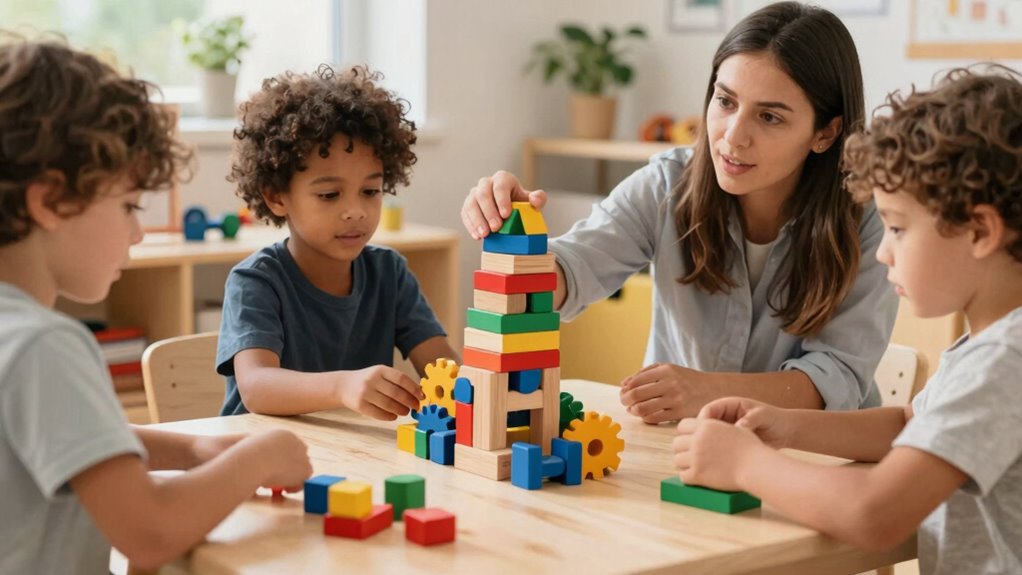
Have you ever noticed how building play naturally sparks curiosity and critical thinking in children? When kids manipulate blocks, LEGO bricks, or everyday household items to create structures, they’re engaging in more than just fun—they’re actively developing their brains. Building play is a powerful way to foster creativity enhancement because it encourages children to imagine possibilities beyond what they see in front of them. As they experiment with different shapes, sizes, and arrangements, they learn to think outside the box and develop innovative ideas. This process nurtures their cognitive development by challenging them to plan, problem-solve, and adapt as they encounter obstacles or new design challenges. Incorporating biodiversity into outdoor building activities can also expand children’s understanding of ecosystems and the importance of conservation while they play and create. Additionally, understanding environmental impact helps children see the broader effects of their actions and fosters responsible decision-making from a young age. Introducing concepts of nature-based learning during these activities further deepens their connection to the environment and enhances their problem-solving skills. To encourage problem solving through building play, start by offering a variety of materials that inspire different types of constructions. This variety keeps children engaged and pushes them to think critically about which tools or pieces work best for their goals. Resist the urge to provide overly detailed instructions; instead, let children explore their own ideas and learn through trial and error. When they face difficulties—such as a structure collapsing or pieces not fitting—guide them with questions rather than solutions. Ask things like, “What do you think you could try next?” or “How might you make it stronger?” This approach encourages independence and helps children develop resilience and perseverance, essential components of problem-solving skills. Creating opportunities for children to collaborate during building play further enhances their cognitive development. Working together, they learn to share ideas, negotiate roles, and resolve disagreements, all while tackling a common project. This social aspect deepens their understanding of planning and strategic thinking. You can facilitate this by setting open-ended challenges, such as building a bridge or a tower that can hold a certain weight, and then observing how they approach the task collectively. Providing a variety of materials and open-ended challenges also fosters their ability to adapt to different constraints and develop flexible thinking. Celebrate their efforts and ideas, emphasizing the process over the final product. This boosts their confidence, motivating them to take on increasingly complex challenges. Ultimately, the key is to be a supportive observer rather than a director. Provide a safe space and the right materials, then watch as children’s curiosity drives them to explore, experiment, and solve problems on their own. Building play isn’t just about creating structures; it’s about nurturing a mindset geared toward innovation, resilience, and cognitive growth. By fostering an environment that encourages exploration and critical thinking, you empower children to become confident, creative problem solvers ready to face future challenges.
As an affiliate, we earn on qualifying purchases.
Frequently Asked Questions
What Are the Best Types of Building Toys for Problem-Solving?
The best building toys for problem-solving foster creative collaboration and structural experimentation. Consider magnetic blocks like Magna-Tiles, which let you explore different shapes and configurations easily, encouraging teamwork. Wooden blocks or LEGO sets also promote creative collaboration by allowing you to build complex structures and test stability. These toys challenge you to experiment with structures, enhancing your problem-solving skills through hands-on exploration and collaborative design.
How Can Parents Support Independent Building Challenges?
You can support independent building challenges by providing open-ended toys that spark creative collaboration and problem solving strategies. Encourage your child to experiment with different ideas and solutions without immediate help, fostering confidence and resilience. Ask open-ended questions like “What do you think happens if you try this?” to stimulate critical thinking. Celebrate their efforts and progress, helping them develop problem-solving skills while enjoying the process of building independently.
At What Age Should Children Start Building for Problem-Solving?
You should start introducing building activities around age two, when children reach important developmental milestones like improved fine motor skills and increased curiosity. Focus on age-appropriate challenges that match their abilities, encouraging them to solve simple problems like stacking blocks or fitting pieces together. As they grow, gradually increase complexity to foster critical thinking and independence. This approach keeps building fun, engaging, and beneficial for their developmental progress.
How to Handle Frustration During Building Activities?
When frustration strikes during building activities, think of it as a storm you can navigate. You’ll help boost your child’s frustration tolerance and emotional regulation by remaining calm and encouraging them to take deep breaths. Prompt them to view setbacks as part of the learning process, fostering resilience. Celebrate small successes, and remind them that mistakes are just stepping stones, helping transform their frustration into perseverance.
Can Building Play Improve Other Cognitive Skills?
Building play can considerably boost your child’s cognitive development by enhancing their problem-solving skills and spatial awareness. When they engage in creative collaboration, they learn to share ideas and negotiate, which sharpens their social cognition. This hands-on activity encourages critical thinking, planning, and concentration, all essential for overall mental growth. By fostering these skills through building play, you help your child develop a strong foundation for future learning and creativity.
Conclusion
By embracing building play, you open the door to endless problem-solving adventures—like planting seeds that bloom into curiosity and resilience. Remember, every block you stack and challenge you face is a step toward sharper thinking and creativity. So, keep encouraging those hands-on experiments; after all, isn’t life itself just a grand, ongoing puzzle waiting to be solved? When you nurture these skills, you’re not just building structures—you’re building futures.
Fall Picks
fall essentials
As an affiliate, we earn on qualifying purchases.