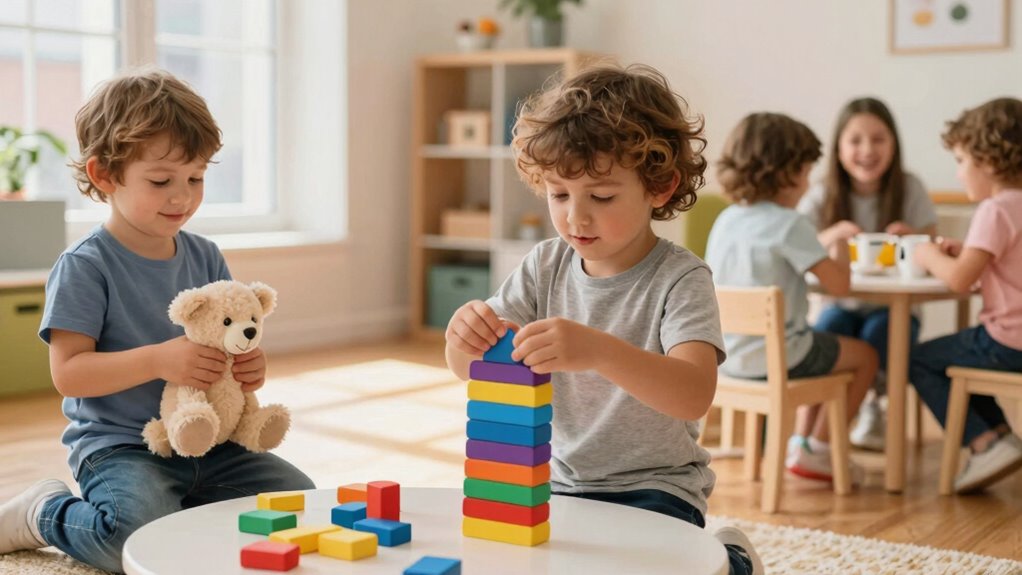

Play is essential for shaping your child’s emotional intelligence. Through pretend play, kids explore emotions, understand different perspectives, and develop empathy. Cooperative play helps them learn patience, sharing, and conflict resolution, boosting emotional regulation. Both types of play strengthen social skills and resilience. By encouraging these activities, you support their emotional growth and well-being. If you want to discover more ways play fosters emotional skills, keep exploring how nurturing play environments can make a lasting difference.

Turn the school run and nap time into listening time
- Thousands of audiobooks, podcasts and originals
- Listen on your phone, tablet or Echo — also offline
- Cancel anytime
Key Takeaways
- Pretend play allows children to explore and understand a wide range of emotions and social roles, enhancing emotional awareness.
- Cooperative play teaches negotiation, sharing, and conflict resolution, which are essential for emotional regulation.
- Engaging in various play types promotes perspective-taking and empathy through role-switching and social interactions.
- Play environments that encourage social interaction support the development of emotional skills like patience and trust.
- Overall, play fosters emotional resilience by helping children manage feelings and navigate social relationships effectively.
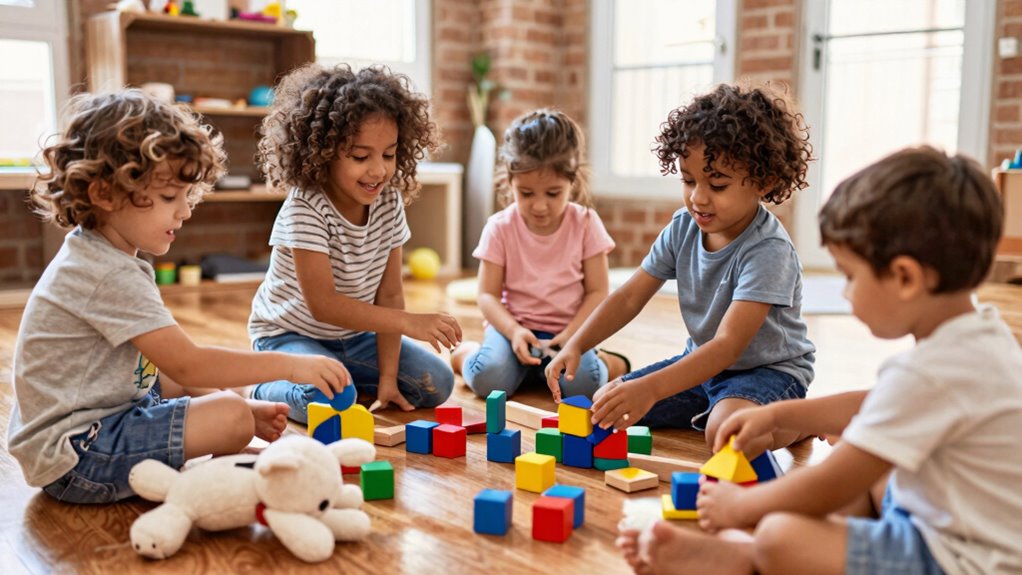
Play is more than just fun for young children; it’s an essential way they develop emotional intelligence. When you observe children engaging in pretend play, you see firsthand how they explore different emotions, scenarios, and social roles. The role of pretend play is powerful because it allows children to practice understanding others’ feelings, experiment with different perspectives, and develop empathy. For example, when a child pretends to be a doctor caring for a patient, they begin to grasp the importance of compassion and attentiveness. This kind of imaginative play helps children recognize and label emotions—both their own and those of others—laying a foundation for emotional awareness.
Cooperative play, on the other hand, dramatically impacts how children learn to navigate social relationships. When children work together toward a common goal, they experience firsthand the give-and-take that’s essential for emotional development. You’ll notice that during cooperative activities, children learn patience, sharing, and conflict resolution. These interactions teach them to manage feelings like frustration or disappointment and to celebrate successes collectively. Through cooperative play, children also develop a sense of trust and belonging, which are vital components of emotional intelligence. This shared experience shows them how their actions affect others, fostering empathy and social sensitivity.
As you watch children engage in different types of play, you’ll see how these activities intertwine to strengthen emotional skills. Pretend play often involves role-switching, which encourages children to see the world from different viewpoints, cultivating empathy. Meanwhile, cooperative play requires negotiation and communication, reinforcing emotional regulation and social awareness. The impact of cooperative play extends beyond immediate enjoyment; it’s about building skills that help children manage their emotions in real-life situations, from resolving disagreements to expressing themselves clearly. Recognizing the importance of play in emotional development can guide caregivers in creating enriching environments that support these vital skills. Understanding the role of social interactions in play can further enhance how adults facilitate emotional growth and resilience in children. Developing a comprehensive understanding of these play dynamics can help caregivers intentionally foster emotional intelligence through everyday activities. Additionally, fostering positive social experiences through play can significantly contribute to long-term emotional well-being.
Frequently Asked Questions
How Does Play Influence Emotional Regulation Development?
Play helps you develop emotional regulation by encouraging your emotional awareness and self-regulation skills. When you engage in pretend or social play, you learn to recognize your feelings and manage them appropriately. Through taking turns, sharing, and resolving conflicts, you practice self-control. This active process builds your ability to understand emotions, regulate impulses, and respond calmly, laying a foundation for healthy emotional development as you grow.
Can Unstructured Play Boost Empathy in Young Children?
Yes, unstructured play can boost empathy in young children. During free play, you observe children developing social skills and practicing perspective-taking as they navigate interactions. This open-ended environment encourages them to understand others’ feelings and viewpoints, fostering empathy naturally. By engaging in unstructured play, your child learns to share, cooperate, and respond thoughtfully, which are essential components of emotional intelligence and building meaningful social connections.
What Role Do Parents Play During Play to Enhance EI?
Did you know that children with involved parents are 30% more likely to develop strong emotional skills? Your parental involvement during play is essential; it guides children in understanding emotions and building empathy. Engaging in playful communication, like sharing feelings or interpreting actions, helps children learn emotional cues. By actively participating and encouraging open dialogue, you foster their emotional intelligence, making play a powerful tool for growth and connection.
Are Certain Types of Play More Effective for Emotional Growth?
Yes, certain types of play, like play therapy and activities focused on emotional literacy, are especially effective for emotional growth. In play therapy, children explore feelings safely, fostering understanding and self-regulation. Activities that build emotional literacy help kids identify and express emotions clearly. When you encourage these types of play, you support your child’s ability to understand themselves and others, boosting their emotional intelligence naturally and meaningfully.
How Does Cultural Background Affect Play’s Impact on EI?
Your cultural background influences how play impacts emotional intelligence by shaping cultural norms around play and social interactions. Play diversity varies across cultures, affecting the emotional skills children develop. In some cultures, collaborative play fosters empathy, while others emphasize individual achievement. By understanding these cultural nuances, you can better support your child’s emotional growth, encouraging diverse play experiences that resonate with your cultural values and promote emotional understanding.
Conclusion
As you watch children play, remember it’s more than just fun—it’s their foundation for emotional intelligence. In those simple games, they learn empathy and self-control, skills that shape their future. Yet, amidst the laughter and chaos, a quiet vulnerability remains, reminding you that nurturing their play isn’t just about entertainment; it’s about guiding their hearts. Play is their language of growth, a delicate dance between joy and understanding that lasts a lifetime.
Fall Picks
fall essentials
As an affiliate, we earn on qualifying purchases.