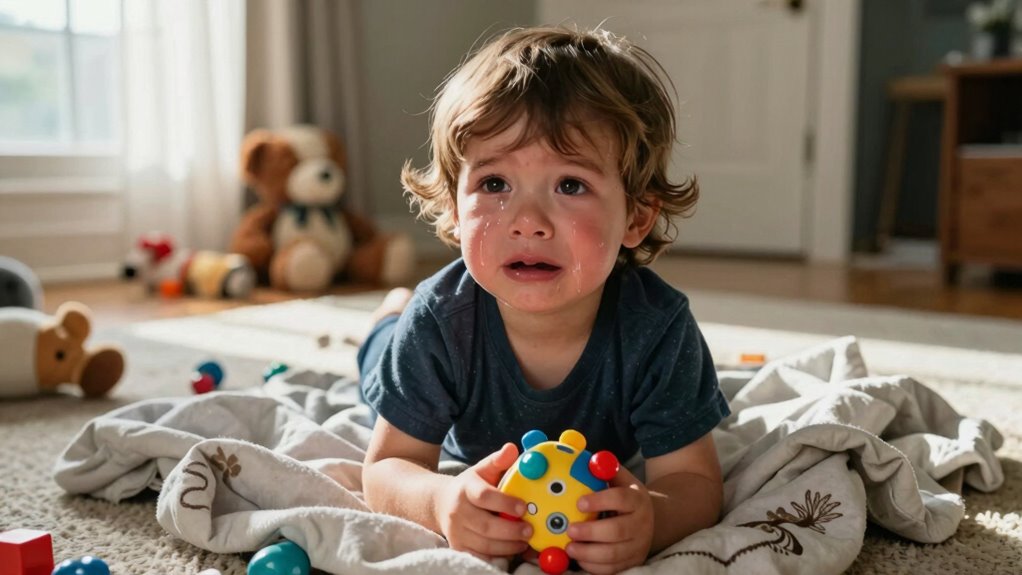

If playtime often ends in tears, try creating a safe space for feelings by encouraging kids to share their emotions and practicing active listening. Clearly explain rules and boundaries with calm, consistent language to help children understand expectations without feeling punished. Tailor your approach based on their age and emotional development, and model empathy during interactions. Supporting children’s emotional needs helps reduce tears and promotes positive social skills—stick with us to discover more useful strategies.
Key Takeaways
- Establish clear, consistent boundaries and explain reasons to prevent misunderstandings and conflicts.
- Use active listening and empathy to acknowledge feelings and address emotional needs early.
- Incorporate age-appropriate guidance to help children develop emotional regulation skills.
- Model positive social behaviors and empathy during play to encourage cooperative interactions.
- End play sessions with a calming activity to help children transition and reduce tears.
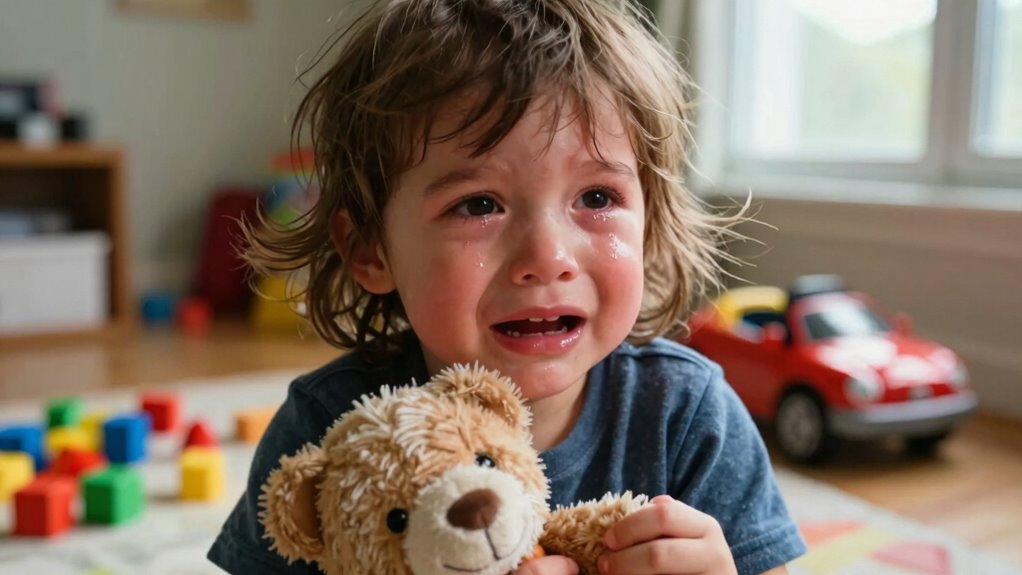
Playtime should be a joyful experience, but when it consistently ends in tears, it can leave both you and your child feeling frustrated. You might wonder what’s going wrong or how to make playtime more enjoyable for everyone. One of the first steps is to create an environment where your child feels safe to share their feelings. When they’re upset or frustrated, encourage them to express what’s bothering them. Use simple words and active listening to show you’re genuinely interested. For example, if your child throws a toy in anger, instead of reacting harshly, ask, “Are you upset because the game isn’t going how you wanted?” This helps your child understand that their feelings are significant and that it’s okay to share them.
Setting boundaries is another essential strategy. Children need clear limits to feel secure, especially during play. If they start to hit, grab toys aggressively, or refuse to share, calmly remind them of the rules. Explain why these boundaries matter—like “We share toys so everyone can have fun” or “Hitting hurts others, and we don’t do that.” Consistent boundaries help your child learn self-control and understand what’s acceptable. It’s crucial to enforce these boundaries gently but firmly, so they don’t feel overwhelmed or punished. When boundaries are clear, your child is more likely to respect them and feel secure in knowing what to expect. Additionally, understanding child development stages can help you tailor your approach to their emotional needs. Recognizing the different emotional regulation skills children develop at various ages can guide you in providing appropriate support during play. Moreover, fostering an environment that encourages empathy promotes positive social interactions and reduces conflicts during playtime. Developing your awareness of emotional needs at different ages can also help you respond more effectively to your child’s feelings and reactions.
emotional regulation toys for children
As an affiliate, we earn on qualifying purchases.
As an affiliate, we earn on qualifying purchases.
Frequently Asked Questions
How Can I Tell if My Child Is Overwhelmed During Play?
You can tell your child’s overwhelmed during play if they show signs of emotional regulation struggles or sensory sensitivities. Look for cues like crying, tantrums, or withdrawal. They might cover their ears, squirm, or become irritable. Notice if they seem overstimulated or unable to focus. Supporting their sensory needs and teaching emotional regulation techniques can help them manage overwhelm, making playtime more enjoyable and less stressful for both of you.
Are There Specific Toys That Reduce Tears During Play?
Surprisingly, the toys that reduce tears aren’t the loud, flashing ones but simple, sensory options like soft plushies or textured stress balls. These toy alternatives encourage calmness and focus. You can enhance this with calming strategies like quiet time or gentle music. By choosing soothing toys and creating a peaceful environment, you help your child shift from play to calm, making tears less likely to appear when playtime ends.
How Do I Handle Tears That Occur Outside of Playtime?
When tears happen outside of playtime, you should focus on emotional regulation and comfort strategies. Stay calm, validate your child’s feelings, and use gentle words to help them express their emotions. Offer physical comfort like hugs, or distraction techniques to shift their focus. Teaching them to identify and name emotions can also empower them to manage tears independently over time. Consistency and patience help them develop healthier emotional responses.
What Should I Avoid Doing When My Child Becomes Upset?
When your child becomes upset, avoid using harsh discipline strategies or dismissing their feelings. Instead, focus on helping them develop emotional regulation by staying calm yourself and validating their emotions. Don’t punish or scold, as this can worsen their distress. Instead, offer comfort and guidance, encouraging them to express their feelings. This approach teaches healthy ways to manage emotions, fostering a trusting environment where they feel safe to share their feelings.
When Should I Seek Professional Help for Playtime Issues?
You should seek professional help when your child’s emotional regulation struggles persist beyond typical developmental milestones or if playtime consistently triggers intense tears or frustration. Ironically, it’s often the times you think everything’s fine that underlying issues reveal themselves. If your child’s reactions seem disproportionate or hinder their social growth, consulting a specialist can provide guidance, ensuring they develop healthy emotional skills and enjoy playtime without distress.
Conclusion
Remember, playtime is meant to be joyful, not tearful. When it ends in tears, it’s a sign to pause and reflect, turning frustration into understanding. Like a storm that clears to reveal a calm sky, setbacks can lead to growth and stronger bonds. Embrace these moments as opportunities to teach patience and empathy, knowing that the tears are just the rain before the rainbow—promising brighter, happier times ahead for both of you.