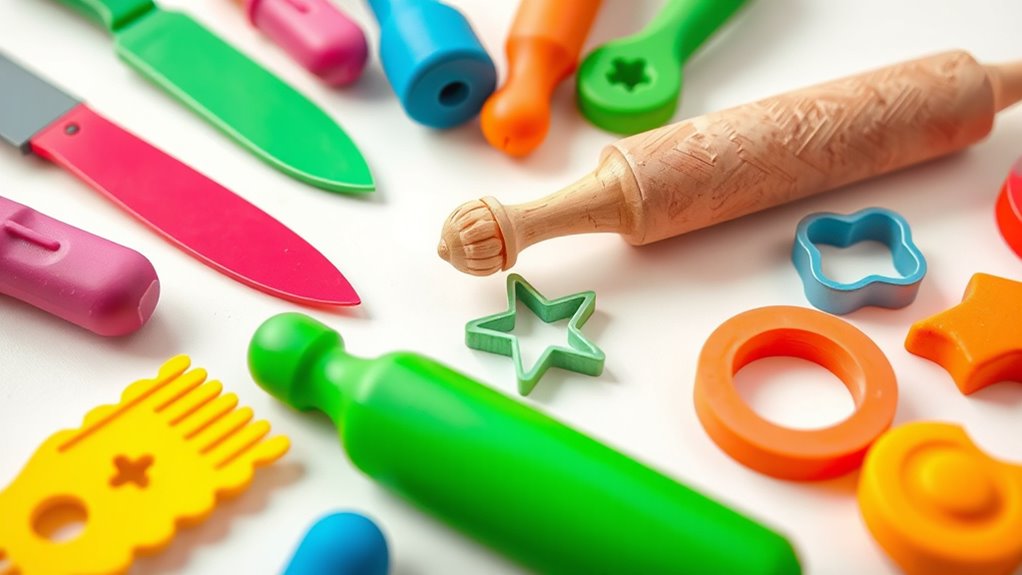

To strengthen your hands during playdough activities, try using household items like plastic knives, rolling pins, and cookie cutters to encourage pinching, pressing, and slicing. Incorporate textured tools such as silicone molds or pasta cutters to boost sensory engagement and fine motor control. Using various tools helps develop hand strength, coordination, and dexterity while making playtime fun and educational. Keep exploring different tools to discover even more ways to promote hand development and skill.
Key Takeaways
- Use household items like plastic knives, rolling pins, and cookie cutters to promote cutting, pressing, and shaping skills.
- Incorporate textured tools such as stamps and molds to enhance tactile stimulation and finger strength.
- Encourage controlled manipulation with tools that require pinching, pressing, or stretching.
- Introduce varied textures and temperatures to develop tactile awareness and sensory integration.
- Design activities that involve pattern creation and problem-solving to improve fine motor coordination and dexterity.

If you’re looking to make playdough activities more fun and creative, having the right tools can make all the difference. Not only do the right tools enhance the play experience, but they also support important developmental skills. When you introduce various tools into playdough sessions, you’re helping to build fine motor skills, which are essential for tasks like writing, buttoning, and tying shoelaces. These tools encourage precise hand movements, strengthening hand muscles and improving dexterity. Plus, incorporating different textures and shapes into sensory play makes the experience more engaging and helps children develop their tactile awareness.
Using simple household items can be surprisingly effective. For example, plastic knives, rolling pins, and cookie cutters allow kids to manipulate the dough with different grips and motions. These tools require children to apply pressure, pinch, and stretch, which contributes to strengthening their hand muscles. As they press cutters into the dough or roll it out, they refine their pincer grasp and improve hand-eye coordination. These activities also promote sensory play, as children feel the different textures and temperatures of the tools and dough, enhancing their sensory processing skills.
Specialized playdough tools can take this further. Silicone molds, textured stamps, or even pasta cutters add variety and challenge. When kids press stamps or shapes into the dough, they practice controlled movements that boost fine motor precision. Sensory play is amplified when different textures are introduced—rough, smooth, bumpy—stimulating the senses and encouraging exploration. These tools can also be themed, such as animal-shaped cutters or alphabet stamps, making the experience educational as well as developmental.
Encouraging children to create patterns or build structures with tools fosters problem-solving and planning skills, alongside fine motor development. You can set up stations with different tools and challenge kids to make specific shapes or scenes, which promotes focus and coordination. As they manipulate the playdough with tools, they’re practicing controlled, deliberate movements that are key to developing steady hands. This consistent practice is crucial for handwriting readiness and other fine motor tasks.
Incorporating a variety of tools into playdough activities keeps sensory play fresh and exciting. It’s not just about fun—it’s about fostering growth in hand strength, coordination, and tactile awareness. When you choose the right tools, you give children a rich, engaging environment to develop these essential skills naturally and enjoyably. Whether you’re at home or in a classroom, these simple additions can make your playdough sessions both more productive and more enjoyable, setting a strong foundation for future learning and development. Additionally, using specialized tools that are designed for sensory engagement can further enhance these developmental benefits.
Frequently Asked Questions
Can Playdough Tools Help Improve Fine Motor Skills?
Yes, playdough tools can help improve fine motor skills by enhancing sensory development and boosting creativity. When you use tools like rollers, cutters, and sculpting tools, you engage your hands in precise movements that strengthen muscles and coordination. This hands-on activity encourages tactile exploration, which is vital for sensory development. Plus, experimenting with different shapes and designs sparks creativity, making playdough a fun way to develop fine motor skills.
Are Playdough Tools Safe for All Ages?
Playdough tools are generally safe for most ages when you choose age-appropriate tools. Always consider playdough safety by avoiding small parts that could be a choking hazard for young children. For toddlers, opt for chunky, easy-to-grasp tools, while older kids can handle more detailed ones. Supervise play to ensure safety and prevent misuse. With proper selection and supervision, playdough tools can be a fun, safe activity for nearly everyone.
How Often Should Children Use Playdough Tools for Best Results?
For ideal playdough routines, you should encourage children to use playdough tools about 3-4 times a week. This playdough tool frequency helps strengthen their hands without causing fatigue. Keep sessions short, around 10-15 minutes, to maintain engagement and prevent overuse. Regular, moderate use ensures children develop fine motor skills while enjoying the creative process, making playtime both fun and beneficial for their hand strength.
Can Playdough Tools Be Reused or Recycled?
Yes, playdough tools can be reused or recycled. You can explore recycling options like repurposing them into art projects or donating to schools and community centers. Look for eco-friendly materials when choosing new tools, ensuring they’re sustainable and safe for the environment. Reusing and recycling playdough tools not only extends their life but also promotes eco-conscious habits, teaching children the importance of caring for the planet while having fun.
What Are Some Inexpensive DIY Playdough Tool Ideas?
You can make inexpensive DIY playdough tools using homemade cutters from household items like bottle caps, cookie cutters, or plastic utensils. Repurpose old items such as plastic knives, straws, or foam shapes to create fun, functional tools. These ideas are budget-friendly, easy to craft, and perfect for strengthening hands, all while encouraging creativity. Plus, you’ll enjoy the satisfaction of turning everyday objects into playful, educational tools.
Conclusion
Get ready to turn your playdough sessions into the ultimate hand-strengthening adventure! These tools will turbocharge your child’s grip, making even the tiniest fingers as strong as superheroes’ fists—seriously, they’ll be able to crush cans with just a pinch! So grab these ideas, release your creativity, and watch those little hands grow stronger by the minute. Who knew playdough could be the secret weapon to building hands so mighty, they’ll conquer the world?