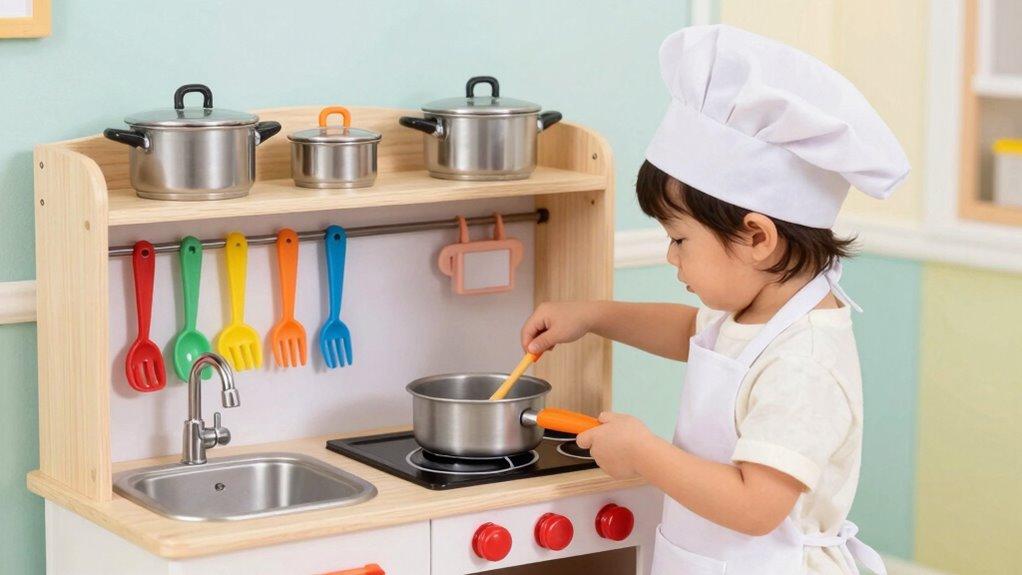

Play kitchens encourage real-world role play by immersing you in scenarios where you can pretend to cook, serve, and manage a household or restaurant. As you explore utensils, ingredients, and roles, you develop social skills, cultural awareness, and problem-solving abilities. These toys help you practice safe and responsible behaviors while fostering creativity and emotional understanding. If you keep exploring, you’ll discover even more ways these kitchens support your growth and learning.

Turn the school run and nap time into listening time
- Thousands of audiobooks, podcasts and originals
- Listen on your phone, tablet or Echo — also offline
- Cancel anytime
Key Takeaways
- Play kitchens simulate real cooking environments, fostering authentic role-playing experiences.
- They promote understanding of social roles such as chefs, parents, or restaurant owners.
- Children practice adult behaviors like cooking, serving, and cleaning, enhancing their social skills.
- Cultural diversity in play kitchens encourages exploration of different cuisines and traditions.
- Safe and realistic props help children emulate real-world culinary and social interactions.
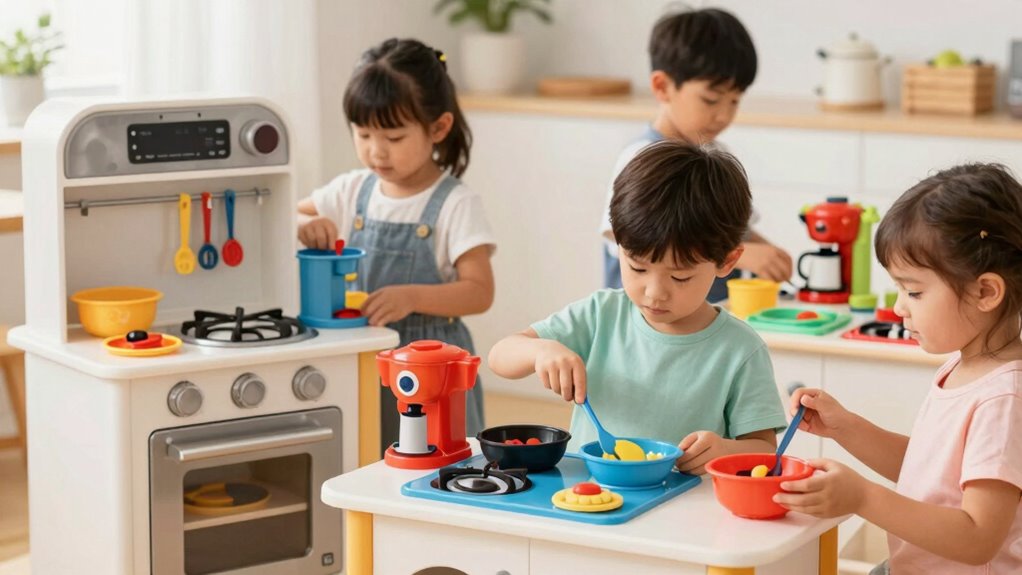
Have you ever watched a child enthusiastically pretend to cook dinner in their play kitchen? It’s a lively scene that sparks imagination and helps them explore the world around them. When kids engage with play kitchens, they’re not just having fun—they’re practicing important life skills and understanding social roles. These toys serve as miniature stages where children mimic real-world activities, fostering cognitive growth and emotional development. Play kitchens encourage role play by allowing children to step into the shoes of chefs, parents, or restaurant owners, giving them a safe space to experiment with adult behaviors and responsibilities.
One of the most valuable aspects of play kitchens is how they reflect cultural diversity. When you include a variety of utensils, ingredients, and props from different cultures, you broaden your child’s understanding of the world. They learn to appreciate different cuisines and traditions, which promotes inclusivity and respect from an early age. This exposure helps children recognize that the world is rich with diverse customs and practices, making their role play more meaningful and educational. Incorporating multicultural elements into play kitchens also encourages conversations about ethnicity, language, and cultural practices, fostering a sense of curiosity and acceptance.
Safety considerations are essential when choosing or designing a play kitchen. You want to guarantee that the toys are sturdy and free from sharp edges, small parts, or toxic materials. Checking labels for non-toxic paints and safe-for-child materials is vital. It’s equally important to supervise playtime, especially with younger children who might put small accessories in their mouths. Regularly inspecting the play kitchen for damage or loose parts helps maintain a safe environment. Additionally, teaching children about safety rules during role play—such as not touching hot surfaces or handling utensils carefully—reinforces important safety habits that can translate into real life. Understanding the importance of biodiversity in maintaining a healthy planet can also be integrated into role play scenarios, encouraging children to appreciate the natural world around them. Exploring how ecological balance supports sustainable living can further deepen their awareness of environmental preservation during play. Recognizing the role of environmental preservation during play can further enhance their awareness of sustainability and ecological responsibility.
As an affiliate, we earn on qualifying purchases.
Frequently Asked Questions
What Safety Features Should I Look for in a Play Kitchen?
You should look for a play kitchen with safety certification to guarantee it meets safety standards. Check that it’s made from non-toxic materials, so your child isn’t exposed to harmful chemicals during play. Look for rounded edges and sturdy construction to prevent injuries. Also, make sure small parts are avoided or securely attached, reducing choking hazards. Prioritize safety features to give you peace of mind while your child explores their imaginative cooking adventures.
At What Age Is a Play Kitchen Most Beneficial?
You’ll find a play kitchen most beneficial when your child is around 2 to 4 years old—it’s like opening a world of limitless imagination! During this stage, they thrive on imaginative cooking and social interaction, which help develop their creativity and social skills. Play kitchens foster role-playing, allowing your child to mimic real-life scenarios, making this age range perfect for nurturing their growth and learning through fun, hands-on experiences.
How Can I Customize a Play Kitchen for My Child’s Interests?
You can customize a play kitchen for your child’s interests by adding themed accessories, like pretend food, utensils, or dishware that reflect their favorite cuisines or characters. DIY modifications, such as painting or attaching decorative elements, further personalize the space. You might also include personalized labels or artwork to make it uniquely theirs, encouraging imaginative play and making their pretend kitchen feel more engaging and tailored to their passions.
Are There Eco-Friendly Options for Play Kitchens?
Yes, there are eco-friendly options for play kitchens. Did you know that over 80% of parents prefer sustainable toys? You can find play kitchens made from sustainable materials like bamboo or recycled wood, which are durable and eco-friendly. Look for options using eco-friendly paints that contain no harmful chemicals. Choosing these environmentally conscious kitchens helps protect the planet and provides safe, imaginative play for your child.
How Long Do Children Typically Play With a Play Kitchen?
You’ll find children typically play with a play kitchen for about 30 minutes to an hour, depending on their age and interest. During this time, they engage in imaginative play, pretending to cook, serve, and clean. This activity helps develop social skills as they often involve friends or family members, encouraging cooperation and communication. Play kitchens provide a fun, interactive way for kids to explore real-world roles and enhance their social development.
Conclusion
In the end, play kitchens are like tiny training grounds for real life, turning imagination into practice. As you watch your child pretend to cook and serve, you see them developing skills and confidence that will serve them well later. Just like a seed grows into a mighty tree, these playful moments nurture creativity and social skills. Embrace these kitchen adventures—they’re a delicious recipe for growth and learning.
Halloween Picks
halloween
As an affiliate, we earn on qualifying purchases.