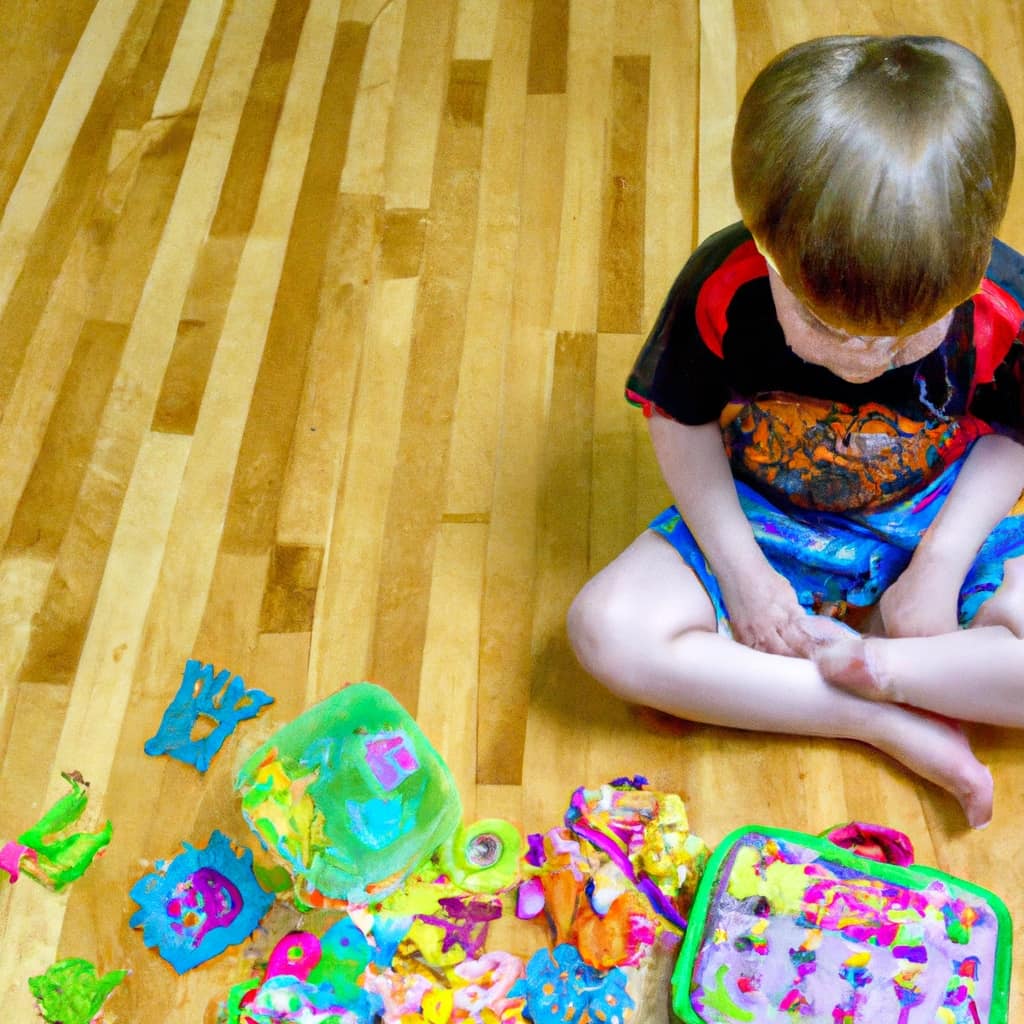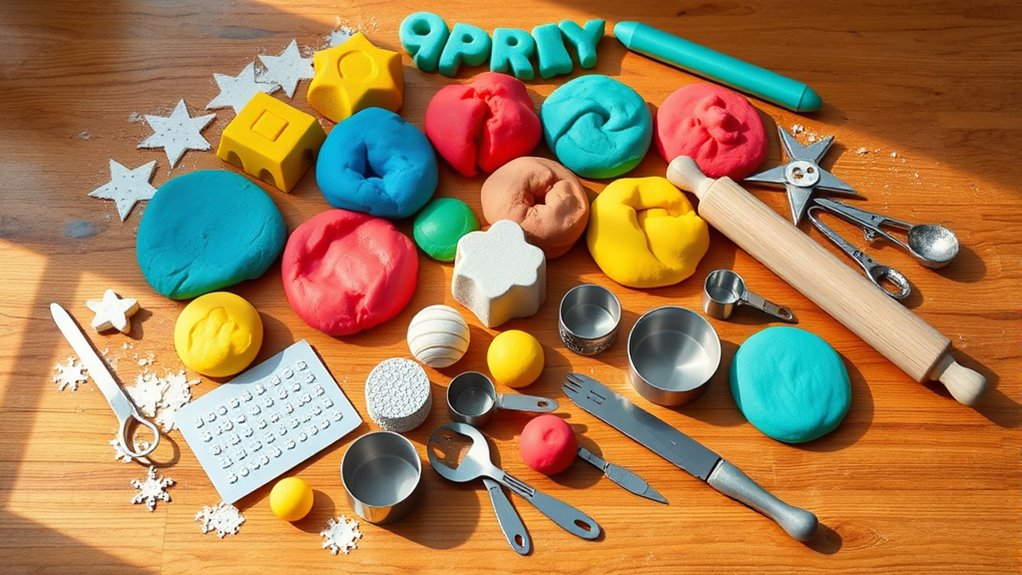

Play dough toolkits designed to foster fine-motor precision help children develop their hand strength, coordination, and dexterity through creative activities like pinching, molding, and shaping. They often include tools such as cutters, rollers, and sculpting sticks, promoting sensory exploration and problem-solving skills. These kits not only boost artistic expression but also prepare kids for future tasks like handwriting. If you keep exploring, you’ll discover more ways these kits support your child’s growth and development.
Key Takeaways
- Play dough toolkits with cutters, rollers, and sculpting sticks enhance fine motor skills through precise manipulation and shaping activities.
- These kits promote hand-eye coordination and muscle strengthening vital for writing and daily tasks.
- Incorporating varied textures and tools supports sensory exploration that improves dexterity and motor control.
- Creative sculpting exercises in toolkits foster problem-solving skills and artistic development alongside motor precision.
- Engaging with diverse tools encourages independence and confidence in mastering detailed motor movements.
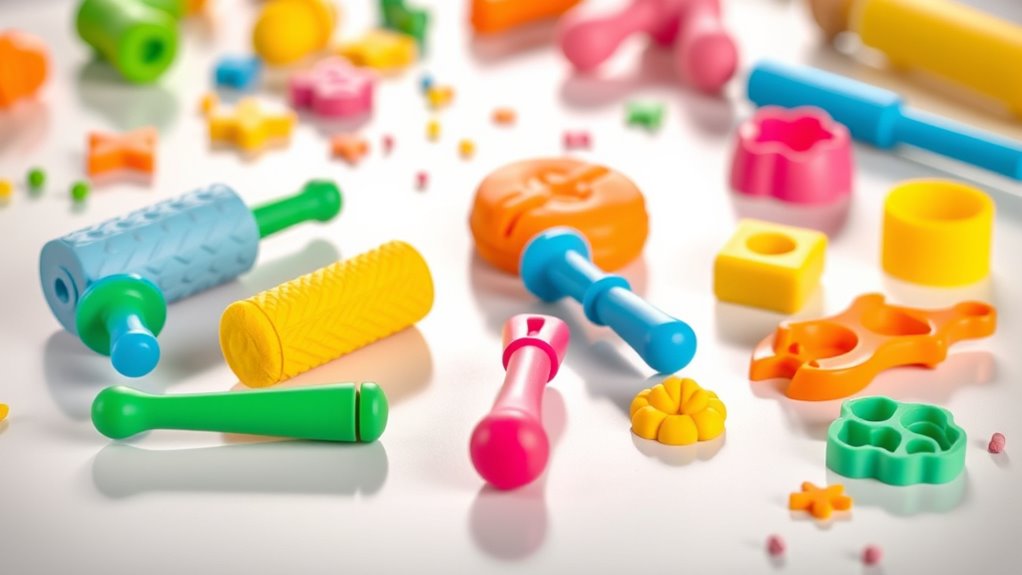
Play dough toolkits are a fantastic way to inspire creativity and develop fine motor skills in children. When you give a child a well-stocked toolkit, you’re opening the door to a world of sensory development and endless creative possibilities. As they manipulate the dough, pinch, roll, and shape, they’re not just having fun—they’re honing their hand-eye coordination and strengthening the small muscles in their fingers and hands. This activity naturally encourages sensory exploration, as kids feel the texture of the dough, notice how it stretches or squishes, and experiment with colors and shapes. All of this sensory input is crucial for their overall development, helping them build a better understanding of the world around them. Incorporating educational tools into play dough activities can further enhance learning and skill-building.
The beauty of play dough toolkits lies in their ability to boost creativity enhancement. When children are free to create whatever they imagine—whether it’s a tiny animal, a food item, or an intricate sculpture—they’re engaging their creative muscles. These kits typically come with a variety of tools like cutters, rollers, molds, and sculpting sticks, which serve as extensions of their imagination. As they explore different techniques and combine colors, they learn problem-solving skills and develop their artistic sense. The act of designing and creating helps children express their feelings and ideas, fostering confidence and independence. Plus, since there are no rules or right answers, kids can experiment freely, making each session a unique experience that encourages innovative thinking.
Using play dough toolkits also supports the development of fine motor precision. The small movements involved in pinching tiny pieces, squeezing cutters, and molding detailed shapes help refine dexterity. These activities are especially important for preschoolers, as they prepare children for handwriting, buttoning clothes, and other daily tasks that require fine control. When you watch a child carefully cut out a star or carefully roll a snake of dough, you’re witnessing their progress in mastering these essential skills. Additionally, the repetitive nature of shaping and molding enhances hand strength and coordination, which are foundational for more complex motor tasks later on.
Frequently Asked Questions
What Age Is Appropriate for Play Dough Toolkits?
When considering age appropriateness, you should look at your child’s developmental milestones. Play dough toolkits are generally suitable for children aged 2 and up, as they help develop fine-motor skills and creativity. Younger children might need supervision to prevent choking hazards, while older kids benefit from more complex tools. Always choose kits that match your child’s age and skill level to make certain of safe and engaging play.
How Do Play Dough Tools Enhance Fine-Motor Skills?
You might wonder how play dough tools boost fine-motor skills. They enhance sensory development by providing tactile experiences, strengthen hand muscles through squeezing, rolling, and shaping, and improve coordination with precise movements. Using these tools encourages active engagement, helping children develop hand strength, refine motor control, and build confidence in tasks requiring delicate manipulation. Ultimately, play dough tools make learning fun while fostering essential fine-motor skills for future success.
Are There Allergy Concerns With Certain Play Dough Ingredients?
You might wonder if allergenic ingredients in play dough pose concerns. Some traditional play dough contains allergens like wheat, gluten, or artificial fragrances, which can cause reactions. To stay safe, look for products with safe alternatives, such as gluten-free or hypoallergenic options. Always check labels for allergenic ingredients, and consider making homemade dough with natural, non-toxic ingredients to minimize allergy risks and guarantee safe fun.
How Often Should Play Dough Toolkits Be Sanitized?
You should sanitize play dough toolkits regularly to maintain proper hygiene protocols. Aim for a sanitation frequency of at least once a week, especially if multiple children use the same set. After each use, wipe down tools with disinfectant wipes or a damp cloth with soap and water. Consistent sanitation helps prevent the spread of germs and keeps the play environment safe and clean.
Can Play Dough Toolkits Be Customized for Specific Learning Needs?
They say “the proof of the pudding is in the eating,” and the same applies to learning tools. Yes, play dough kits can be customized to meet specific needs by incorporating adaptive tools that support sensory integration. You can add textured tools or modify shapes to align with individual learning styles, helping children develop fine-motor skills and sensory awareness effectively. Customization makes playtime both fun and educational.
Conclusion
Just like Michelangelo shaped masterpieces from humble clay, you can nurture your child’s fine-motor skills with the right play dough toolkit. These kits turn everyday play into an artful journey of growth and development. By encouraging creativity and precision, you’re shaping not only their tiny fingers but also their confidence and imagination. So, grab a toolkit today and watch your little artist create, explore, and flourish—transforming simple dough into a world of endless possibilities.