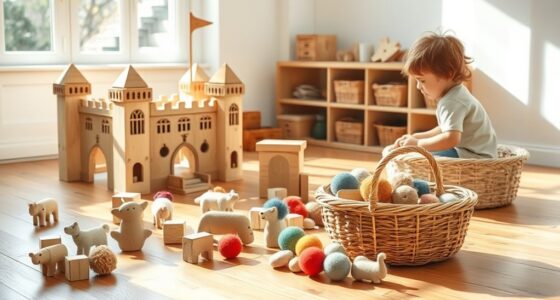
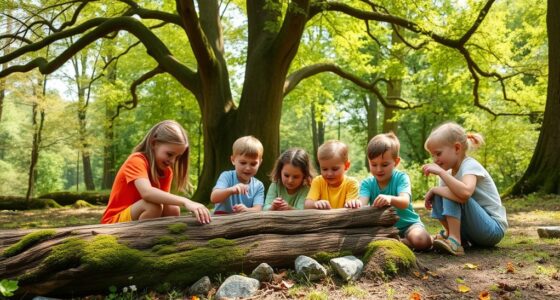
Using natural materials in play helps create safer, more engaging environments where children can safely explore their senses and develop their creativity. These materials are eco-friendly, durable, and free from harmful chemicals, promoting both health and environmental responsibility. They inspire imaginative play and problem-solving while supporting sensory development. As you consider these benefits, you’ll discover even more ways natural elements foster growth, exploration, and a meaningful connection to nature.
Key Takeaways
- Natural materials support eco-friendly play environments by being sustainably sourced and reducing environmental impact.
- They stimulate multiple senses through varied textures, scents, and shapes, enhancing sensory development.
- Natural elements foster creativity and durability, allowing for open-ended, imaginative play in outdoor settings.
- They are safer for children, free from harmful chemicals, and minimize allergic reactions and skin irritations.
- Using natural materials promotes environmental awareness and sustainable practices in play spaces.

Natural materials have become a popular choice for creating engaging and safe play environments. When you select natural elements like wood, stone, or organic fabrics, you’re not only enhancing the aesthetic appeal but also making a conscious decision to support sustainable sourcing. This means that the materials are harvested responsibly, ensuring that ecosystems are preserved and resources are replenished. By choosing sustainably sourced materials, you help reduce environmental impact and promote a more eco-friendly approach to play spaces. This commitment to sustainability resonates with children and parents alike, fostering awareness of environmental responsibility from a young age.
Choosing natural, sustainably sourced materials supports eco-friendly play environments and fosters environmental awareness from a young age.
In addition to the environmental benefits, natural materials *essentially* contribute to sensory development. When children interact with diverse textures, shapes, and natural scents, they engage multiple senses, which is *crucial* for healthy brain growth. For example, the rough surface of a wooden block or the soft, warm feel of cotton fabric stimulates touch, helping children refine their tactile skills. These sensory experiences are often richer and more varied than those offered by synthetic alternatives, *therefore* encouraging curiosity and exploration. Natural materials also introduce subtle variations in color, pattern, and texture, which challenge children to observe and differentiate sensory inputs more keenly.
Playing with natural materials encourages kids to use their imagination and problem-solving skills. Unlike plastic toys with fixed functions, natural objects can serve multiple purposes—imagine a sturdy branch becoming a bridge, a rock transforming into a stepping stone, or a piece of driftwood turning into a sculpture. This open-ended play fosters creativity and independence, empowering children to invent their own stories and scenarios. *Moreover*, natural elements tend to be more durable and weather-resistant, making them ideal for outdoor environments where children can enjoy unstructured play in all seasons.
Safety also plays a *key* role in why natural materials matter. They are generally free from harmful chemicals and toxins often found in synthetic toys or surfaces, reducing health risks. Their natural composition minimizes the likelihood of allergic reactions and skin irritations, giving parents peace of mind. Additionally, natural materials tend to age gracefully, developing a charming patina over time that adds character to the play space without requiring constant replacement. Furthermore, using natural materials aligns with the growing trend of integrating sustainable practices into everyday life and play environments, reinforcing eco-conscious values.
In essence, choosing natural materials for play environments aligns with fostering sustainable practices, enhancing sensory development, and ensuring safety. When you prioritize these elements, you’re creating a space that not only nurtures children’s growth and imagination but also respects the planet. This thoughtful approach to play benefits everyone—children, families, and the environment—by promoting a more mindful, enriching way to learn and explore.
Frequently Asked Questions
Are Natural Materials Safer Than Synthetic Toys?
Yes, natural materials are generally safer than synthetic toys because they undergo durability testing to guarantee they withstand play without breaking apart or causing harm. You should also consider material sourcing, as natural materials are often sustainably sourced and contain fewer harmful chemicals. This makes them less likely to cause allergic reactions or toxicity, giving you peace of mind that your child’s play environment is safer and healthier.
How Do Natural Materials Support Child Development?
Imagine opening your child’s full potential through play. Natural materials support child development by fostering sensory exploration, allowing them to feel different textures and shapes that boost their sensory skills. They also enhance creativity, inspiring open-ended play and imaginative thinking. By choosing natural materials, you give your child a richer, more engaging experience that promotes growth in multiple areas, setting the stage for confident learning and discovery.
Can Natural Materials Be Reused or Recycled Easily?
Yes, natural materials can be reused or recycled easily, offering significant sustainability benefits. Their material durability means they withstand repeated use, reducing waste. You can repurpose items like wooden blocks or cloth fabrics for different activities, encouraging creativity and environmental responsibility. Reusing natural materials not only minimizes landfill waste but also teaches children the importance of caring for the planet, making play both fun and eco-friendly.
Do Natural Materials Require Special Maintenance or Cleaning?
Natural materials typically require simple cleaning routines and minimal maintenance. You should regularly wipe them with a damp cloth and avoid harsh chemicals to keep them in good shape. For maintenance requirements, check for any signs of wear or damage, and treat them with natural oils if needed to preserve their quality. Overall, natural materials are low-maintenance, making them an excellent choice for safe, sustainable play.
Are Natural Materials More Environmentally Friendly Than Plastic?
They say “you are what you consume,” and natural materials are generally more environmentally friendly than plastic. They have a lower environmental impact, often being biodegradable and sourced sustainably, which adds to their sustainability benefits. By choosing natural materials for play, you help reduce plastic pollution and support eco-friendly practices, making a positive difference for the planet and future generations.
Conclusion
Just as Mother Nature crafted timeless wonders, incorporating natural materials into play connects you and your children to something greater. These materials foster creativity, curiosity, and a sense of calm, much like the serenity of a forest or the wonder of a seashell. By choosing natural, you’re nurturing more than just playtime—you’re cultivating a deeper bond with the world around you, reminding us all of the enduring power and beauty that nature provides, just like an ancient story waiting to be rediscovered.