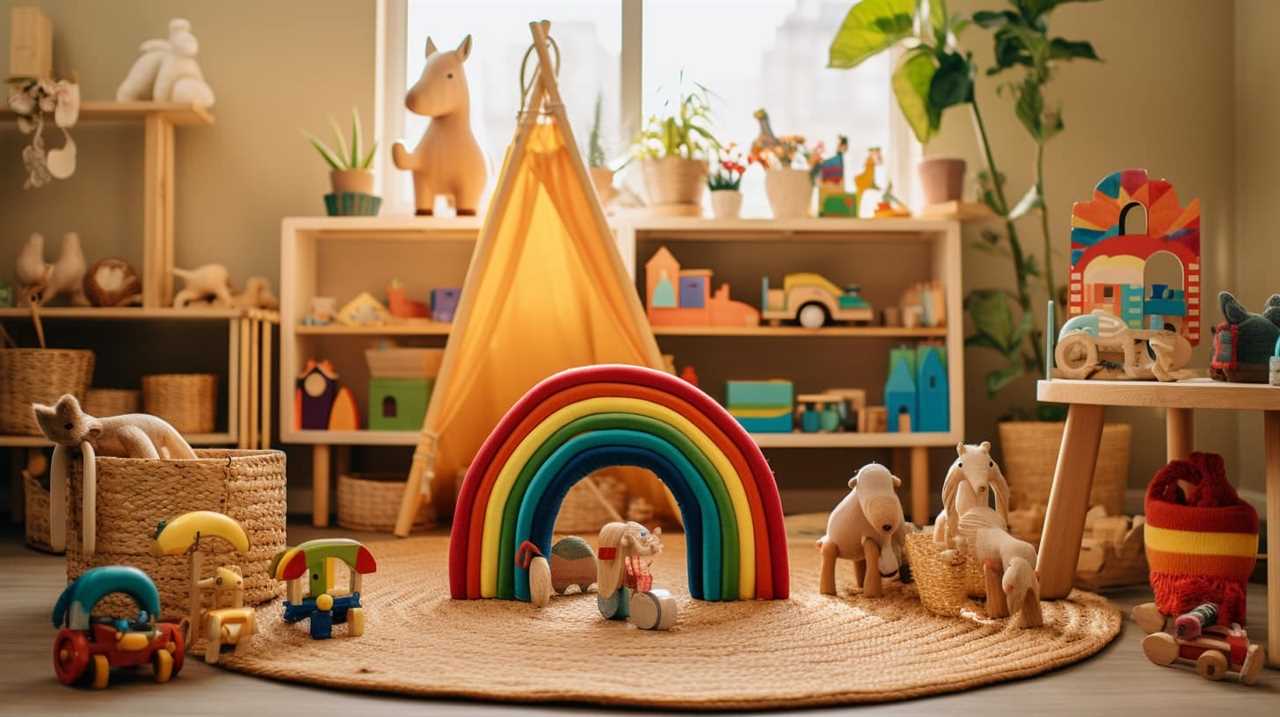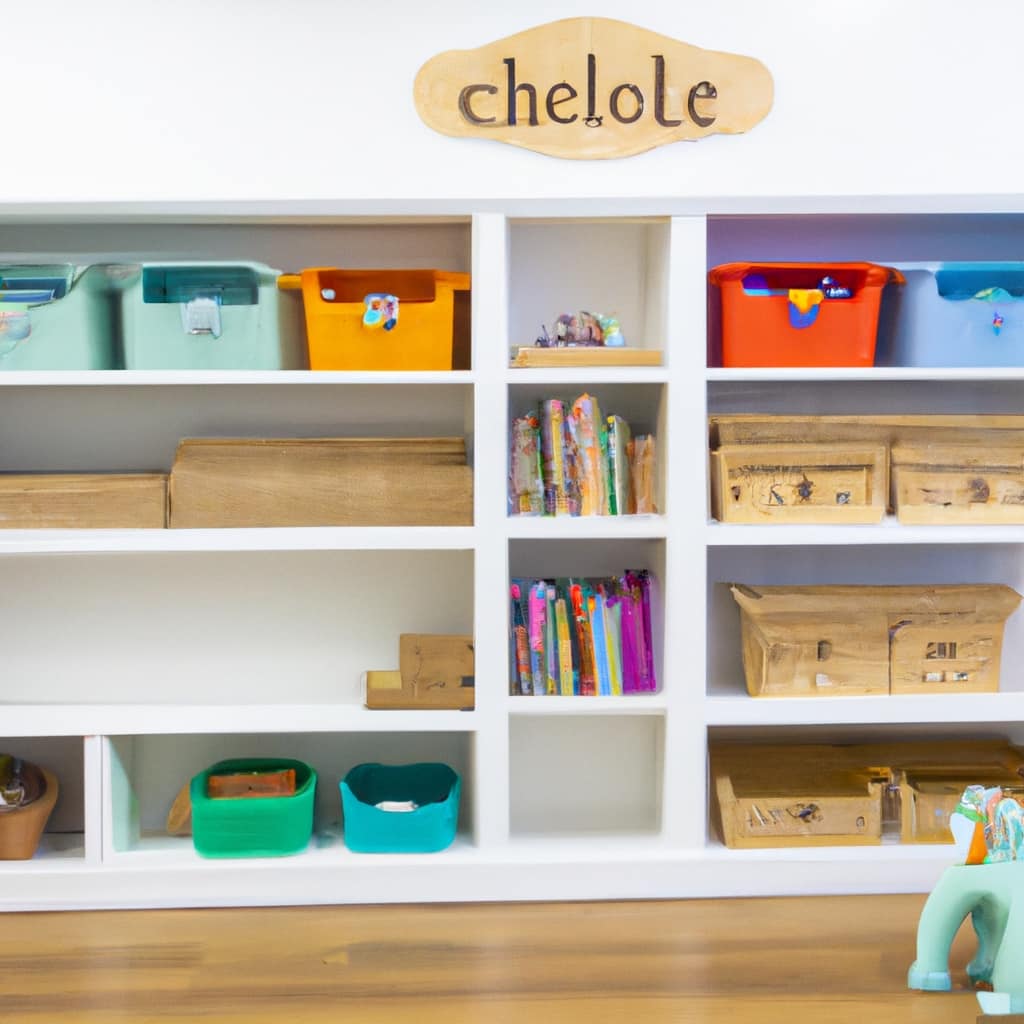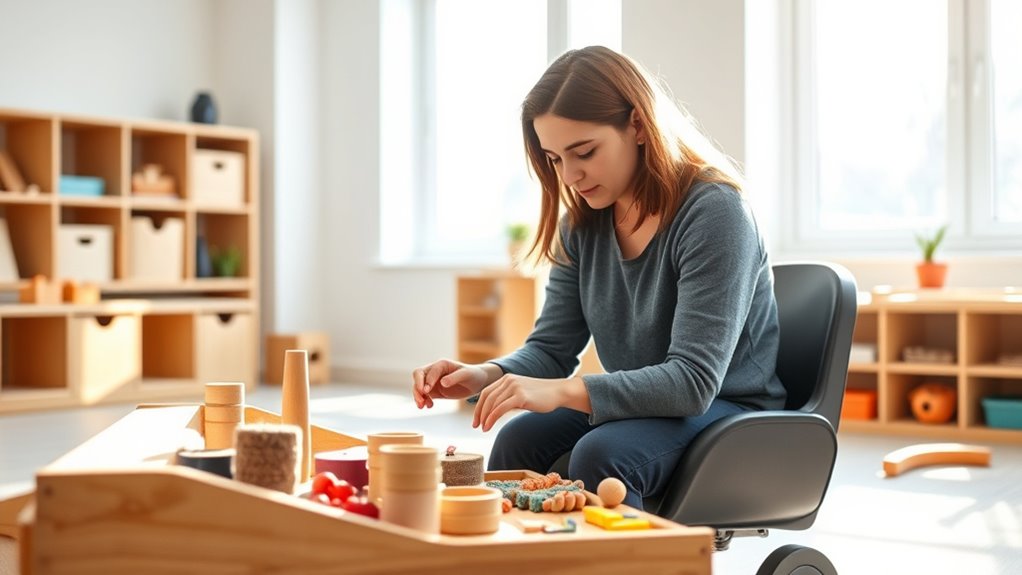
In a Montessori setting for children with special needs, adaptations focus on respecting each child’s unique abilities and sensory profiles. You’ll find sensory-rich activities that engage multiple senses, helping children process information better. Peer collaboration encourages social skills while classroom spaces are designed for comfort and accessibility. These thoughtful modifications foster independence, confidence, and inclusion. If you explore further, you’ll discover how these strategies create a nurturing environment where every child can thrive and feel valued.
Key Takeaways
- Implement sensory-rich activities tailored to individual needs to promote engagement and sensory processing.
- Design classroom spaces with calming areas and adaptable materials to support sensory regulation.
- Foster peer collaboration to enhance social skills and provide positive role models.
- Customize activities and materials to respect each child’s unique learning style and sensory profile.
- Create an inclusive environment that encourages independence, confidence, and meaningful participation for all children.
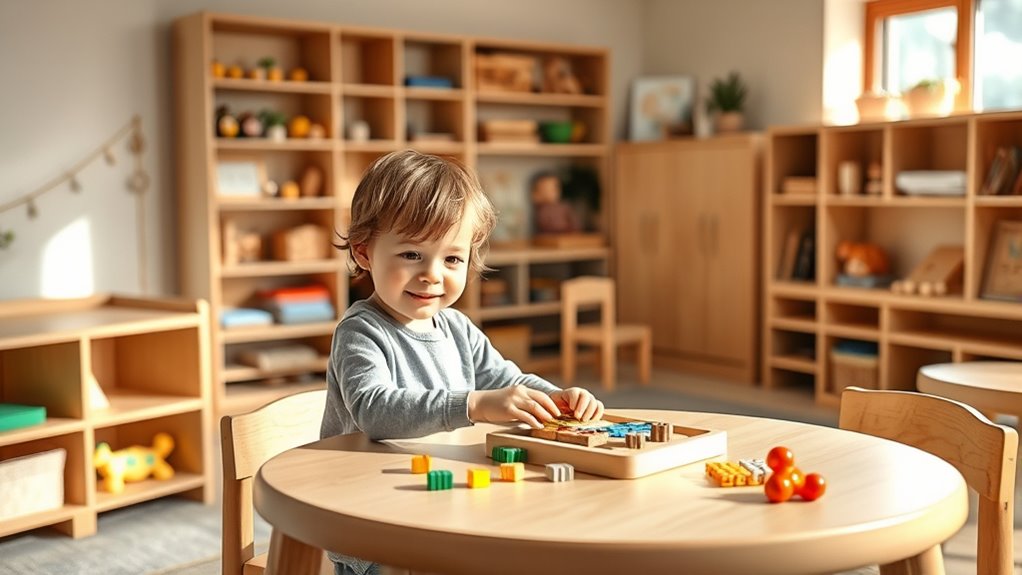
Have you ever wondered how the Montessori approach supports children with special needs? One of the key ways is through sensory integration, which is fundamental to helping children process and respond to sensory information effectively. In a Montessori setting, you’ll find carefully designed activities that engage multiple senses, allowing children to explore and make sense of their environment at their own pace. These activities often involve tactile materials, such as textured objects or sensory trays, which help children develop better body awareness and improve their ability to filter sensory input. By gradually exposing children to sensory-rich experiences, Montessori environments foster calmness, focus, and confidence, empowering children to navigate their world more independently.
Peer collaboration also plays a crucial role in supporting children with special needs within the Montessori framework. When children work together on tasks, they learn from one another, build social skills, and develop a sense of community. This collaborative approach encourages children to share their unique strengths and learn patience, empathy, and communication skills. As children engage in peer collaboration, they often feel less isolated and more motivated to participate, which can be especially beneficial for those with social or emotional challenges. Montessori classrooms are intentionally designed to promote respectful interactions, and teachers guide children to support each other, creating a nurturing environment where everyone’s abilities are valued.
In an adapted Montessori setting, you’ll notice that activities are tailored to meet individual needs, making sensory integration and peer collaboration more accessible. For example, children with sensory processing differences might have a designated space with calming materials or alternative activities that suit their sensory profile. Likewise, children who need extra social support might be paired with peers who can model appropriate interactions, fostering positive relationships and enhancing social development. These adaptations respect each child’s unique learning style and pace, allowing them to participate meaningfully in the classroom community.
Frequently Asked Questions
How Do Montessori Materials Accommodate Children With Sensory Processing Disorders?
You can support children with sensory processing disorders by offering Montessori materials that promote sensory integration through tactile activities. These materials are designed to be soft, textured, or manipulable, allowing children to explore and regulate their sensory input comfortably. By providing a variety of tactile options, you help children develop focus, calmness, and self-awareness, making learning more accessible and respectful of their sensory needs.
Are Montessori Methods Suitable for Children With Severe Cognitive Impairments?
Yes, Montessori methods can be suitable for children with severe cognitive impairments. You’ll find that adaptive communication tools help these children express themselves, fostering independence. The hands-on materials support motor skill development and engage their senses, making learning accessible. By tailoring activities to each child’s abilities and needs, you create an inclusive environment that encourages growth, confidence, and a love for learning.
How Can Parents Adapt Montessori at Home for Special Needs Children?
You can adapt Montessori at home for your special needs child by using parent strategies that create an adaptive environment. Simplify activities, use tactile and visual materials, and break tasks into manageable steps. Let your child explore at their own pace, offering gentle guidance. Focus on their interests and strengths, providing consistent routines. This approach respects their individual needs while fostering independence and confidence in a supportive setting.
What Training Do Montessori Educators Need for Inclusive Classrooms?
You need inclusive training and specialized workshops to work effectively in inclusive classrooms. These programs help you understand diverse needs and adapt the Montessori approach accordingly. By participating in ongoing professional development, you learn strategies to support all children, including those with special needs. This training enhances your ability to create a respectful, accommodating environment where every child can thrive and feel valued.
How Does Montessori Support Social-Emotional Development in Special Needs Children?
You see a child’s face light up as they engage in peer interactions, and suddenly, you realize how Montessori nurtures emotional regulation in special needs children. Through carefully designed activities, they learn to express feelings and manage emotions confidently. This environment fosters trust and respect, empowering children to build meaningful social connections. Montessori’s hands-on approach creates a safe space where emotional growth naturally blossoms, transforming challenges into opportunities for connection.
Conclusion
By embracing adaptations that respect each child’s unique needs, you create an inclusive Montessori environment that fosters growth and independence. Did you know that children with special needs often show significant progress when supported with tailored approaches? This highlights the importance of flexible, respectful strategies. When you prioritize the child’s dignity and individuality, you reveal their potential and promote a truly empowering learning experience for all.