
To use mirrors in creative play invitations, set them at eye level on tables or walls for easy exploration. Encourage children to experiment with movements, facial expressions, and light reflections, or create self-portraits and costumes. Incorporate art, dance, or storytelling activities that make use of mirror reflections to boost imagination and coordination. By exploring these ideas, you’ll discover how mirrors foster self-awareness, curiosity, and creativity—keep going to uncover even more engaging ways to inspire play.
Key Takeaways
- Incorporate mirrors into themed activities like costume shows or art projects to inspire imagination and self-expression.
- Position mirrors at eye level to encourage children to explore movements, facial expressions, and environment reflections.
- Use mirrors to teach concepts like symmetry, contrast, and cause-and-effect through interactive experiments.
- Integrate mirror-based movement or dance activities to promote coordination and visual awareness.
- Create inviting play scenarios that combine mirrors with natural or artistic elements to deepen engagement and creativity.

Have you ever considered how mirrors can transform your child’s playtime into a sphere of endless creativity? Reflective surfaces like mirrors are more than just tools for checking appearances; they serve as gateways to visual exploration. When you introduce mirrors into play invitations, you’re inviting children to see the world—and themselves—in new and fascinating ways. This simple addition sparks curiosity and encourages kids to investigate their environment through a different lens, fostering both cognitive and emotional growth.
Mirrors unlock endless creativity, inspiring children to explore, imagine, and grow through visual discovery and self-awareness.
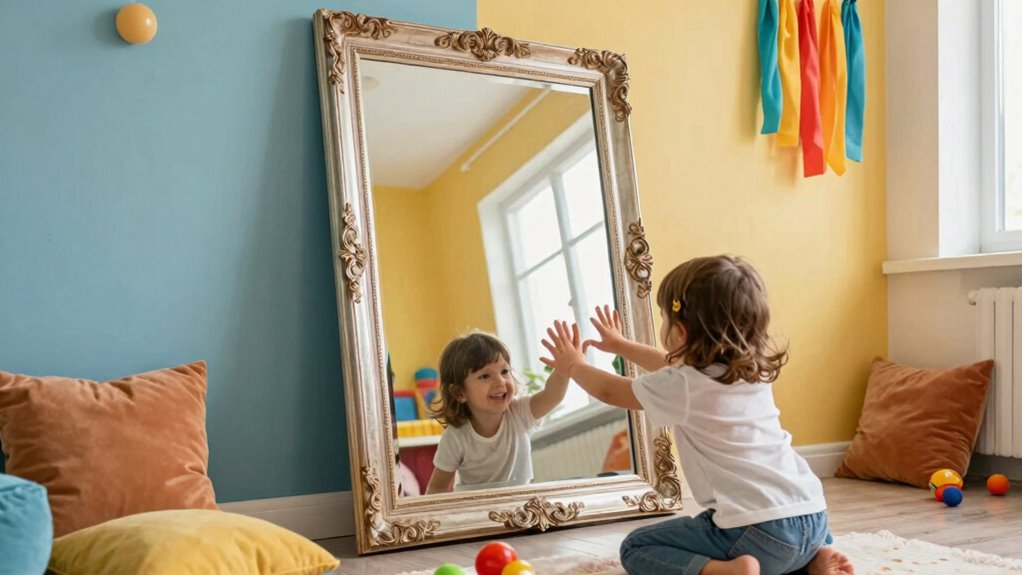
Start by positioning a mirror where your child’s natural curiosity can lead them to explore freely. For example, set one at eye level on a table or against a wall, allowing your child to observe their movements, facial expressions, and the way light interacts with the surface. As they look into the mirror, they begin to notice details they might otherwise overlook—how their hair moves, the colors they wear, or the way shadows fall across their face. This process of visual exploration deepens their understanding of their own body and surroundings, building confidence and self-awareness.
You can also enhance play invitations by creating scenarios that involve mirrors. For instance, provide costume pieces or art supplies, encouraging your child to create a “costume show” or a “self-portrait” in the mirror. As they experiment with different looks or expressions, they learn about symmetry, contrast, and the relationship between their actions and reflections. These activities promote creativity while subtly developing fine motor skills and observation abilities. Engaging with mirrors in these ways can also support early visual perception skills, which are essential for many areas of learning and development.
Incorporate mirrors into interactive activities like mirror painting or dance. For example, invite your child to mimic your movements or create their own dance routines while watching their reflection. This kind of visual feedback helps them understand movement and coordination, making the activity engaging and educational. The mirror becomes a partner in their exploration, making the experience immersive and dynamic. Additionally, mirrors can serve as tools for fostering an awareness of biodiversity by reflecting natural elements or outdoor scenes, connecting children to the environment around them.
As an affiliate, we earn on qualifying purchases.
Frequently Asked Questions
What Safety Precautions Should I Take With Mirrors During Play?
You should follow safety guidelines by ensuring mirrors are securely placed to prevent tipping or falling. Position mirrors at appropriate heights to avoid accidents, especially with young children. Use shatterproof or acrylic mirrors instead of glass, and regularly check for cracks or damage. Keep the play area clear of sharp edges around mirror frames, and supervise children closely during play. Proper mirror placement reduces risks and creates a safe, inspiring environment for creative exploration.
How Do I Clean and Maintain Mirrors Used in Play Invitations?
Did you know that a clean mirror reflection can boost creativity by 20%? To keep your mirrors in play invitations clear, regularly use a soft cloth and a gentle glass cleaner or a mixture of water and vinegar. Avoid abrasive materials that can scratch the surface. Proper cleaning techniques guarantee your mirrors stay shiny and safe, encouraging endless imaginative exploration during play.
Are There Specific Types of Mirrors Best Suited for Creative Play?
You should choose mirrors with reflective surfaces that are durable and safe for children. Opt for round or irregular-shaped mirrors, as these shapes stimulate curiosity and imaginative play. Avoid sharp-edged or fragile mirrors to guarantee safety. The best mirrors for creative play invitations are shatterproof, non-toxic, and easy to clean, so you can maintain a safe environment while encouraging exploration and self-discovery through diverse reflective surfaces and shapes.
How Can Mirrors Be Incorporated Into Outdoor Play Activities?
You can incorporate mirrors into outdoor play by using reflective surfaces like handheld mirrors or mirror panels to create engaging activities. Encourage children to explore outdoor reflections, observing how light and surroundings change. Set up mirror scavenger hunts or reflection art stations, allowing kids to experiment with angles and perspectives. This sparks curiosity and creativity, helping children develop visual awareness while enjoying the natural environment through the intriguing lens of reflective surfaces.
What Age Groups Benefit Most From Mirror-Based Play Invitations?
You’ll find that children aged 2 to 6 benefit most from mirror-based play invitations. Mirror symbolism helps them explore identity and emotions, while reflective learning encourages self-awareness and social skills. As they observe their movements and expressions, they develop better understanding of themselves and others. This age group naturally engages with mirrors, making it a powerful tool for fostering curiosity, empathy, and self-expression through creative play.
Conclusion
By incorporating mirrors into your creative play invitations, you open a doorway to endless self-discovery and imagination. Think of mirrors as magic portals, reflecting not just your child’s image but their inner world—inviting them to explore, express, and transform. With each reflection, they craft their own story, turning everyday moments into shimmering adventures. Embrace this tool, and watch their creativity blossom like a garden blooming in the sunlight.