Measurement activities belong in play because they help children explore concepts like size, weight, and volume in fun, hands-on ways. Using digital tools and sensors makes these activities engaging and provides instant feedback, boosting confidence and understanding. Playful measurement fosters curiosity, critical thinking, and problem-solving skills, forming a strong math and science foundation. Keep exploring this approach further to discover how it can unleash even more learning opportunities for children.
Key Takeaways
- Measurement during play helps children intuitively understand concepts like size, weight, and volume.
- Play-based measurement activities make learning engaging and enjoyable, fostering positive attitudes toward math.
- Sensor tools enhance interactive, real-time feedback, making abstract measurement concepts concrete and accessible.
- Measurement play develops critical thinking, observation, and problem-solving skills essential for cognitive growth.
- Inclusive, dynamic activities using sensors support diverse learners, encouraging active participation and curiosity.
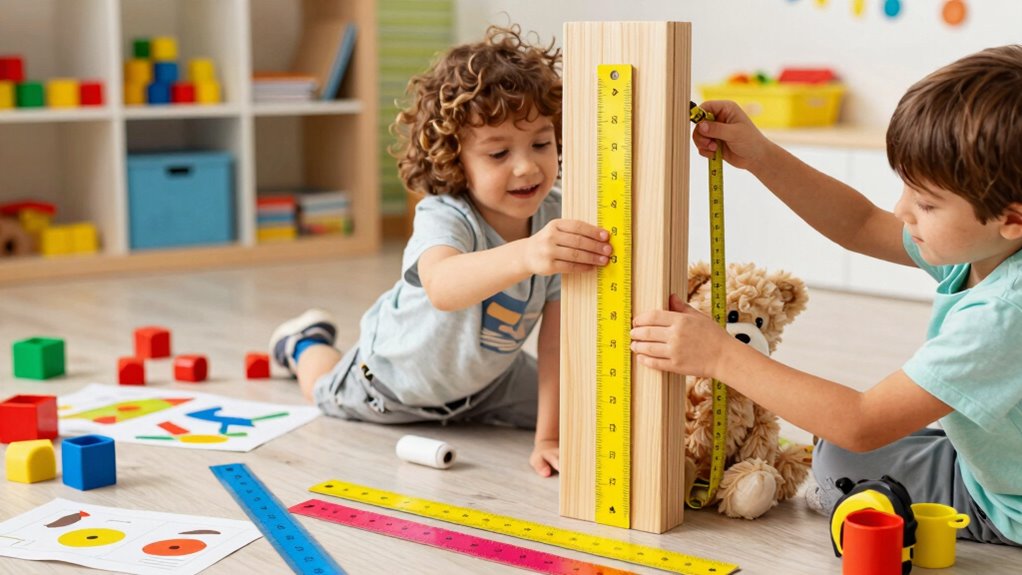
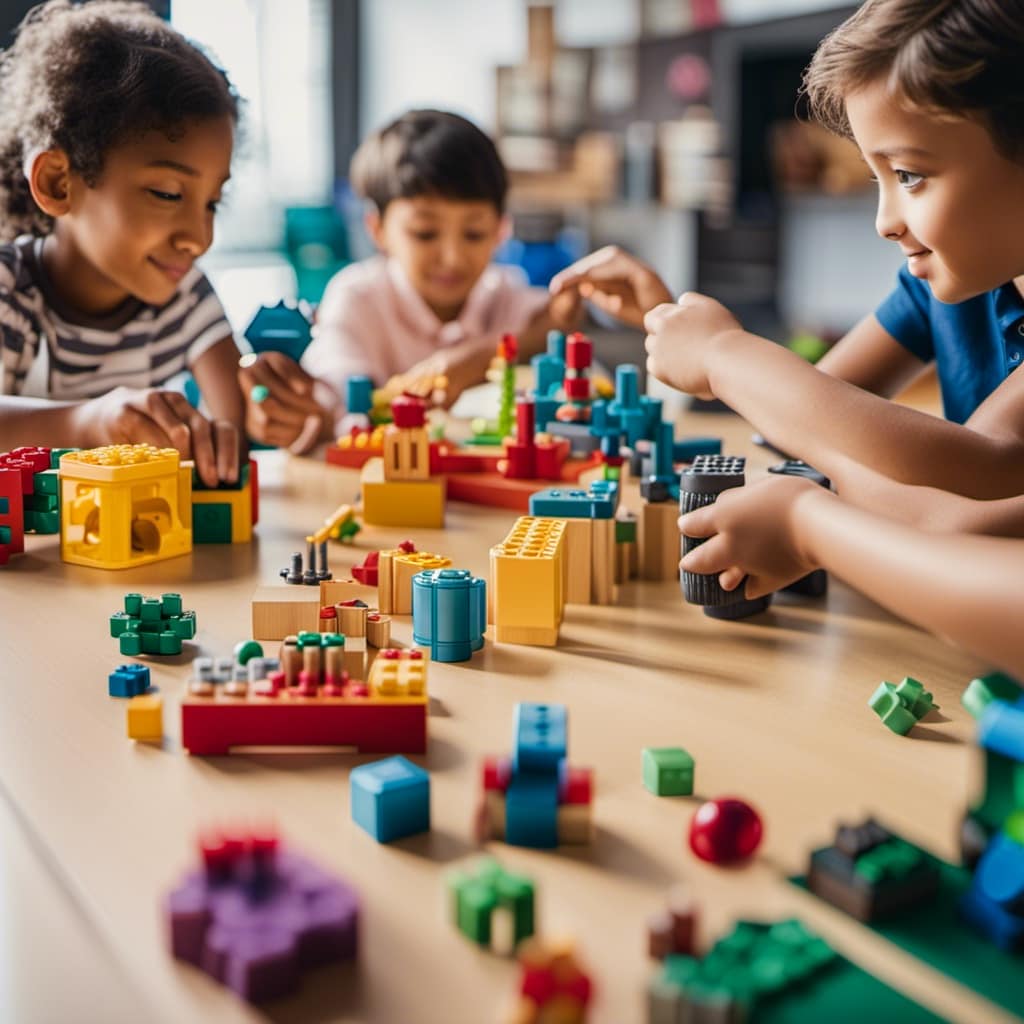
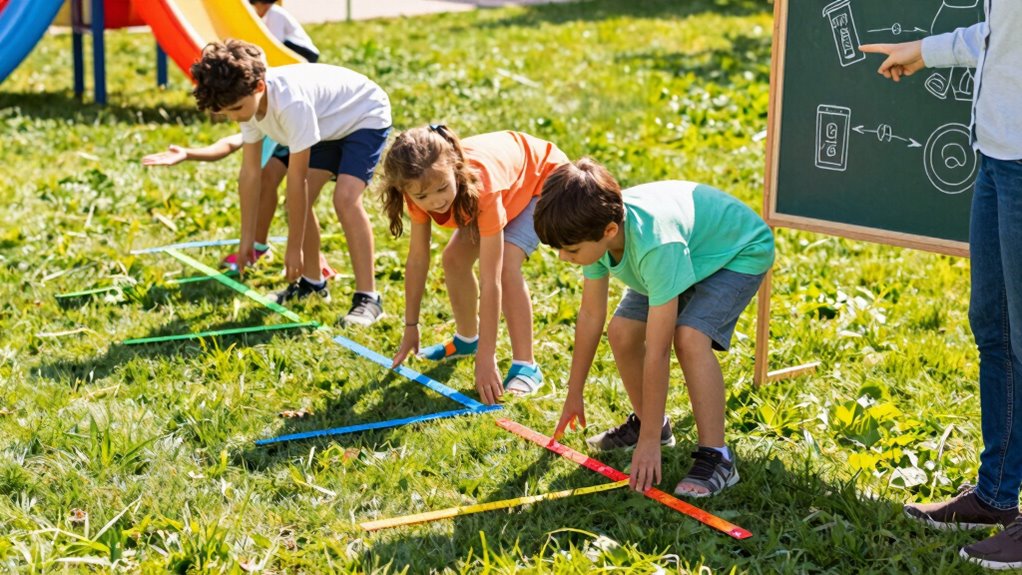
Have you ever considered how play can be a natural way for children to learn about measurement? When children engage in playful activities, they’re not just having fun—they’re actively exploring concepts like size, length, weight, and volume. Incorporating measurement activities into play helps children develop essential skills while keeping the experience enjoyable. As they experiment with different objects and compare sizes, they build an intuitive understanding of measurement that forms a foundation for more complex learning later on.
Playful activities help children explore measurement concepts and build a strong foundation for future learning.
Sensor integration plays a crucial role in making measurement activities engaging and meaningful. By using tools like digital scales, rulers with digital readouts, or interactive measurement toys, children can immediately see the results of their actions. These sensors provide instant feedback, which helps them connect physical actions with numerical outcomes. This real-time data not only makes learning more interactive but also boosts their confidence as they see how their manipulations influence the measurements. Sensor integration makes abstract concepts concrete, transforming a simple activity into an immersive learning experience.
Engaging in measurement play also supports cognitive development in multiple ways. When children compare objects, estimate sizes, or measure ingredients for a recipe, they’re practicing critical thinking skills. They learn to observe, analyze, and draw conclusions based on their observations. Through trial and error, they begin to understand relationships between different measurements and develop problem-solving strategies. These activities challenge their reasoning abilities and encourage curiosity, which are fundamental aspects of cognitive growth. Developing an understanding of measurement concepts early on can also foster a lifelong interest in STEM fields.
Furthermore, measurement activities in play foster early mathematical skills. Children start recognizing patterns, understanding units of measurement, and grasping the idea of scale—all within an informal, playful context. The joy of discovery during these activities motivates them to explore further, nurturing a positive attitude towards learning math and science. When measurement becomes a part of their play, it’s no longer a task but an adventure that promotes deeper comprehension and retention.
In addition, sensor-based tools can make measurement activities more accessible and engaging for children with diverse learning styles. These tools adapt to different needs and help create inclusive learning environments where every child can participate actively.
In essence, integrating measurement activities into children’s play isn’t just about teaching them numbers; it’s about creating rich, meaningful experiences that support their overall development. Sensor integration makes these activities more dynamic and accessible, while the cognitive challenges involved help children develop essential thinking skills. By allowing kids to explore measurement in a playful setting, you’re helping them build a strong foundation for future learning—one that’s rooted in curiosity, confidence, and a love for discovery.
digital measurement toy for kids
As an affiliate, we earn on qualifying purchases.
As an affiliate, we earn on qualifying purchases.
Frequently Asked Questions
How Do Measurement Activities Differ From Traditional Play?
Measurement activities differ from traditional play by integrating innovative measurement tools into engaging, playful assessments. Instead of passive activities, you actively involve children in exploring concepts like size, weight, or volume through hands-on experiments. This approach encourages curiosity and critical thinking, making learning fun. You foster a natural environment for children to develop mathematical understanding, all while enjoying playful interactions that enhance their problem-solving skills and confidence in exploring the world around them.
What Skills Do Children Develop Through Measurement Activities in Play?
Through measurement activities in play, you help children develop critical skills like quantitative skills and spatial awareness. They learn to compare sizes, lengths, and amounts, strengthening their understanding of numbers and relationships. As they explore and experiment, children improve their ability to visualize spatial relationships and manipulate objects accurately. These activities foster problem-solving, critical thinking, and confidence, making learning engaging and meaningful while building foundational skills for future math and science concepts.
Are Measurement Activities Suitable for All Age Groups?
Measurement activities are suitable for all age groups if you use age-appropriate tools and design inclusive activities. Research shows children naturally develop skills through playful measurement, and adapted tools guarantee even very young or older children can participate meaningfully. You can tailor activities to suit different developmental stages, making measurement fun and accessible for everyone. This inclusive approach supports engagement and learning across diverse ages.
How Can Parents Incorporate Measurement Play at Home?
You can incorporate measurement play at home by encouraging playful exploration with everyday objects. Use kitchen tools to measure ingredients, compare sizes of toys, or weigh items around the house. This boosts measurement accuracy and makes learning fun. You might also set up simple experiments, like building towers or filling containers, where your child can explore concepts physically. These activities promote curiosity and develop essential math skills through hands-on, playful exploration.
What Tools Are Best for Measuring During Play?
Think of measurement tools as your child’s playful wands—simple, colorful, and fun. Use rulers, measuring cups, or scales for hands-on exploration. These tools turn everyday moments into a playful assessment, sparking curiosity and understanding. Stick to child-friendly options that are safe and easy to handle, encouraging your little one to discover length, volume, and weight naturally. The goal is to make learning seamless and joyful through playful measurement activities.
Conclusion
By incorporating measurement activities into play, you turn learning into an engaging, hands-on experience. You help children develop critical thinking and problem-solving skills while making learning fun. Isn’t it better to foster curiosity through play rather than traditional methods? When children see the relevance of numbers in their world, they build confidence and a love for learning that lasts. So, why not make measurement an exciting part of every child’s playtime?