
To design a successful magnetic maze puzzle business, focus on strategic magnet placement to create engaging and solvable challenges. Think about the puzzle’s difficulty level and work backward to plan magnetic arrangements that promote logical problem-solving. Use different magnet strengths, positions, and interactive elements to enhance complexity and enjoyment. By balancing these factors, you’ll craft unique puzzles that motivate players and showcase magnetic physics. Keep exploring to discover more tips for crafting mesmerizing magnetic logic puzzles.
Key Takeaways
- Define target difficulty levels and work backwards to layout magnet placements ensuring puzzle solvability.
- Strategically position magnets to create dynamic pathways and multi-move challenges.
- Balance magnetic strength and positioning to promote logical problem-solving and prevent frustration.
- Incorporate interactive elements like movable magnets to increase engagement and complexity.
- Use varied magnetic configurations to inspire creativity and develop unique, brain-teasing maze designs.

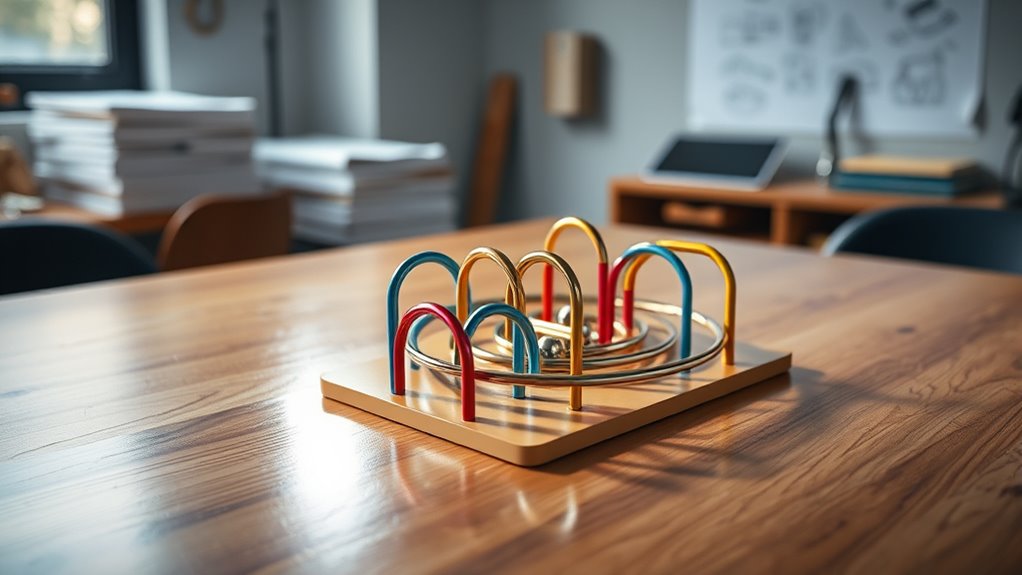
Have you ever wondered how a simple magnet can turn into an exciting puzzle? With the right approach, a magnet maze challenge can become an engaging experience that tests both logic and dexterity. At the core of creating these puzzles lies the skill of magnetic field manipulation, which involves carefully controlling magnetic forces to guide a metal ball or object through a maze. Your goal is to design puzzles that are both challenging and solvable, and that begins with understanding how to skillfully manipulate magnetic fields to influence the movement of metallic components.
To craft compelling magnetic puzzles, you need to develop effective puzzle design strategies. This starts with defining the difficulty level, then working backwards to create a layout that challenges players without frustrating them. Think about how magnetic field manipulation can be used to create obstacles or pathways—placing magnets at strategic points to attract or repel metallic balls, creating dynamic and unpredictable routes. These strategic placements allow you to craft puzzles that require players to think several moves ahead, considering how the magnetic forces will interact with their actions.
A clever design incorporates multiple magnetic poles and varying distances to introduce nuanced control. For example, positioning a magnet closer to the maze increases its influence, while moving it farther away diminishes its effect. This variety adds depth to your puzzles, encouraging players to experiment with different configurations. Using puzzle design strategies effectively means balancing the strength and placement of magnets so that the solution isn’t purely guesswork but a logical progression based on understanding magnetic field manipulation principles.
Furthermore, integrating elements like movable magnets or adjustable controls can elevate the challenge by allowing players to dynamically modify the magnetic field during the puzzle. This interactivity not only increases engagement but also demonstrates the practical application of magnetic field manipulation. By designing puzzles that require players to think about how magnetic forces interact in real-time, you create a more immersive and rewarding experience.
Ultimately, the key to a successful magnetic maze challenge is in your ability to blend magnetic field manipulation with strategic puzzle design. Think of each magnet as a tool to craft a unique pathway, and each configuration as a new challenge. With careful planning and a clear understanding of how magnetic fields work, you can design puzzles that captivate players and inspire them to explore the fascinating world of magnetic forces. Your creativity, combined with solid design strategies, will turn simple magnets into intricate, brain-teasing adventures. Additionally, understanding the psychological benefits of such puzzles can motivate players and enhance their problem-solving skills over time.
Frequently Asked Questions
What Materials Are Best for Creating Magnetic Maze Puzzles?
When choosing materials for magnetic maze puzzles, focus on magnetic material selection that guarantees strong magnetic attraction and responsiveness. Opt for durable puzzle materials like high-quality plastics or wood to withstand frequent use and handling. These materials should also be lightweight for easy manipulation. Prioritize puzzle material durability to keep your maze intact over time. Combining reliable magnetic materials with sturdy puzzle surfaces guarantees a fun, lasting experience for users.
How Can I Test the Durability of My Magnetic Puzzles?
To test the durability of your magnetic puzzles, focus on durability testing methods that evaluate how well the magnetic strength holds up over time. You can simulate repeated use by opening and closing the puzzle multiple times, applying pressure, and observing any magnetic weakening or physical damage. This way, you guarantee your puzzles maintain their magnetic strength and structural integrity, providing a reliable and long-lasting experience for users.
Are There Safety Concerns With Small Magnetic Components?
You might worry about safety, and rightly so—small magnetic components can pose risks like magnetic field hazards and ingestion. Studies show that swallowing multiple magnets can cause serious internal injuries. Always keep these components out of reach of children, and clearly label your puzzles with safety warnings. By taking precautions, you guarantee that your magnetic puzzles are both fun and safe, preventing potential accidents and giving parents peace of mind.
How Do Magnetic Puzzles Differ From Traditional Maze Games?
Magnetic puzzles differ from traditional maze games because they rely on magnetic field dynamics to guide pieces through the puzzle. You manipulate magnets or magnetic components, creating varied puzzle complexity levels based on how the magnetic forces interact. Unlike traditional mazes that use physical barriers, magnetic puzzles challenge your understanding of magnetic interactions, making each level more engaging and mentally stimulating. This innovative approach adds a new dimension to puzzle-solving experiences.
What Age Groups Are Suitable for Magnetic Logic Puzzles?
Think of magnetic puzzles as a bridge connecting young explorers to a world of clever thinking. You’ll find they’re best suited for ages 5 and up, offering age-appropriate challenges that grow with your child’s skills. These puzzles release developmental benefits like critical thinking, fine motor skills, and problem-solving. As your child advances, the complexity of these puzzles can keep pace, making learning a fun and engaging adventure.
Conclusion
As you design your magnetic logic puzzles, remember you’re crafting a maze like a master gardener tending a delicate garden—each piece fitting perfectly to create harmony. Your creativity transforms simple magnets into intricate challenges that captivate and inspire. With every thoughtful turn, you build a world where problem-solving becomes an exciting adventure, like exploring a shimmering maze of stars. Keep experimenting, and watch your magnetic maze challenge shine brighter than ever before.