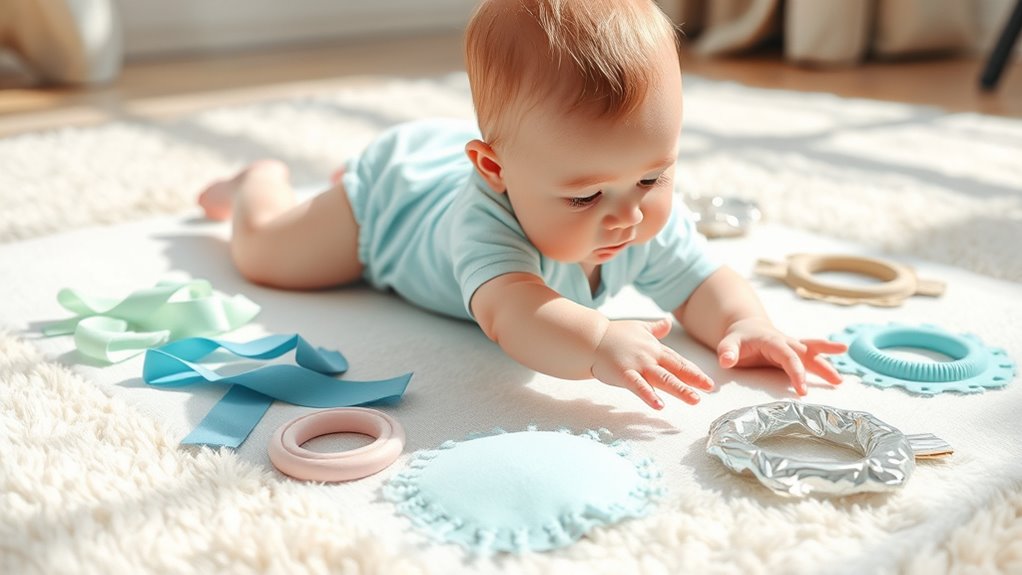

To safely introduce sensory play to your infant, focus on tactile activities like exploring textured fabrics, soft toys, and textured mats that are free of small parts and non-toxic. Combine this with visual stimulation by showing high-contrast images, colorful toys, or mobiles within reach. Always supervise, keep activities brief, and choose age-appropriate items to guarantee safety while fostering curiosity and development. Interested in exploring more ideas? Keep going to discover how to create a nurturing, engaging sensory environment.
Key Takeaways
- Use age-appropriate, non-toxic toys with varied textures and high contrast visuals to ensure safe sensory exploration.
- Supervise play sessions closely to prevent choking hazards or injuries during tactile and visual activities.
- Incorporate safe, soft textured fabrics and colorful picture books to stimulate senses without overstimulation.
- Encourage multisensory activities like textured fabric exploration combined with visual engagement, such as mirrors or mobiles.
- Keep activities short, positive, and adaptable to your baby’s evolving interests and developmental stage.

Infant sensory play is an essential activity that stimulates your baby’s developing senses and supports their overall growth. At this stage, your baby is eager to explore the world around them, and engaging their senses through safe, simple activities can make a big difference in their development. One of the most important aspects of sensory play is tactile exploration. When your baby touches different textured objects, they learn about the feel of various surfaces—soft, rough, smooth, or bumpy. You can encourage this by offering safe items like soft cloths, rubbery toys, or textured mats. Allow your baby to grasp and feel these objects, helping them build their sense of touch and fine motor skills. Remember, always supervise to ensure they don’t put small objects in their mouth or hurt themselves.
Engage your baby with textured toys to nurture their sense of touch and fine motor skills safely.
Alongside tactile exploration, visual stimulation plays a vital role in early development. Babies are naturally drawn to bright, contrasting colors and simple patterns. When you introduce high-contrast images, black-and-white cards, or colorful toys within their reach, you help develop their visual acuity and focus. Moving objects, like a softly swinging mobile or a gentle flashlight beam, also stimulate their eyes and encourage tracking movements. Keep in mind that your baby’s vision is still developing, so offering a variety of visually stimulating yet safe toys helps strengthen their eye muscles and enhances their ability to focus. Incorporating appropriate sensory tools that are designed for infants can further enrich their sensory environment.
Incorporating both tactile exploration and visual stimulation in your daily routine is simple and effective. For example, you might place a textured fabric square in front of your baby while talking to them or showing them a colorful picture book. As they reach out to investigate the textures and colors, they’re actively learning about their environment. Using mirrors can also be fun—babies love looking at their reflection, which promotes visual engagement and self-awareness. When you combine these sensory experiences, you’re creating a rich environment that promotes curiosity and cognitive growth.
Always prioritize safety during sensory play. Select age-appropriate toys free of small parts, and ensure they’re clean and non-toxic. Keep play sessions short and positive, allowing your baby to explore at their own pace. As they grow, their interests and abilities will evolve, so adapt activities accordingly. By providing a variety of tactile and visual experiences, you’re helping your baby develop essential skills in a fun, safe way that nurtures their natural curiosity and supports their overall development.
Frequently Asked Questions
When Should I Start Sensory Play With My Baby?
You can start sensory play as early as birth. Begin with simple activities like tummy time to strengthen muscles and encourage visual tracking. As your baby grows, introduce soft textures, gentle sounds, and contrasting colors to stimulate their senses. Keep activities short and supervised, watching for cues they’re ready for more. Sensory play helps your baby explore and develop vital skills during this early stage.
How Do I Ensure Sensory Activities Are Developmentally Appropriate?
To guarantee sensory activities are developmentally appropriate, pay attention to your baby’s cues and avoid sensory overload. Keep activities simple, like soft textures or gentle sounds, matching their current developmental milestones. Watch for signs of overstimulation, such as fussiness or turning away. Gradually introduce new sensations, making sure each experience is enjoyable. This approach helps your baby explore safely while supporting their sensory development without overwhelming them.
Are There Any Sensory Play Activities to Avoid?
You should avoid sensory play activities involving toxic materials or choking hazards. Never give your baby small objects they can swallow, like beads or buttons, and steer clear of any substances with harmful chemicals. Instead, opt for safe, non-toxic items like soft fabrics, water, or food-based textures. Always supervise, and check that materials are age-appropriate, ensuring your little one explores safely without risking poisoning or choking.
How Can Sensory Play Support My Baby’s Overall Development?
Sensory play boosts your baby’s overall development by promoting multisensory engagement, helping them explore and understand their environment. As you introduce safe textures, sounds, and visuals, you support cognitive enhancement, encouraging curiosity and problem-solving skills. This active engagement strengthens neural connections, improves fine motor skills, and fosters emotional growth. By providing varied sensory experiences, you help your baby build a strong foundation for future learning and development.
What Safety Precautions Are Necessary During Sensory Activities?
You should always supervise your baby during tactile exploration and visual stimulation to guarantee safety. Use non-toxic, age-appropriate materials and avoid small objects that pose choking hazards. Keep the play area clean and free of harmful substances. Never leave your baby unattended, especially with items that stimulate their senses. Regularly check toys and materials for damage, and tailor activities to your baby’s developmental stage to keep them safe and engaged.
Conclusion
As you explore these sensory play ideas, remember, each moment sparks your baby’s curiosity and growth. But what surprises await in the next activity? Will they reach for that new textured toy or react with a giggle? Keep experimenting, stay attentive, and watch as your little one uncovers endless wonders. The journey of discovery is just beginning—are you ready to see what exciting surprises lie ahead? The next adventure is only a moment away.