This guide provides clear, step-by-step instructions for installing and using a child safety booster seat correctly. It is designed for parents and caregivers who want to ensure their child’s safety during car rides. Proper booster seat use can significantly reduce injury risk, but incorrect installation or use can compromise safety. Follow this guide carefully to achieve a secure, correct fit for your child.
Play games included with Prime
Start a Prime free trial and play with Amazon Luna on your devices.
Start playingAs an affiliate, we earn on qualifying purchases.

Joie Baby Saffron SI 4-in-1 Convertible Car Seat
- ✔ Fits child weight: 4-120 lbs
- ✔ Stages: Infant, Convertible, High Back, Backless Booster
- ✔ Recline positions: 3

Graco Extend2Fit 3-in-1 Convertible Car Seat, 3 Modes – Rear Facing, Forward Facing, Highback Booster, Ashten
- ✔ Weight Capacity (Rear Facing): 4-50 lb
- ✔ Weight Capacity (Forward Facing): 26.5-65 lb
- ✔ Weight Capacity (Booster): 40-100 lb

Joie Baby Basil Highback & Backless Booster Car Seat, Ages 4 to 12 Years
- ✔ Highback booster size: 18.4”L x 18.6”W x 27.5-33.5”H
- ✔ Backless booster size: 15.4”L x 17.5”W
- ✔ Highback booster weight limit: 40-110 lbs
Difficulty: Intermediate | Time: 30-45 minutes
What You’ll Need
Tools & Materials:
- Car with seat belts
- Booster seat suitable for child’s weight and height
- Optional: seat belt lock-off or locking clip
Knowledge:
- Basic understanding of car seat belts
- General familiarity with your vehicle’s seat belts
Ensure the booster seat is appropriate for your child’s age, weight, and height according to the manufacturer’s specifications. Read the booster seat manual before starting.
Joie Baby Saffron SI 4-in-1 Convertible Car Seat
<p>The <strong>Joie Baby Saffron SI</strong> stands out for its remarkable versatility, functioning as an infant, convertible, high back, and backless booster. Its adjustable headrest and multiple recline positions support children from 4 to 120 lbs, making it a true long-term investment. Compared to the Graco Extend2Fit, it offers more mode options, but it is significantly heavier, which could be a drawback for families needing portability. Installation requires attention to detail, but its magnetic chest clip and cup holders add convenience and safety features that justify its premium price.</p>
Pros:
- Versatile 4-in-1 design suitable for all growth stages
- Adjustable headrest with 10 positions for a customized fit
- Includes cup holders and magnetic chest clip for added convenience
Cons:
- Heavy at approximately 23.1 lbs, less portable
- Limited detail on fabric padding and comfort features
- Proper installation is essential for safety
Best for: Families seeking a single seat that adapts through all stages of childhood
Not ideal for: Parents prioritizing lightweight, portable seats for frequent travel
Bottom line: Best for families who want a durable, all-in-one seat that grows with their child, despite its weight and installation complexity.
“Best for families who want a durable, all-in-one seat that grows with their child, despite its weight and installation complexity.”
Graco Extend2Fit 3-in-1 Convertible Car Seat, 3 Modes – Rear Facing, Forward Facing, Highback Booster, Ashten
<p>The <strong>Graco Extend2Fit</strong> is designed to grow with your child, featuring an extension panel that adds up to 5 inches of legroom—crucial for rear-facing safety. Its No-Rethread Simply Safe Adjust harness makes tightening easy as your child grows. However, its bulk can be a challenge in smaller vehicles, and some users find the installation process complex. Compared to the Joie Saffron, it offers less mode flexibility but excels in safety standards and extended rear-facing capacity.</p>
Pros:
- Adjustable extension panel for extra legroom
- Grows with your child from 4 to 100 lbs
- Easy harness adjustments with No-Rethread system
Cons:
- Bulky in smaller vehicles
- Installation can be tricky for some users
- Requires more space due to extension panel
Best for: Parents seeking a seat that adapts from infancy to booster while maximizing legroom
Not ideal for: Those with small or compact cars where space is limited
Bottom line: Ideal for families prioritizing safety and comfort for long-term use, despite its size and installation complexity.
“Ideal for families prioritizing safety and comfort for long-term use, despite its size and installation complexity.”
Joie Baby Basil Highback & Backless Booster Car Seat, Ages 4 to 12 Years
<p>The <strong>Joie Basil booster seat</strong> offers flexibility with both high back and backless modes, suitable for children from 40 to 120 lbs. Its adjustable headrest and secure LATCH connectors make it easy to install and adapt as your child grows. Weighing only about 9 lbs, it is highly portable—perfect for travel or secondary cars. However, it doesn’t support children exceeding 120 lbs, and it lacks additional comfort features like extra padding or cushioning. Compared to the larger convertible seats, it sacrifices some longevity but excels in portability and ease of use.</p>
Pros:
- Lightweight and portable design
- Adjustable headrest and modes to grow with your child
- Secure installation with LATCH and belt guides
Cons:
- Limited to children up to 120 lbs
- No additional comfort padding
- Proper installation is still required for safety
Best for: Parents looking for a lightweight, easy-to-move booster for older children or travel
Not ideal for: Families needing a seat that lasts beyond 120 lbs or offers extensive comfort features
Bottom line: Great for portability and ease of use for older kids, but not suitable for long-term use beyond 120 lbs.
“Great for portability and ease of use for older kids, but not suitable for long-term use beyond 120 lbs.”
As an Amazon Associate we earn from qualifying purchases.
Before You Start
Check that your car seat belts are in proper working order and that the vehicle seat is clean and dry. Confirm the booster seat is compatible with your vehicle’s seat type. Do not use a booster seat if it shows signs of damage or missing parts.
Step-by-Step Instructions
Step 1: Position the booster seat in the back seat
Place the booster seat on the vehicle’s back seat, ensuring it is centered and stable. Do not put the booster seat in the front seat if the vehicle has an active airbag; always use the back seat for safety.
Tip: Check that the booster seat does not slide side to side or front to back. It should sit firmly on the vehicle seat.
Check: The booster seat remains stable without excessive movement when pressure is applied from different directions.
Step 2: Adjust the booster seat to fit your child
Have your child sit on the booster seat. Adjust the seat’s armrests or position to ensure the child’s thighs are supported and the seat fits snugly against their body.
Tip: Make sure the child’s knees bend comfortably at the edge of the seat and their feet rest flat on the vehicle floor or footrest.
Check: Your child’s head is at or just above the top of the booster seat, and they sit upright comfortably with secure positioning.
Step 3: Secure the booster seat using the vehicle’s seat belt
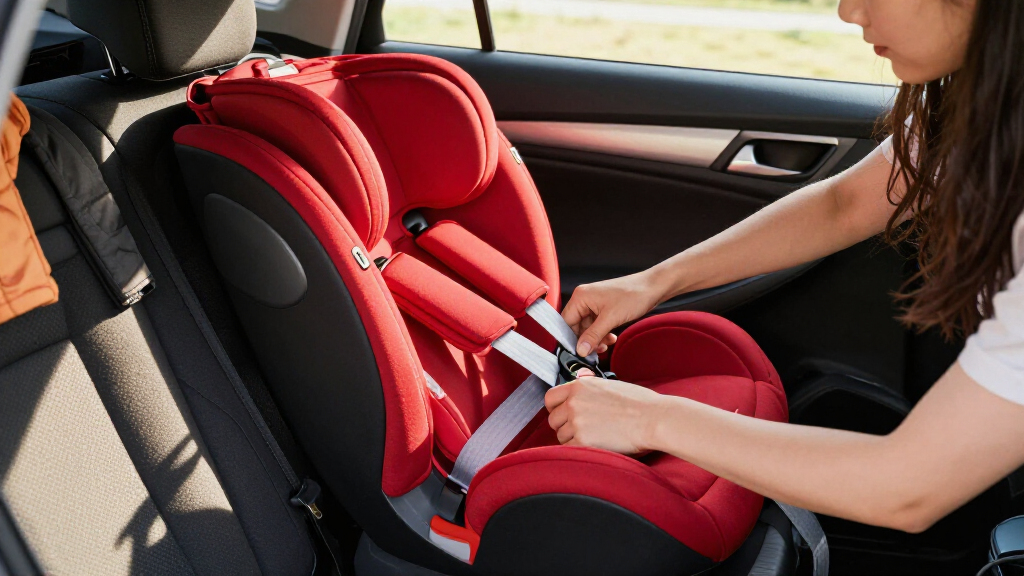
Pull the vehicle’s seat belt across your child’s lap and shoulder. Buckle the seat belt into the seat belt latch, ensuring it clicks securely.
Tip: Position the lap belt low and snug across your child’s hips, not the stomach. The shoulder belt should lie flat across the chest and shoulder, not the neck or face.
Check: The seat belt is tight and lies flat without slack, with no twisting or pinching, and the lap belt is positioned low on the hips.
Step 4: Check the fit and adjust as needed
Recheck the child’s position and the seat belt fit. Ensure there is no slack in the belt and that the child cannot slide out or wiggle excessively.
Tip: Use the ‘pinch test’: try to pinch excess belt at the child’s shoulder; if you can pinch fabric, tighten the belt.
Check: Belt remains snug around the child’s hips and shoulders, with no slack or bunching, and the child is securely seated.
Common Mistakes to Avoid
- Using the seat belt incorrectly, such as placing the lap belt above the stomach or the shoulder belt under the arm. — Position the lap belt low on the hips and the shoulder belt across the chest and shoulder, never on the stomach or under the arm.
- Not securing the booster seat tightly or allowing excessive movement. — Ensure the booster seat is stable on the seat and the seat belt is snug, performing regular checks during each use.
- Placing the booster seat in the front seat with an active airbag. — Always install the booster seat in the back seat, away from active airbags, to prevent injury in a crash.
Troubleshooting
Problem: The seat belt does not stay snug or slips after adjustment.
Solution: Reposition the seat belt, ensure it is properly routed through the designated belt guides, and tighten it firmly. Consider using a locking clip if recommended by the manufacturer.
Problem: The booster seat moves excessively or shifts during the ride.
Solution: Adjust the seat placement, press down firmly on the booster seat to lock it in place, or try a different seat with a better fit in your vehicle.
Problem: Your child’s head leans forward or their legs are uncomfortable.
Solution: Adjust the child’s position, ensure the seat height is correct, and that footrests or the vehicle floor support their feet properly.
What Success Looks Like
The booster seat is securely positioned, stable on the vehicle seat, and the seat belt fits snugly across your child’s hips and shoulders. Your child sits upright with their head supported, feet resting flat, and the belt does not pinch or slip. The setup prevents excessive movement or slouching, and the child can comfortably sit for the duration of the trip.
Next Steps
Regularly check the booster seat’s stability and belt fit, especially as your child grows. Read the manufacturer’s updates or safety notices. When your child exceeds the weight or height limits, transition to a dedicated car seat or seat belt alone, following safety guidelines. Keep the booster seat clean and in good condition, replacing it if damaged.
Frequently Asked Questions
How do I know if the booster seat fits my child properly?
The child’s head should be at or just above the top of the seat, and they should sit upright comfortably with the seat belt fitting snugly across the hips and shoulders. The child should be able to sit without slouching or sliding out of position.
Can I use a booster seat in the front seat?
It is safest to install booster seats in the back seat, away from active airbags. If you must use the front seat, disable the airbag if the manufacturer recommends it, and ensure the seat is properly installed.
How often should I check the booster seat’s fit and stability?
Check the booster seat every time before a trip, especially if your child has grown or if the seat has been in an accident or moved. Regular inspections ensure continued safety and proper fit.
My child’s weight is close to the booster seat’s limit. When should I switch to a different restraint?
Once your child exceeds the weight or height limit specified by the booster seat manufacturer, switch to a higher weight/height-rated car seat or seat belt alone, following local safety regulations.
NFL season / tailgating Picks
team gear
As an affiliate, we earn on qualifying purchases.