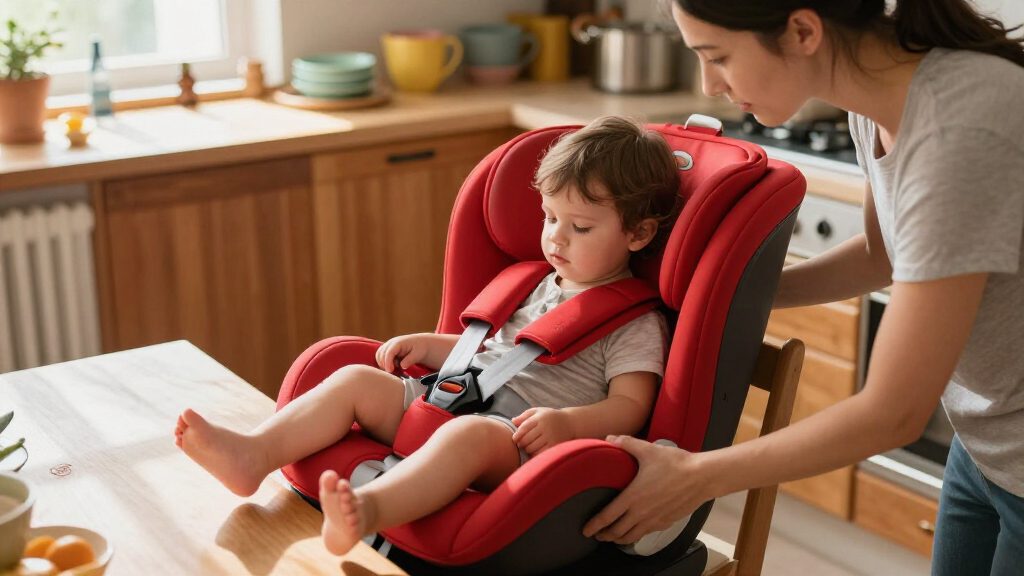
Parents seeking the safest and most comfortable booster seat for their child often face a key decision: should they opt for a high-back booster or a backless booster? Both types serve to elevate children for proper seat belt positioning, but they differ significantly in design, safety features, and convenience. Understanding these differences helps in selecting the best fit based on your child’s age, vehicle, and lifestyle. High-back boosters are typically favored for added support and crash protection, making them suitable for vehicles lacking head restraints or for longer journeys. Backless boosters, on the other hand, are more portable, easier to store, and often less expensive, making them attractive for families with multiple vehicles or those on a budget. This comparison highlights the core distinctions, helping caregivers make an informed choice based on safety, comfort, and practicality.

Turn the school run and nap time into listening time
- Thousands of audiobooks, podcasts and originals
- Listen on your phone, tablet or Echo — also offline
- Cancel anytime

Joie Baby Basil Highback & Backless Booster Car Seat, Ages 4 to 12 Years
- ✔ Highback booster size: 18.4”L x 18.6”W x 27.5-33.5”H
- ✔ Backless booster size: 15.4”L x 17.5”W
- ✔ Highback booster weight limit: 40-110 lbs

Joie Baby Saffron SI 4-in-1 Convertible Car Seat
- ✔ Fits child weight: 4-120 lbs
- ✔ Stages: Infant, Convertible, High Back, Backless Booster
- ✔ Recline positions: 3

Graco Extend2Fit 3-in-1 Convertible Car Seat, 3 Modes – Rear Facing, Forward Facing, Highback Booster, Ashten
- ✔ Weight Capacity (Rear Facing): 4-50 lb
- ✔ Weight Capacity (Forward Facing): 26.5-65 lb
- ✔ Weight Capacity (Booster): 40-100 lb
At a Glance
| Criteria | High-Back Booster Seat | Backless Booster Seat | Winner |
|---|---|---|---|
| Safety features | Enhanced side-impact protection, built-in headrest, reinforced frame | Basic belt positioning, minimal side protection | A |
| Portability and ease of use | Bulkier, heavier, requires more space, less portable | Lightweight, compact, easily portable, fits in a bag or car trunk | B |
| Comfort and support | Superior head and neck support, more cushioning | Less padding and support, focuses on seat belt positioning | A |
| Compatibility with vehicle | Best suited for vehicles with high back seats and head restraints | Suitable for vehicles with headrests or high back seats, easier to transfer between cars | A |
| Price | Generally higher price, reflecting added safety features | Typically less expensive, good value for short-term use | B |
| Adjustability and longevity | Designed to last longer, suitable for growing children | Adjustable but may have limited lifespan as child grows | A |
| Cleaning and maintenance | May include removable covers and padding for easy cleaning | Usually simple to clean, often with wipeable covers | B |
| Aesthetics and design | More options for colors and styles, often more modern | Streamlined design, minimal aesthetic features | B |
Joie Baby Basil Highback & Backless Booster Car Seat, Ages 4 to 12 Years
<p><strong>The Joie Baby Basil</strong> stands out for its adaptability, offering both high back and backless modes. This makes it a flexible choice for children from 4 to 12 years old, accommodating a wide weight range of 40 to 120 pounds. Its adjustable headrest ensures proper fit as your child grows, and the removable, washable covers simplify maintenance. Compared with the Joie Saffron, it’s lighter and easier to transport, making it ideal for families on the go. However, it doesn’t include extra padding or comfort features, which might be a drawback for children sensitive to seat comfort. Its weight limit caps at 120 pounds, so it’s less suitable for bigger children beyond that. Overall, it’s a dependable, multi-use booster that balances safety and convenience.</p>
Pros:
- Versatile with both high back and backless modes
- Adjustable headrest for long-term fit
- Removable, washable covers for ease of cleaning
Cons:
- Limited to children up to 120 lbs
- No extra padding or comfort features
Best for: Parents seeking a versatile, budget-friendly booster that adapts to multiple stages and is easy to travel with.
Not ideal for: Families needing extra padding or those with children over 120 lbs or taller than 47 inches.
Bottom line: A flexible, lightweight booster ideal for parents who want longevity and easy maintenance without extra padding.
“A flexible, lightweight booster ideal for parents who want longevity and easy maintenance without extra padding.”
Joie Baby Saffron SI 4-in-1 Convertible Car Seat
<p>The <strong>Joie Baby Saffron SI</strong> offers a comprehensive 4-in-1 design, suitable from infancy through booster age, covering 4 to 120 lbs. Its multiple recline options and adjustable headrest make transitions between stages smooth, and the built-in cup holders add convenience. Compared with the Basil booster, it’s bulkier—about 23.1 pounds—making it less portable, but it compensates with its versatility and long-term usability. The seat’s design emphasizes safety with features like magnetic chest clips and multiple recline positions. Its main tradeoff is weight, which could be cumbersome for travel or frequent transfers, and it requires careful installation to maximize safety. This model works best for families prioritizing a multi-stage seat that grows with their child, especially if they don’t mind the added weight.</p>
Pros:
- Versatile 4-in-1 design for all growth stages
- Multiple recline positions and adjustable headrest
- Includes cup holders and magnetic chest clip
Cons:
- Heavy at over 23 pounds, less portable
- Limited detailed padding information
Best for: Parents looking for a multi-stage, long-term booster seat with added comfort and safety features.
Not ideal for: Parents needing a lightweight, portable booster for frequent travel or short-term use.
Bottom line: A versatile, all-in-one seat ideal for long-term use, suitable for families seeking durability over portability.
“A versatile, all-in-one seat ideal for long-term use, suitable for families seeking durability over portability.”
Graco Extend2Fit 3-in-1 Convertible Car Seat, 3 Modes – Rear Facing, Forward Facing, Highback Booster, Ashten
<p>The <strong>Graco Extend2Fit</strong> is designed to grow with your child, offering three modes: rear-facing, forward-facing, and booster. Its standout feature is the adjustable extension panel, providing up to 5 inches of extra legroom—crucial for longer rear-facing use and comfort in booster mode. It adheres to Graco’s ProtectPlus safety standards, ensuring high-impact safety performance. Compared to the Joie options, it’s bulkier and may be more complex to install, especially in smaller vehicles. However, its focus on safety, comfort, and longevity makes it a top choice for families prioritizing long-term protection. The main tradeoff is size—it’s not as compact for tight spaces—so vehicle compatibility is essential. Overall, it’s geared toward parents who want a durable seat that will serve from infancy through booster years.</p>
Pros:
- Grows with your child from infancy to booster age
- Extra legroom with adjustable extension panel
- Easy harness and headrest adjustment with No-Rethread system
Cons:
- Bulky size may not fit smaller vehicles
- Installation can be complex for some users
Best for: Parents seeking a long-lasting, safety-focused seat with extra legroom for taller children.
Not ideal for: Families with small vehicles or those needing a lightweight, portable booster for frequent travel.
Bottom line: A highly durable, safety-centric seat best suited for families prioritizing longevity and comfort over portability.
“A highly durable, safety-centric seat best suited for families prioritizing longevity and comfort over portability.”
As an Amazon Associate we earn from qualifying purchases.
Key Differences
The core distinction between high-back and backless booster seats centers on safety support versus portability. High-back models add extra head and neck protection, especially beneficial in crashes and in vehicles without adequate head restraints. This makes them a safer choice for children transitioning from car seats, especially for longer trips or in vehicles with lower seatbacks. However, they tend to be bulkier, heavier, and more expensive, which may be a drawback for families who need lightweight options or frequently switch between vehicles. Backless boosters are simpler, more portable, and generally less costly. They excel in ease of transfer, storage, and use in multiple vehicles, making them suitable for older children who no longer need high-back support or families with tight budgets. Both types meet safety standards but differ significantly in practical everyday use, comfort, and flexibility.
Detailed Comparison
Safety features (High-Back Booster Seat wins — major)
High-back boosters include side-impact protection and headrests that shield the child’s head and neck during a crash, providing a significant safety advantage. Backless boosters rely solely on the vehicle’s seat belt positioning and lack additional side support, making them less protective in side collisions. For overall safety, especially in vehicles without headrests or in crash-prone areas, high-back seats are the superior choice. The safety gap is major, as high-back models align with latest safety recommendations for enhanced protection.
Portability and ease of use (Backless Booster Seat wins — major)
Backless boosters are notably lighter and more compact, fitting easily into a bag or trunk, and are straightforward to transfer between vehicles. High-back boosters are bulkier, heavier, and require more space, making them less convenient for frequent switching or travel. For families that require portability or have multiple vehicles, backless boosters provide a clear advantage. The difference is major in terms of daily practicality.
Comfort and support (High-Back Booster Seat wins — moderate)
High-back boosters typically offer more padding, head and neck support, and a better overall seating experience, especially for longer rides. Backless boosters are simpler, offering minimal padding and support, which might be less comfortable for extended use. For children who need extra support or are sensitive to discomfort, high-back seats are preferable. The comfort advantage is moderate but meaningful for longer trips or children with specific needs.
Compatibility with vehicle (moderate difference)
High-back booster seats work best in vehicles with high back seats and built-in headrests, providing seamless integration and maximum safety. Backless boosters are versatile and fit well in most vehicles, especially those with adjustable or low seatbacks, and are easier to position in cars with limited space. For older or smaller vehicles, backless boosters might be more compatible. The difference is moderate and depends largely on vehicle type.
Price (Backless Booster Seat wins — major)
Backless boosters are generally less expensive, often costing significantly less than high-back models, making them appealing for budget-conscious families. High-back seats tend to be pricier due to added safety features and padding. When considering long-term value, backless boosters provide a cost-effective solution for short-term or occasional use, but high-backs may be worth the extra investment for safety and comfort over time. The price gap is major, influencing affordability decisions.
Adjustability and longevity (High-Back Booster Seat wins — major)
High-back booster seats usually feature multiple height and headrest adjustments, allowing them to accommodate children for several years as they grow. Many models are designed for extended use, sometimes up to 12 years old. Backless boosters generally have fewer adjustment options and a shorter lifespan, suitable until the child reaches the maximum height or weight limit. For longer use as children grow, high-back seats are more advantageous. The difference is major in terms of value for growing children.
Cleaning and maintenance (Backless Booster Seat wins — minor)
Both types often feature removable covers that can be washed. High-back boosters may have more padding and fabric that can trap crumbs and dirt, requiring more careful cleaning. Backless boosters tend to be simpler, with fewer soft surfaces, and are easier to wipe down. For ease of maintenance, backless boosters are generally more straightforward, but both are manageable with removable covers. The difference is minor but relevant for busy families.
Aesthetics and design (High-Back Booster Seat wins — minor)
High-back seats often come in more varied colors and designs, with added features like built-in cup holders and modern styling. Backless boosters tend to be minimalistic, focusing on function over form. For families concerned with style or additional features, high-back models provide more options. The difference is minor but can influence preferences for appearance and extra functionalities.
High-Back Booster Seat: Pros and Cons
Pros:
- Enhanced safety with side-impact protection and headrest
- Longer adjustment span for growing children
- Better support and comfort for extended trips
- Seamless fit in vehicles with high back seats
- More aesthetic options and features
Cons:
- Bulkier and heavier, less portable
- More expensive upfront
- Requires more space in vehicle
Backless Booster Seat: Pros and Cons
Pros:
- Lighter and more portable, easy to transfer
- Lower price, great value for short-term use
- Simple to clean and maintain
- Fits in most vehicles and is easy to store
Cons:
- Less safety support, especially in side impacts
- Limited adjustability and shorter lifespan
- Less supportive and comfortable for long rides
Who Should Choose What
Choose High-Back Booster Seat if:
- You prioritize maximum safety, long-term use, and comfort for your child, especially for long trips or in vehicles lacking headrests.
Choose Backless Booster Seat if:
- You need a lightweight, portable booster for occasional use, are on a budget, or frequently switch vehicles.
Value for Money
High-back booster seats offer enhanced safety features and longer usability, justifying their higher cost for families prioritizing safety and comfort. Backless boosters provide excellent value for short-term, budget-conscious needs, especially when portability and ease of cleaning are key. Overall, high-backs are better for ongoing safety and support, but backless models suit transient or cost-sensitive situations better.Final Verdict
For most parents focused on safety, comfort, and long-term value, choosing a high-back booster seat is advisable. It provides superior protection, adjustable features, and longer usability, making it a worthwhile investment. However, if portability, cost, and quick transfer are your primary concerns—especially for older children who need a booster for short trips or in multiple vehicles—a backless booster remains a practical and economical choice. The biggest deciding factor is how much you value added safety versus convenience and cost.
Frequently Asked Questions
Are high-back booster seats significantly safer than backless ones?
Yes, high-back booster seats generally offer better side-impact protection and head support, which can reduce injury risk in crashes. They are recommended for added safety, especially in vehicles without adequate head restraints.
Can a backless booster be used long-term?
Backless boosters are suitable until the child reaches the maximum height or weight limit, typically around age 8-12. However, they lack the adjustable features and support of high-back seats, which are better for long-term use.
Is the extra cost of a high-back booster justified?
For families prioritizing safety, comfort, and long-term usability, the higher price is justified. The added safety features and adjustable design often make high-backs a better investment over time.
Are backless boosters easier to clean?
Generally, yes. Backless boosters tend to be simpler, with fewer padding and fabric areas, making them easier to wipe clean and maintain regularly.
Which booster type is better for travel?
Backless boosters are more portable and lightweight, making them the preferred choice for travel and frequent vehicle changes. High-back boosters are bulkier and less convenient for quick transfers.
Halloween Picks
halloween
As an affiliate, we earn on qualifying purchases.