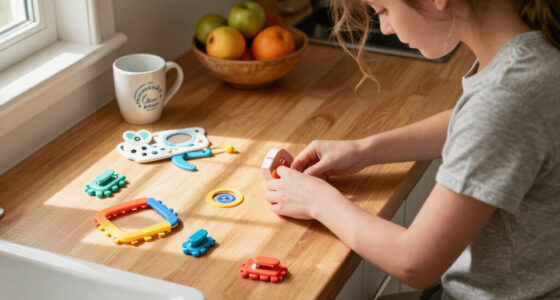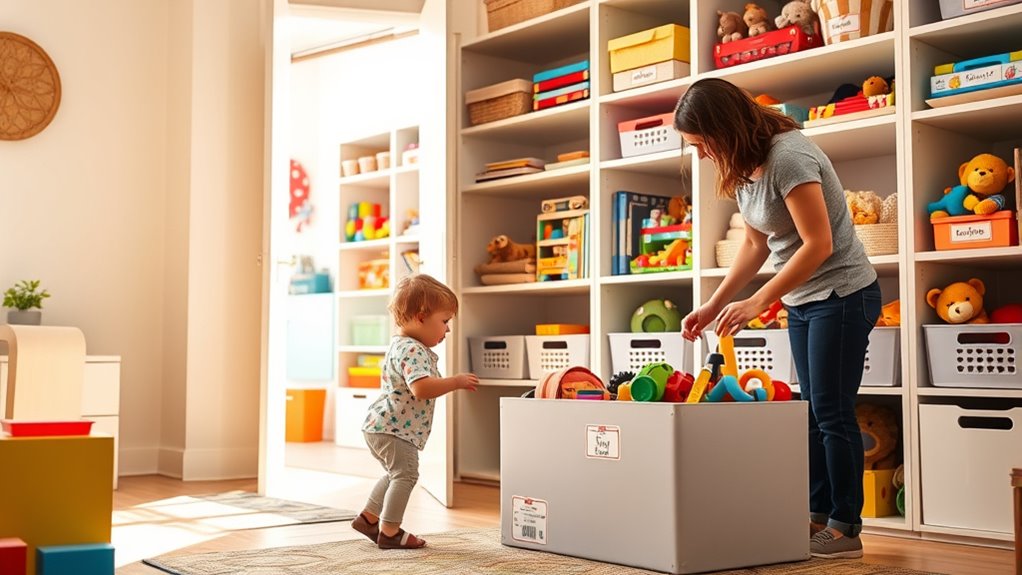

To implement toy rotation as a busy parent, start by organizing toys into categories like blocks or puzzles using clear, labeled bins and designated zones. Keep a few toys out for play while storing the rest in a hidden spot, then switch them weekly or bi-weekly. Observe which toys engage your child most and adjust your schedule accordingly. Continue exploring these steps to create an easier, more organized play environment for your family.

Turn the school run and nap time into listening time
- Thousands of audiobooks, podcasts and originals
- Listen on your phone, tablet or Echo — also offline
- Cancel anytime
Key Takeaways
- Categorize toys into groups like blocks, puzzles, and stuffed animals for easy management.
- Use clear, labeled storage bins and designated zones to organize toys efficiently.
- Select a few toys to display and store the rest in a designated spot, rotating weekly or bi-weekly.
- Observe which toys engage your child most and adjust the rotation schedule accordingly.
- Keep the system simple and flexible to fit your busy schedule, ensuring tidiness and developmental benefits.

As a busy parent, keeping your child’s toys organized and engaging can feel overwhelming. Between work, household chores, and everything else on your plate, maintaining a clutter-free play area might seem like an impossible goal. That’s where toy rotation comes in, offering a simple yet effective way to manage clutter and keep your child’s interest piqued. The key is to implement smart storage solutions that make it easy to swap toys in and out. Invest in stackable bins, clear containers, or labeled baskets so you can quickly access toys and store them away without chaos. Using these storage solutions allows you to create designated zones for different types of toys, making cleanup straightforward and less time-consuming. Plus, it helps your child understand where everything belongs, fostering independence and responsibility.
When you rotate toys, you’re not just reducing mess — you’re also boosting your child’s educational benefits. Limited access to toys encourages your child to focus on a few items at a time, promoting deep engagement and creative play. Instead of being overwhelmed by a vast array of toys, your child learns to appreciate and explore each piece more thoroughly. This focused interaction supports cognitive development, problem-solving skills, and imagination, as your little one spends more time playing with each toy and discovering new ways to use it. Additionally, rotating toys introduces an element of surprise, which keeps playtime fresh and exciting. Your child will look forward to discovering new toys in the rotation, fostering curiosity and enthusiasm for learning through play.
To get started, gather all your child’s toys and sort them into categories—like blocks, puzzles, or stuffed animals. Use your storage solutions to organize these categories, then select a few to keep out at a time. Store the rest in a designated spot, such as a closet or under-bed storage, and set a schedule—like weekly or bi-weekly—to switch out the toys. As you rotate, take note of which toys are most engaging and which ones your child might be ready to put aside for now. Proper storage organization is essential for maintaining an efficient system. This process doesn’t have to be perfect; it’s about creating a manageable system that keeps playtime enjoyable and clutter under control. By doing so, you’ll not only make tidying up easier but also enhance your child’s development through thoughtfully curated, engaging toys that stimulate their growth and curiosity.
Frequently Asked Questions
How Often Should I Rotate My Child’s Toys?
You should rotate your child’s toys every 2 to 4 weeks to keep toy organization fresh and engaging. Regular rotation prevents clutter, encourages exploration, and offers developmental benefits by exposing your child to new stimuli. Pay attention to your child’s interests and developmental stage, adjusting the frequency if needed. Consistent toy rotation helps maintain excitement and promotes creativity, making playtime both fun and beneficial for your child’s growth.
What Are the Best Storage Solutions for Toy Rotation?
You should choose versatile storage containers like clear bins or baskets to keep toys organized and easily accessible. Shelving options, such as adjustable or wall-mounted units, help maximize space and display toys neatly. Opt for containers that are durable and easy to open, so your child can help with clean-up. Combining these storage solutions makes toy rotation simple, keeps your space tidy, and encourages independence in your little one.
How Can I Involve My Child in the Rotation Process?
Imagine you’re a ship captain steering toy treasures; involving your child is like anchoring with a trusted crew. You can ask about their preferences, encouraging parent-child communication, and let them choose which toys to keep or rotate. Make it fun by turning it into a game or adventure, so your child feels excited and empowered. This approach fosters independence and helps them understand the importance of sharing and decision-making.
What Are Signs My Child Is Bored With Current Toys?
You’ll notice behavior cues like your child ignoring their toys, fussiness, or switching quickly between options, suggesting boredom. They may also show less engagement or skip playing altogether. Keep an eye on developmental milestones; if your child isn’t exploring or practicing new skills, it’s a sign they might need new or different toys. Switching out toys regularly keeps their curiosity alive and supports their growth.
How Do I Handle Toys That Are Damaged or Unsafe?
Think of your child’s toys as treasured tools—if they’re damaged or unsafe, it’s time for repair. You should conduct regular safety inspections and perform toy repair when needed, removing any broken parts or sharp edges. When a toy can’t be fixed, dispose of it responsibly to prevent accidents. This way, you keep playtime safe and enjoyable, ensuring your child’s curiosity stays protected and nurtured.
Conclusion
Just like a gardener tends to their plants, rotating your child’s toys keeps their curiosity blooming and their space uncluttered. With a little planning and regular updates, you’ll create an inviting haven for play and learning. Think of this as your secret recipe—simple, effective, and surprisingly freeing. Soon, you’ll see your little one explore with renewed excitement, as if discovering a whole new world each time. Embrace the process, and watch the magic unfold.
Fall Picks
fall essentials
As an affiliate, we earn on qualifying purchases.