Gardening with kids is a rewarding way to teach responsibility, patience, and respect for nature. You can introduce simple tools like small shovels and watering cans, making tasks manageable and safe. Show how natural pest control and good garden habits keep plants healthy, fostering environmental awareness. By guiding them on tool safety and responsibility, you’ll help your children connect with nature while developing important skills that grow with them. Keep exploring to discover even more ways to nurture their learning.
Key Takeaways
- Gardening with kids fosters responsibility, patience, and curiosity about nature through hands-on planting activities.
- Using child-friendly tools enhances motor skills, safety, and confidence during gardening tasks.
- Teaching natural pest control methods promotes environmental awareness and sustainable garden care.
- Regular garden maintenance teaches responsibility and reinforces lessons about ecosystems and plant health.
- Proper tool safety and responsibility cultivate respect for equipment and safe gardening habits in children.

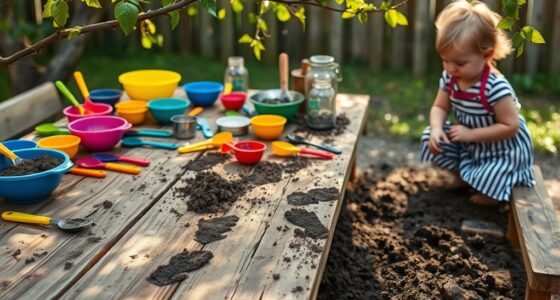
Gardening with kids is a rewarding way to teach them about nature, responsibility, and patience. When you involve children in planting and caring for a garden, you’re giving them hands-on experience that fosters curiosity and respect for the environment. To get started, gather the right garden tools that are safe and easy for little hands to handle. Small shovels, trowels, and watering cans are perfect choices. Using the correct tools not only makes tasks easier but also helps kids develop motor skills and confidence as they learn to dig, plant, and water their plants.
Gardening with kids teaches responsibility and develops motor skills with safe, easy-to-handle tools.
As you prepare the garden, teach kids about the importance of pest control. Explain that pests like insects or rodents can damage plants, and it’s crucial to manage them carefully. Instead of using harsh chemicals, introduce natural pest control methods. For example, encourage planting companion plants that repel pests or creating homemade sprays from garlic or neem oil. These approaches teach children sustainable practices and the importance of caring for the garden ecosystem. Monitoring plants regularly helps children understand the dynamics of pest populations and recognize early signs of trouble, fostering a sense of responsibility.
Involving children in pest control also provides a practical way to discuss the impact of chemicals on the environment and wildlife. Let them see firsthand how healthy plants are less susceptible to pests and how maintaining good garden hygiene—like removing dead leaves or weeds—reduces pest habitats. Emphasize patience, as pest control is often a matter of ongoing effort rather than quick fixes. Celebrate small victories when pests are kept at bay through natural methods, reinforcing that persistence pays off.
Throughout the gardening process, teach kids the safe and proper use of garden tools. Show them how to handle tools carefully, store them safely after use, and clean them regularly. This instills respect for equipment and safety habits that will serve them well in future gardening projects. As they gain confidence, encourage them to take on more responsibilities, like watering or harvesting, which deepen their connection to the plants they’ve nurtured. Additionally, understanding the contrast ratio of gardening tools like grow lights can help optimize plant health and growth conditions.
Frequently Asked Questions
What Are the Best Beginner Plants for Children?
When choosing beginner plants for children, consider easy-to-grow options like radishes, lettuce, or marigolds. These plants thrive with minimal care and quick results, boosting kids’ confidence. Incorporate simple garden design elements like raised beds or containers to make gardening fun and manageable. Teach composting basics alongside to help them understand recycling organic waste. This hands-on approach not only makes gardening enjoyable but also instills valuable environmental lessons.
How Can I Make Gardening Educational for Kids?
Imagine turning a simple garden into a classroom where curiosity blooms. You can make gardening educational by encouraging kids to keep garden journaling, tracking plant growth and changes. Introduce composting basics to teach eco-awareness and sustainability. Let them observe, ask questions, and record discoveries. This hands-on approach makes learning engaging, fostering responsibility and curiosity, while connecting them to nature and the environment in a fun, meaningful way.
What Safety Precautions Should Kids Take While Gardening?
When gardening with kids, safety is key. You should guarantee they wear garden gloves to protect their hands from dirt and sharp tools. Make sure they use sun protection like hats, sunscreen, and sunglasses to prevent sunburns. Supervise them closely, especially around tools and plants with thorns or chemicals. Teach them proper techniques and remind them to wash their hands afterward. These precautions help keep gardening fun and safe.
How Long Does It Typically Take for Children to See Results?
Imagine tiny green shoots breaking through soil, a sign of growth. You’ll see results in about one to three weeks, depending on what you plant. During this growth timeline, you develop patience and understanding, watching your child’s excitement blossom with each sprout. The process teaches them about nature’s pace, fostering patience development. Keep nurturing and celebrating small milestones, and before long, those tiny plants will flourish, showing the fruits of their care.
What Tools Are Safe and Suitable for Kids to Use?
When choosing tools for kids, you want to guarantee they’re safe and child friendly. Look for safe gardening equipment designed specifically for little hands, like small trowels, watering cans, and gloves. These child friendly tools help prevent accidents and make gardening fun. Always supervise their use and check for sharp edges or small parts. Using safe gardening equipment encourages kids to explore confidently and develop their gardening skills safely.
Conclusion
By gardening with your kids, you’re planting more than just seeds—you’re cultivating curiosity, responsibility, and joy that will grow for a lifetime. Remember, each sprout is a small miracle, a reminder that patience and nurturing turn tiny efforts into beautiful results. So, grab your tools and embrace the adventure—because the garden isn’t just a place for plants, it’s a playground for learning and connection that blossoms with every shared moment.