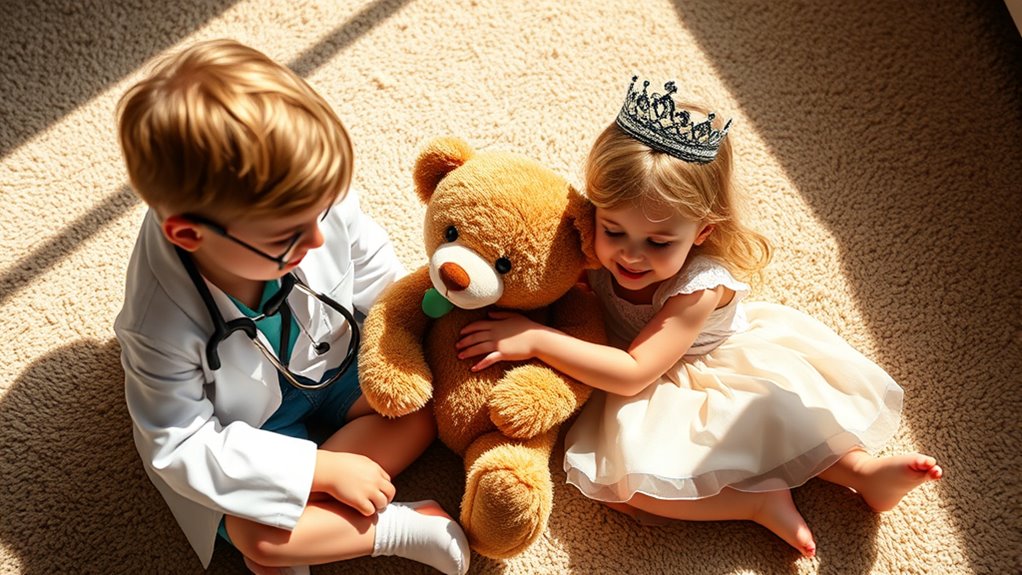

Talking about feelings through pretend play is a great way to help your child explore and express emotions safely. As they act out different scenarios, they learn to identify and label feelings like happiness, sadness, or anger. Role-playing tasks, such as caring for a doll or playing a firefighter, encourage emotional understanding and empathy. By engaging in this imaginative activity, your child develops social skills and emotional regulation—discover more ways to support their emotional growth as you continue.
Key Takeaways
- Pretend play allows children to act out and identify different emotions in a safe environment.
- Role-playing scenarios help children practice expressing feelings like happiness, anger, or sadness.
- Discussing characters’ emotions during play enhances emotional vocabulary and understanding.
- Playing out conflicts or fears helps children process and regulate complex emotions.
- Reflecting on feelings experienced during pretend scenarios fosters emotional awareness and empathy.

Have you ever noticed how children use pretend play to explore their emotions? When kids engage in make-believe scenarios, they’re not just having fun—they’re learning essential skills that shape their understanding of themselves and others. During these imaginative moments, children practice emotion recognition by acting out different feelings like happiness, anger, or sadness. They might pretend to be a brave firefighter facing a challenge or a caring parent comforting a doll. This process helps them identify and label emotions, both in themselves and in others, which is fundamental for developing emotional intelligence.
As you observe children during pretend play, you’ll notice how they navigate social skills naturally. When children take on roles, they learn how to communicate, cooperate, and negotiate with their peers. For instance, they might decide together how a story unfolds or assign roles in a game, practicing turn-taking and listening skills. These interactions teach kids how to express their feelings appropriately and understand the feelings of others. They begin to grasp concepts like empathy—recognizing how someone might feel in a given situation—and learn the importance of kindness and patience.
Pretend play also offers a safe space for children to process complex emotions they might not yet have words for. When they act out scenarios involving conflict or fear, they gain a sense of control and understanding. You might see a child pretend to be a doctor comforting a sick patient, which reflects their way of managing worry or concern. This kind of role-playing supports emotional regulation, helping children learn how to cope with their feelings in a healthy way. It’s also an effective tool for building social skills because it encourages children to think from another’s perspective, fostering empathy and compassion.
Furthermore, engaging in pretend play allows children to experiment with social roles and expectations, giving them insight into social norms and relationships. As they switch between different characters, they practice perspective-taking and learn how to navigate social interactions. This nurtures their ability to read social cues and respond appropriately, laying a foundation for effective communication and emotional expression in real-life situations.
Research shows that visionary quotes can serve as powerful tools for inspiring self-reflection and growth, just as pretend play helps children develop emotional intelligence. In essence, pretend play is much more than a pastime; it’s a foundational developmental activity that enhances emotion recognition and social skills. By stepping into various roles, children learn to understand and manage their feelings while building the social competencies they need to connect with others. Watching them create stories and act out scenarios reveals how play shapes their emotional and social growth, equipping them with the tools to navigate the complexities of human interactions confidently.
Frequently Asked Questions
How Can Parents Encourage More Emotional Expression Through Pretend Play?
You can encourage emotional expression through pretend play by introducing emotional vocabulary into your child’s stories. Engage in playful storytelling that involves characters experiencing different feelings, prompting your child to identify and discuss those emotions. Ask open-ended questions and model expressing your own feelings. This approach helps your child recognize and articulate emotions naturally, making emotional development a fun and integral part of their pretend play experiences.
What Are Signs of Emotional Understanding in Children’s Pretend Scenarios?
You’ll notice signs of emotional understanding in children’s pretend scenarios when they express emotion recognition, such as comforting a friend or showing concern. They may also demonstrate empathy development by reflecting feelings, like saying, “You seem sad,” or offering solutions. These behaviors indicate they’re grasping emotions and practicing empathy, which are key milestones in emotional growth. Encouraging their pretend play helps strengthen these skills further.
At What Age Should Children Start Expressing Feelings Through Pretend Play?
Imagine a young child’s tiny hands shaping a soft doll, their eyes lighting up as they mimic real emotions—this is when they start expressing feelings through pretend play, typically around age 3 to 4. These emotional milestones help children process their experiences, and play therapy often harnesses this creative expression to foster emotional understanding and resilience. By this age, children actively use pretend scenarios to explore and communicate their feelings.
How Does Pretend Play Support Children With Social Anxiety?
Pretend play can help children with social anxiety improve emotional regulation and peer interaction. By acting out different scenarios, you give them a safe space to explore feelings and practice social skills without real pressure. This playful environment encourages gradual confidence building, making it easier for them to connect with peers and manage emotions. Over time, they learn to navigate social situations more comfortably and express feelings openly.
Can Pretend Play Help Children Process Traumatic Experiences?
Imagine a child using pretend play as a safe harbor, anchoring their emotions during stormy times. Yes, pretend play can help children process traumatic experiences by fostering emotional regulation and supporting trauma recovery. It allows them to reenact, explore, and understand difficult feelings in a controlled environment, making the overwhelming seem manageable. This creative outlet helps children gain resilience and insight, ultimately aiding their healing journey.
Conclusion
As you watch children engage in pretend play, you might notice how effortlessly they explore their feelings. Sometimes, it’s funny how a simple game reveals what they’re truly experiencing inside. That moment when a toy becomes a friend or a storm turns into calm isn’t just play—it’s a window into their emotions. So next time, pay attention; those little scenes might just surprise you, showing you feelings you never knew were there.