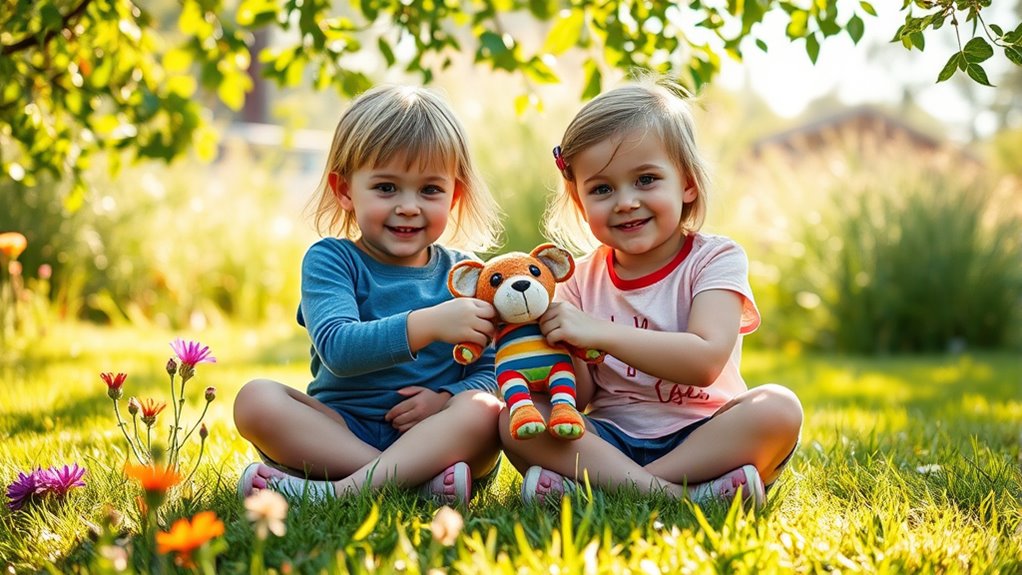

Engaging children in play is a wonderful way to foster emotional development and build empathy. When kids act out scenarios, share toys, or role-play with puppets, they learn to recognize and understand feelings. Play also encourages them to notice social cues and respond compassionately, strengthening their ability to empathize. By creating safe spaces for emotional expression during play, you help your child develop essential social skills. Keep exploring how intentional play can deepen their emotional insight and connection.

Turn the school run and nap time into listening time
- Thousands of audiobooks, podcasts and originals
- Listen on your phone, tablet or Echo — also offline
- Cancel anytime
Key Takeaways
- Play allows children to recognize and understand different emotions, fostering emotional awareness and self-expression.
- Role-playing and pretend scenarios help children practice empathizing with others’ feelings.
- Engaging in cooperative play and sharing builds social skills and promotes empathy through interaction.
- Using puppets, dolls, and role-play tools makes exploring and expressing emotions more accessible.
- Social interactions during play strengthen the ability to interpret social cues and develop inclusive behaviors.

Have you ever noticed how children often express their feelings through play? It’s a natural way for them to explore emotions and develop essential social skills. When kids engage in pretend scenarios or interactive games, they’re not just having fun—they’re building their emotional awareness. Through play, children learn to recognize different feelings, understand others’ perspectives, and respond appropriately. This process is fundamental to developing empathy, which is the ability to understand and share the emotions of someone else.
As you observe children during play, you’ll notice that they often mimic adult behaviors or act out social situations. These activities serve as practice for real-life interactions, helping kids grasp the subtleties of emotional cues. For instance, a child playing “house” might react to a friend’s upset mood or share toys to resolve conflicts. These moments are crucial because they teach kids how to interpret social signals and regulate their own emotions. The playful setting creates a safe space for children to experiment with different responses, fostering both their social skills and emotional awareness simultaneously.
By engaging in cooperative play, children learn the importance of turn-taking, sharing, and negotiating—skills that are essential for positive social relationships. As they navigate these interactions, they become more attuned to the feelings of others. For example, if one child notices a peer feeling left out or upset, they might invite them to join or comfort them, reinforcing their sense of empathy. This kind of social interaction helps kids understand that others have feelings that matter, which in turn deepens their emotional insight.
Play also encourages children to express their own feelings openly. When they act out scenarios where they experience happiness, frustration, or sadness, they gain a clearer understanding of their emotional states. This awareness makes it easier for them to communicate their needs and boundaries effectively. As they become more emotionally aware, they’re better equipped to handle social challenges and build meaningful relationships.
Additionally, incorporating appropriate play materials such as dolls, puppets, or role-playing toys can enhance children’s ability to explore and express emotions more vividly. These tools support emotional development by providing tangible ways to engage with feelings in a safe environment.
In essence, play isn’t just entertainment; it’s a powerful tool for emotional development. It nurtures social skills and emotional awareness in a way that feels natural and engaging for children. As you support their play, you’re helping them develop the empathy that will serve as a foundation for their social and emotional growth throughout life.
Frequently Asked Questions
How Early Can Children Start Developing Empathy Through Play?
You might wonder how early children can develop empathy through play. Around ages 1 to 2, they start showing social awareness and emotional expression, which are key for empathy. As they engage in play, they learn to recognize others’ feelings and respond appropriately. By encouraging shared activities and guiding their interactions, you help foster their emotional understanding and build a foundation for empathy that grows stronger over time.
What Types of Play Are Most Effective for Emotional Growth?
You should focus on play types like fantasy play and cooperative games, as they’re most effective for emotional growth. Fantasy play allows children to explore emotions and social roles, helping them understand others’ feelings. Cooperative games promote teamwork, communication, and empathy, encouraging kids to see different perspectives. Engaging in these activities regularly helps children develop emotional awareness, empathy, and stronger social skills naturally through enjoyable, meaningful interactions.
How Can Parents Assess Their Child’s Emotional Development During Play?
When evaluating your child’s emotional development during play, observe how they express feelings, manage conflicts, and show empathy. Play therapy techniques can reveal their emotional milestones, like understanding others’ perspectives or coping with frustrations. Engage in open conversations afterward to gauge their awareness and growth. You can also note if they seek comfort or demonstrate resilience, helping you understand their emotional progress during various play activities.
Are There Cultural Differences in Play-Based Emotional Development?
You might wonder if cultural differences affect play-based emotional development. Cultural norms and play traditions shape how children express and understand emotions during play. In some cultures, children engage in collaborative games that foster empathy, while others emphasize individual play. Recognizing these differences helps you support your child’s emotional growth appropriately, respecting cultural values. Embracing diverse play traditions enriches your child’s ability to develop empathy across different social contexts.
How Does Play Influence Emotional Resilience in Children?
Research shows that children who engage in play develop stronger emotional resilience. Play allows you to role model healthy coping strategies and emotional literacy, which helps kids manage stress better. When you create safe, supportive play environments, you give children opportunities to practice resilience, building their confidence to face challenges. This active engagement fosters emotional strength, making play a crucial tool for nurturing resilient, emotionally intelligent children.
Conclusion
By engaging in play, you foster empathy and emotional growth in a way that’s timeless, much like the bard’s tales. As you watch children navigate social scenes, remember that play is their secret weapon—building bridges of understanding and kindness. Keep nurturing these moments, for they shape compassionate hearts that’ll carry them through any age. After all, even in this digital age, the power of play remains a trusty tool for emotional development.
Halloween Picks
halloween
As an affiliate, we earn on qualifying purchases.