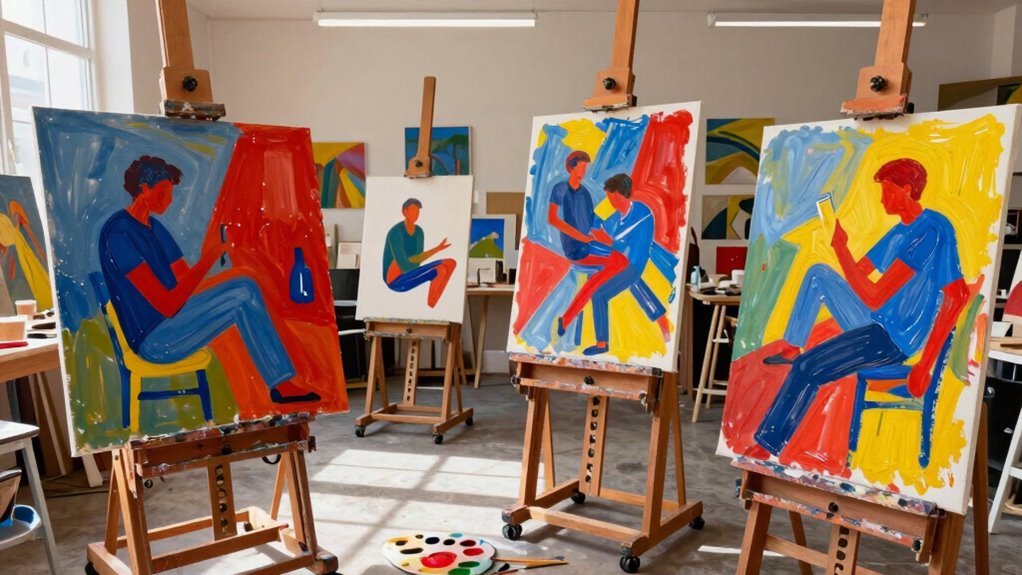

Using an easel encourages you to create larger, more energetic, and expressive art by promoting bold techniques and a physical approach to painting. Its upright position helps you view your work from a distance, making colors and compositions clearer. It also supports better posture and control, allowing for confident brushwork and experimentation. As you explore, you’ll find yourself pushing boundaries and capturing emotion more freely—if you keep exploring, you’ll discover even more ways it fuels your creativity.
Key Takeaways
- Upright positioning on easels inspires artists to work on larger canvases, promoting scale and grandeur.
- Easels foster bold brushstrokes by encouraging full-arm movement and physical engagement.
- The vertical orientation enhances perspective, enabling artists to create more dynamic and expressive compositions.
- Working on an easel boosts confidence to experiment with vibrant colors and daring techniques.
- Easels create an energetic environment that motivates spontaneous, emotionally charged artwork.
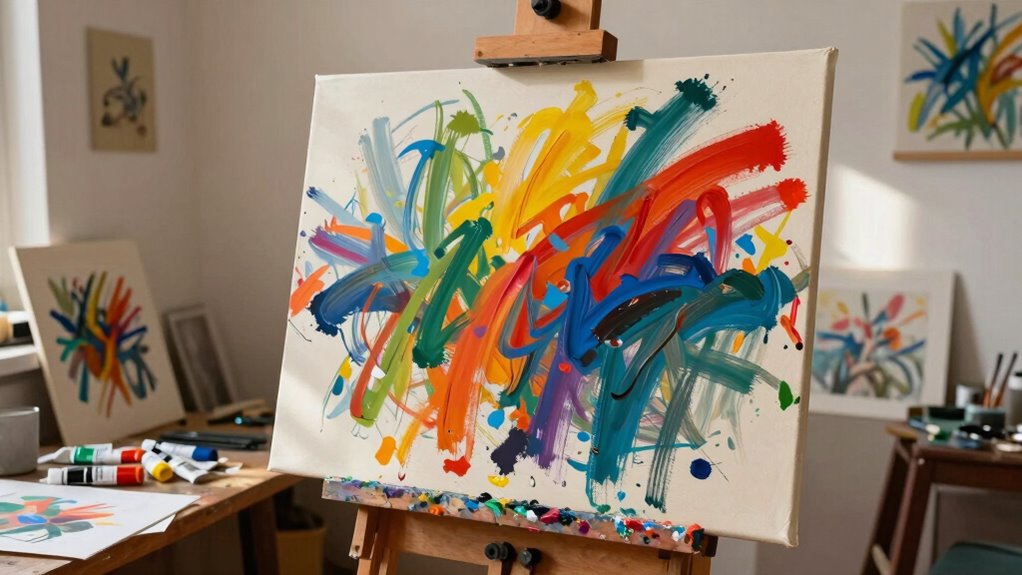
Easels have long been a staple in the world of expressive art, providing artists with a dedicated space to explore their creativity freely. When you set up your workspace with an easel, you create an environment that encourages boldness and experimentation. The upright position pushes you to think bigger, filling larger canvases and embracing expansive strokes. The physical stance naturally invites more dynamic brush techniques, allowing you to use the entire arm rather than just your wrist. As a result, your brushwork becomes more confident and expressive, giving your art a lively, energetic feel.
With an easel, you’re also more likely to engage in engaging color mixing. Because your canvas is positioned upright, you can step back frequently to view your work from a distance, gaining a clearer perspective on how your colors blend and interact. This perspective helps you make smarter decisions about color relationships and encourages you to experiment more freely. You might find yourself mixing vibrant hues directly on your palette, creating new shades that add depth and richness to your work. The ease of switching between colors and trying different combinations fosters a playful atmosphere that fuels bigger, more expressive pieces. Additionally, the ergonomics of working upright can reduce fatigue and improve your overall painting posture, allowing for longer, more comfortable sessions. Developing a better painting posture can also enhance your control and precision. Moreover, the physicality of working on an easel influences your brush techniques, inspiring you to develop a more varied and expressive style. This dynamic process further pushes artists to explore new methods and approaches.
Positioned upright, easels encourage frequent distance viewing, inspiring bold color mixing and more expressive, playful artwork.
Furthermore, the physicality of working on an easel influences your brush techniques. As you move around the canvas, you develop a wider range of brushstrokes—bold sweeps, delicate flicks, and textured dabs—all of which contribute to the emotional impact of your art. The upright position also makes it easier to layer paint, building up textures that add dimension and intensity. This vertical orientation can help artists better understand composition and balance within their work. You’re less constrained by the size of your workspace, so you’re more likely to push your boundaries and create works that are grand in scale and full of energy.
Using an easel helps break down creative barriers because it elevates your process. It encourages you to approach your painting with a sense of freedom, making your strokes more spontaneous and your use of color more daring. The combination of larger canvases, a better view of color interactions, and the freedom to experiment with brush techniques ultimately leads to bolder, more expressive art. Whether you’re working on a small study or a large masterpiece, an easel becomes the catalyst that pushes you toward bigger, more emotionally charged creations. It’s not just a tool—it’s an invitation to paint with passion and confidence.

Large Beech Wood H-Frame Easel, Professional Painting Easel with 2 Palette
- Premium Beech Wood Construction: Durable, warp-resistant hardwood with elegant grain
- Integrated Storage & Organization: Includes storage box and two movable palettes
- Adjustable for Canvas Sizes: Tool-free adjustment up to 36 inches
As an affiliate, we earn on qualifying purchases.
As an affiliate, we earn on qualifying purchases.
Frequently Asked Questions
What Materials Are Best for Portable Easels?
For portable easels, you’ll want travel-friendly setups made from lightweight materials like aluminum or bamboo. These materials keep the easel sturdy yet easy to carry, perfect for plein air painting or outdoor sketching. Look for compact, foldable designs that fit easily into your backpack or art bag. Lightweight, durable materials guarantee you can set up quickly and enjoy creating anywhere without the hassle of heavy, cumbersome equipment.
How Do Easel Angles Affect Painting Techniques?
Did you know that adjustable easel tilt and angle adjustment can substantially influence your painting technique? When you change the easel angles, you control brush strokes and perspective, making your work more dynamic and expressive. A steeper tilt helps with detailed work, while a flatter angle offers broader strokes. By mastering easel angles, you enhance your control, enabling bigger, more expressive art while reducing fatigue during long sessions.
Can Children Use Easels for Expressive Art?
Yes, children can definitely use easels for expressive art. Easels boost children’s creativity by providing a dedicated space for their ideas and allowing artistic freedom. They inspire kids to experiment with different colors, shapes, and techniques, making art more engaging and fun. Using an easel helps children develop confidence in their artistic skills and encourages them to express their feelings and imagination freely.
What Are the Maintenance Tips for Wooden Easels?
To keep your wooden easel in top shape, regularly check its stability and tighten any loose screws. For example, a studio owner noticed wobbling during long sessions and fixed it by tightening joints. To enhance durability, apply a wood protector or varnish annually. Maintain it clean with a damp cloth and store it in a dry, sheltered spot. Proper maintenance extends your easel’s lifespan and ensures steady support for your creative projects.
Are There Specific Easels for Different Art Mediums?
Yes, there are specific easels designed for different art mediums. For example, watercolor artists often prefer lightweight, portable easels with adjustable height for flexibility, while oil painters might choose sturdy, studio-style easels that prioritize stability. When selecting, consider easel stability and adjustable height features to suit your medium. This guarantees you work comfortably and efficiently, whether you’re creating large, expressive pieces or detailed, delicate artwork.
Conclusion
As you stand before your easel, remember it’s more than just a stand—it’s a gentle nudge encouraging your deepest feelings to flow freely. With each brushstroke, you invite your emotions to blossom into vibrant, untamed beauty. Let your easel be the quiet whisper that pushes you to explore, to grow, and to paint your innermost dreams. Embrace its silent support, and watch your artistry bloom into something truly expansive and heartfelt.