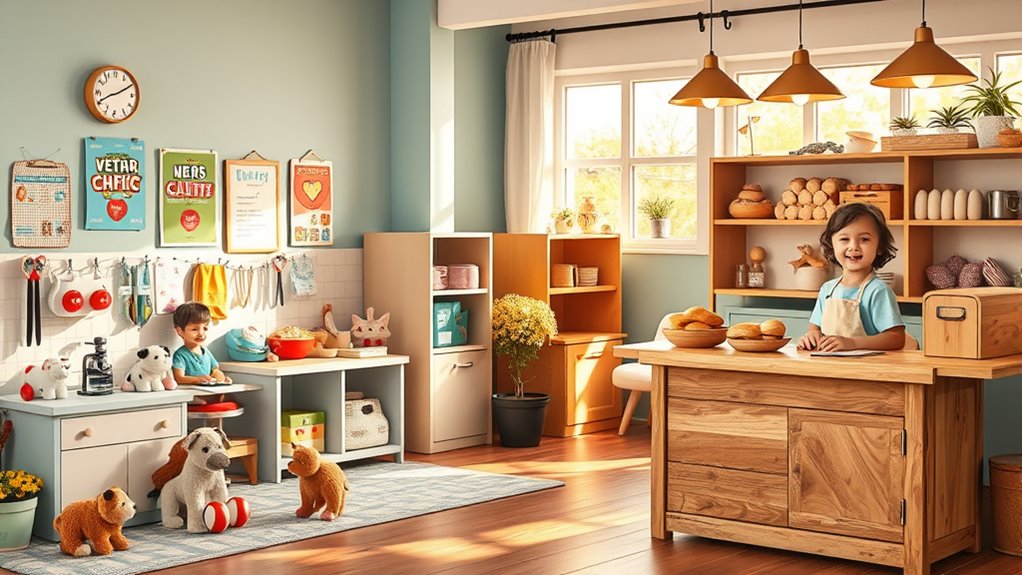

Creating dramatic play centers at home is a fun way to spark your child’s imagination and develop social skills. You can easily transform a safe corner into a vet clinic, bakery, or store using household items, costumes, and simple setups like cardboard furniture. Encourage storytelling and role-playing to boost language and empathy. Keep themes fresh by switching scenarios regularly. If you keep exploring, you’ll discover more ideas to turn any space into a lively play zone.
Key Takeaways
- Transform a dedicated corner into themed zones like vet clinic or bakery using inexpensive DIY materials.
- Use household items, costumes, and repurposed furniture to create realistic role-playing props.
- Label zones clearly and rotate themes regularly to keep children engaged and inspired.
- Incorporate storytelling tools like whiteboards and prompts to enhance language and creativity.
- Encourage role exploration, social interaction, and problem-solving through guided questions and scenario variations.
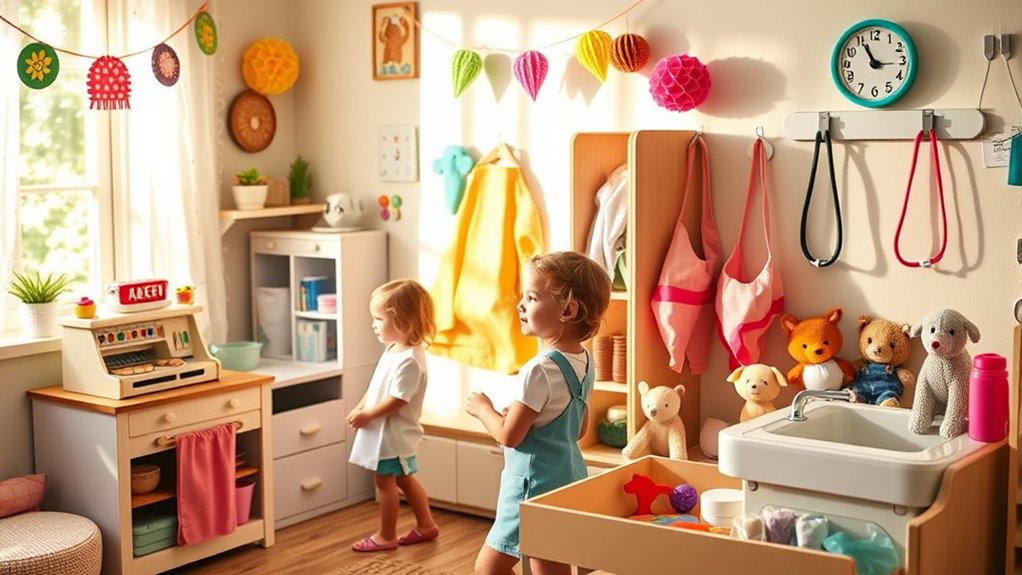
Have you ever considered transforming a corner of your home into a fun, engaging play center for your kids? Creating a dramatic play center is a fantastic way to ignite their imagination and encourage social skills. Kids love pretending to be vets, bakers, shopkeepers, or firefighters. Setting up such a space doesn’t have to be complicated or expensive. With some simple DIY setup tips, you can craft an inviting environment where your children can explore different role playing scenarios, develop problem-solving abilities, and have endless fun.
Start by choosing a dedicated corner or area that’s safe and easily accessible for your kids. Clear out the space and think about how to make it versatile. Use inexpensive materials like cardboard boxes, fabric, and household items to create a backdrop that suits various roles. For example, a cardboard box can become a pet clinic’s exam table or a bakery counter. Add some trays, bowls, and utensils to mimic real tools, allowing your kids to practice their pretend skills. Incorporate costumes—old clothes, aprons, hats, or even themed accessories—to enhance the role playing scenarios. These elements help kids fully immerse themselves in their characters and stories.
When designing your DIY setup, think about functionality and safety. Make sure all items are non-toxic, sturdy, and free of sharp edges. Label different zones within the play area—like a “clinic,” “bakery,” or “grocery store”—to give your children clear cues for their role playing. Use storage bins or baskets to keep costumes and props organized, making cleanup easy and encouraging independence. Adding a small chalkboard or whiteboard can also inspire storytelling and scenario planning, further enriching their imaginative play. Additionally, integrating AI-driven insights can help you discover new creative ideas for enhancing play scenarios and organization.
Encourage your kids to invent their own stories within these role playing scenarios. You might ask questions like, “What kind of pet will you treat today?” or “What baked goods are you making?” This sparks creativity and helps them develop language skills. As they act out different roles, they learn empathy, negotiation, and problem-solving. Plus, you can rotate themes regularly—dental office one week, bakery the next—to keep their interest high.
Creating a dramatic play center at home is an enjoyable project that fosters learning and fun. With some DIY setup tips and a focus on role playing scenarios, you turn a simple corner into a dynamic space where your kids can explore the world they imagine. Not only does it promote creativity, but it also provides a perfect outlet for their energy and curiosity.
Frequently Asked Questions
How Can I Ensure Safety During Dramatic Play?
You can guarantee safety during dramatic play by supervising materials closely and maintaining playground safety. Always check that toys and props are age-appropriate, free from small parts, and in good condition. Keep an eye on children to prevent rough play or unsafe behavior. Regularly inspect your play area for hazards, and set clear rules. By actively supervising and prioritizing playground safety, you create a secure environment where kids can explore and imagine freely.
What Age Is Best for Starting These Play Centers?
You should start dramatic play centers at home around age 2 or 3, when children show age-appropriate curiosity and can engage in imaginative activities. This promotes developmental benefits like social skills, language development, and creativity. As your child grows, you can adapt the play centers to match their evolving interests and abilities, ensuring the activities remain engaging and beneficial for their developmental journey.
How Do I Store Play Materials When Not in Use?
Think of your play area as a busy kitchen; good storage solutions keep everything tidy. When not in use, you can use bins, shelves, or a dedicated cabinet to store play materials. Labeling containers helps with play area organization, making cleanup quick and easy. Consider stackable bins or a rolling cart for flexibility. This way, your space stays inviting and organized, encouraging your child’s creativity and independence.
Can These Play Centers Support Multiple Children Simultaneously?
Yes, these play centers support multiple children at once. They’re perfect for group activities, encouraging kids to work together and share roles. You can promote role rotation, so everyone gets a turn exploring different parts of the play. This not only keeps children engaged but also fosters social skills and teamwork. Make sure the space is organized and safe, so all kids can enjoy the play comfortably.
How Do I Encourage Imaginative Storytelling During Play?
You might find that a sudden rainstorm outside sparks your child’s imagination, encouraging them to plunge into role playing scenarios. To boost storytelling, introduce fun prompts like “What happens next?” or “Imagine you’re a superhero.” Encourage them to build on each other’s ideas, making play more dynamic. By sharing these storytelling prompts, you inspire your child to create richer, more engaging narratives during dramatic play.
Conclusion
Creating dramatic play centers at home lets you nurture imagination, encourage exploration, and foster confidence. You provide opportunities for your child to pretend, to learn, and to grow. You inspire creativity, ignite curiosity, and build confidence. In these simple moments, you nurture dreams, support development, and strengthen your bond. With every play center you create, you’re not just building a space—you’re building a foundation for a lifetime of discovery and joy.