
To start a daily play routine at home, create a balanced schedule that includes outdoor and indoor activities, setting specific times for each. Limit screens to certain periods, like after outdoor play or snacks, and establish clear boundaries. Incorporate fun activities like arts, movement, and nature exploration to keep your child engaged and active. Stay consistent but flexible, adjusting routines as needed. Keep going, and you’ll discover more ways to make daily play enjoyable and beneficial.

Turn the school run and nap time into listening time
- Thousands of audiobooks, podcasts and originals
- Listen on your phone, tablet or Echo — also offline
- Cancel anytime
Key Takeaways
- Establish a consistent daily schedule balancing outdoor, indoor, and rest periods to create predictability.
- Incorporate a variety of activities like outdoor exploration, arts, and movement to keep play engaging.
- Limit screen time and set clear boundaries to promote active, creative play.
- Involve children in planning activities to foster enthusiasm and ownership.
- Adjust routines flexibly to accommodate energy levels and developmental needs.
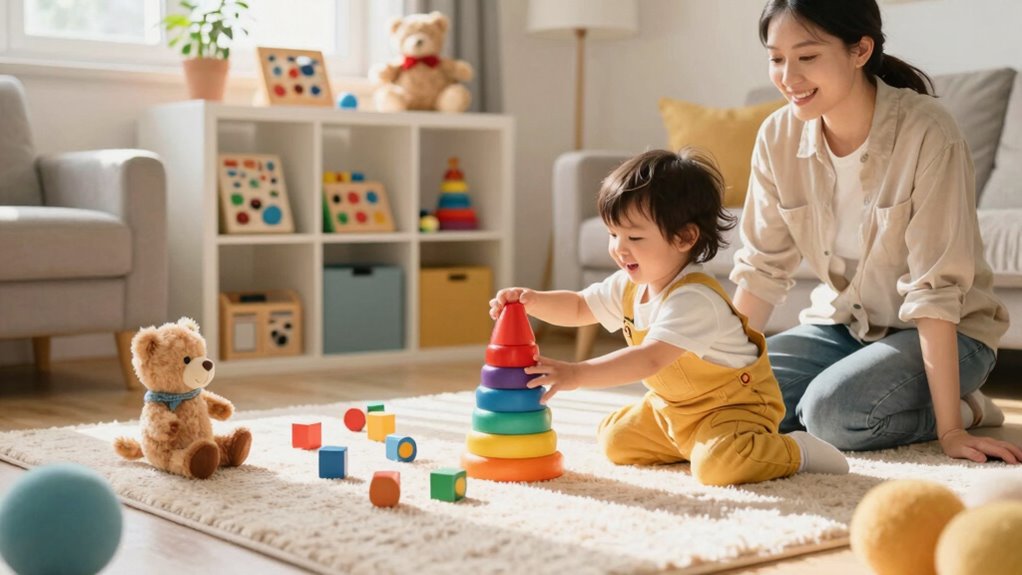
Starting a daily play routine at home can seem overwhelming, but with a clear plan, you’ll find it becomes an enjoyable part of your day. The key is to set a balanced schedule that includes both indoor and outdoor activities, giving your child the right mix of fun and development. One of the most important aspects is managing screen time, so it doesn’t dominate your child’s day. Too much screen time can limit physical activity and social interaction, so aim to limit it to specific times, like after outdoor play or a healthy snack. Establish clear boundaries, such as no screens during meals or an hour before bedtime, and encourage other engaging activities that promote creativity and movement.
Incorporating outdoor activities into your routine is essential. Fresh air and open space help your child burn off energy, improve motor skills, and develop a love for nature. You might set aside a specific time each day for outdoor play, whether it’s a walk around the block, a trip to the park, or simply playing in your backyard. Keep the activities simple—throwing a ball, riding a tricycle, or exploring nearby trees. The goal is to make outdoor play consistent and enjoyable, so your child looks forward to it. You can also involve your child in small gardening tasks or nature walks, which foster curiosity and a sense of responsibility. Engaging with biodiversity through outdoor exploration can deepen your child’s connection to the environment. Incorporating environmental awareness into daily activities can further nurture their appreciation for nature. Additionally, understanding the importance of early childhood development can help you tailor activities that support their growth. Developing an understanding of environmental sustainability can also inspire your child to care for their surroundings from a young age.
Indoor play is equally important and offers opportunities for creativity and skill-building. Set up a dedicated space for arts and crafts, puzzles, or building blocks. These activities help develop fine motor skills and problem-solving abilities. To keep things fresh, rotate toys and activities regularly, so your child stays engaged without becoming bored. Incorporate movement into indoor routines with dance parties, obstacle courses, or simple yoga sessions. These activities help burn off energy and improve coordination.
Creating a daily routine means consistency, but also flexibility. Some days will be more active than others, and that’s okay. The main idea is to establish a pattern that balances physical activity, creative play, and rest. By setting clear limits on screen time and prioritizing outdoor activities, you’re helping your child develop healthy habits early on. Over time, this routine becomes second nature, making daily play both fun and beneficial for their growth and well-being.
As an affiliate, we earn on qualifying purchases.
Frequently Asked Questions
How Do I Motivate My Child to Participate Daily?
You can motivate your child to participate daily by creating a fun, inviting play environment and using reward systems. Praise their efforts, offer small incentives, and set consistent routines. Make playtime enjoyable and varied to keep their interest. When they see that play is rewarding and engaging, they’ll be more enthusiastic to join every day. Keep it positive, and gradually encourage independence to build their motivation naturally.
What Are Age-Appropriate Play Activities for Different Children?
Research suggests age-appropriate play boosts development, so organize your child’s play area with toys suited to their age. For toddlers, focus on simple puzzles and soft blocks, while preschoolers enjoy imaginative play and basic art supplies. School-aged children thrive with more complex building sets or educational games. Regularly update toy selection to match their growing interests, keeping play engaging and tailored to their developmental stage.
How Can I Balance Playtime With Other Daily Responsibilities?
You can balance playtime with daily responsibilities by creating a structured play schedule that fits into your day. Use time management strategies to allocate specific periods for play, chores, and other tasks. Stick to this routine consistently, so your child knows what to expect. This approach helps you guarantee meaningful play while also handling your responsibilities efficiently, making the day more organized and enjoyable for everyone.
What Safety Measures Should I Consider During Play?
To keep playtime safe, you should always prioritize playground safety and toy safety. Regularly inspect equipment for hazards, like loose bolts or sharp edges, and guarantee toys are age-appropriate and free from small parts that could cause choking. Keep a watchful eye during play, and create a safe environment by removing any potential dangers. These precautions are essential—they might just save your child’s day from unexpected accidents.
How Do I Handle Tantrums or Resistance to Play?
When your child resists play or throws a tantrum, stay calm and practice emotional regulation yourself. Gently acknowledge their feelings and offer reassurance, helping them feel understood. Use positive reinforcement to encourage cooperation, praising small successes and redirecting their attention to engaging activities. Consistently setting boundaries and remaining patient helps your child learn to manage emotions, making future playtimes smoother and more enjoyable for both of you.
Conclusion
Starting a daily play routine at home is like planting a seed for joy and growth. With a little consistency and creative flair, you’ll nurture a space where your little one feels free to explore and learn. Over time, those small moments of play will blossom into cherished memories and stronger bonds. So, embrace the journey—sometimes the tiniest steps lead to the most beautiful adventures. Your home is ready for magic to unfold.
Cold & flu season Picks
humidifiers
As an affiliate, we earn on qualifying purchases.