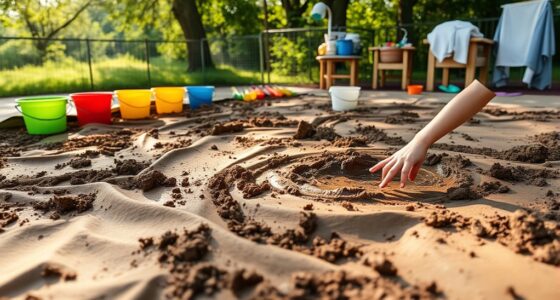
To incorporate color sorting in sensory play, gather safe, textured objects like buttons, beads, or blocks and sort them by color into designated containers. Encourage your child to use their fingers to pick and place items, boosting fine motor skills and tactile exploration. Ask questions about the colors and textures to support language development. You can also add challenges, like sorting by size or creating story-based activities, to make it even more engaging. Keep exploring to discover more fun ideas!

Turn the school run and nap time into listening time
- Thousands of audiobooks, podcasts and originals
- Listen on your phone, tablet or Echo — also offline
- Cancel anytime
Key Takeaways
- Incorporate colorful, textured objects like beads or buttons to enhance tactile and visual sensory experiences.
- Use designated containers for each color to facilitate sorting and reinforce color recognition.
- Combine color sorting with storytelling or pretend play to make the activity engaging and meaningful.
- Introduce multisensory elements, such as different textures or sizes, to deepen sensory exploration.
- Encourage language development by asking questions about colors and sorting decisions throughout the activity.

Color sorting is a simple yet effective way to engage children in sensory play while helping them develop important skills. When you introduce color sorting activities, you give kids a chance to practice color recognition, which is foundational for early learning. As they pick up and classify objects based on their colors, they start to notice differences and similarities, strengthening their ability to distinguish shades and hues. This process isn’t just about identifying colors; it also encourages children to focus and pay attention to detail, which supports their cognitive development.
Color sorting boosts early learning by enhancing color recognition, focus, and cognitive development through playful, sensory activities.
As you set up a color sorting activity, you’ll want to gather a variety of colorful objects—such as buttons, blocks, or beads—that are safe for children to handle. To make it more engaging, consider using items with different textures or sizes within each color group. This way, children not only practice color recognition but also explore tactile sensory input, making the activity richer and more stimulating. Incorporating multisensory learning can enhance their engagement and understanding of the activity. Encourage your child to pick up each item and place it into the correct container or on a designated mat sorted by color. This task promotes fine motor skills because it requires precise hand movements, finger strength, and hand-eye coordination. The act of grasping, pinching, and placing objects helps develop these essential motor skills.
You can make the activity more interactive by asking questions like, “Can you find all the red blocks?” or “Where should this yellow bead go?” This promotes language development and critical thinking as they process instructions and make decisions. Providing opportunities for children to categorize objects helps build classification skills, which are important for their overall cognitive growth. Additionally, incorporating visual discrimination exercises can further refine their ability to notice subtle differences between shades and shapes. As they become more confident, introduce challenges such as sorting by multiple criteria—like color and size—or timing how quickly they can sort all the objects. These variations keep the activity engaging and help children build problem-solving skills.
To keep the experience fun and educational, you might also incorporate storytelling or pretend play. For instance, you could pretend the objects are characters that need to be sorted into their homes based on color. This adds a layer of imaginative play that makes learning feel like a game. Remember, the goal is to foster a positive, stress-free environment where children can learn through exploration and play. Incorporating early childhood development principles can help optimize their learning experiences. With consistent practice, children will improve their color recognition and fine motor skills while enjoying the process of sorting and exploring colors.
As an affiliate, we earn on qualifying purchases.
Frequently Asked Questions
What Ages Are Best for Color Sorting Sensory Activities?
You’ll find that children aged 2 to 4 are perfect for color sorting sensory activities. At this stage, they develop key skills like color recognition and fine motor control. By engaging in sorting tasks, you help them strengthen their hand-eye coordination while boosting their understanding of colors. Keep activities simple and fun, encouraging exploration and learning through playful, sensory experiences that grow with their developmental milestones.
How Can I Modify Color Sorting for Children With Special Needs?
You can modify color sorting for children with special needs by incorporating adaptive tools like textured bins or larger, easy-to-handle objects to support sensory integration. Use visual cues or labels to guide them, and break tasks into smaller steps to reduce frustration. Focus on sensory exploration and engagement, encouraging independence while providing support. These adjustments help make color sorting accessible, enjoyable, and beneficial for their developmental progress.
What Are Some Common Challenges Kids Face With Color Sorting?
You might notice kids facing color confusion or sorting frustration during activities. They may struggle to distinguish between similar shades or get overwhelmed by too many options. These challenges can cause them to lose focus or become upset. To help, simplify the color choices, use clear labels, or incorporate tactile cues. Patience and gentle guidance encourage confidence, making the sorting process more enjoyable and accessible for children experiencing these common difficulties.
Can Color Sorting Activities Be Adapted for Outdoor Play?
Yes, you can adapt color sorting activities for outdoor play using outdoor materials like seashells, stones, or leaves. Just make certain you consider weather conditions—avoid rainy or windy days that might disrupt the activity. Set up a simple sorting station on a picnic table or blanket, and encourage kids to find and sort items by color. This outdoor twist makes sensory play more engaging and connects children with nature.
How Do I Encourage Kids to Learn Color Names During Sorting?
To encourage kids to learn color names during sorting, use engaging language and ask guiding questions to boost color recognition. Incorporate sorting techniques that involve naming each color aloud as they categorize objects. Make it fun by adding stories or songs related to colors. Praise their efforts to reinforce learning and help them connect the color names with the objects they’re sorting, making the experience both educational and enjoyable.
Conclusion
As you incorporate color sorting into sensory play, you’ll notice how it sparks curiosity and joy in your child’s eyes. Sometimes, it’s the simple moments—like finding a red block or sorting blue beads—that create lasting memories. These small, shared experiences can unexpectedly turn into cherished stories you’ll both remember. Keep exploring, and you’ll see how these colorful interactions not only develop skills but also strengthen your bond in the most beautiful, everyday ways.
Halloween Picks
halloween
As an affiliate, we earn on qualifying purchases.