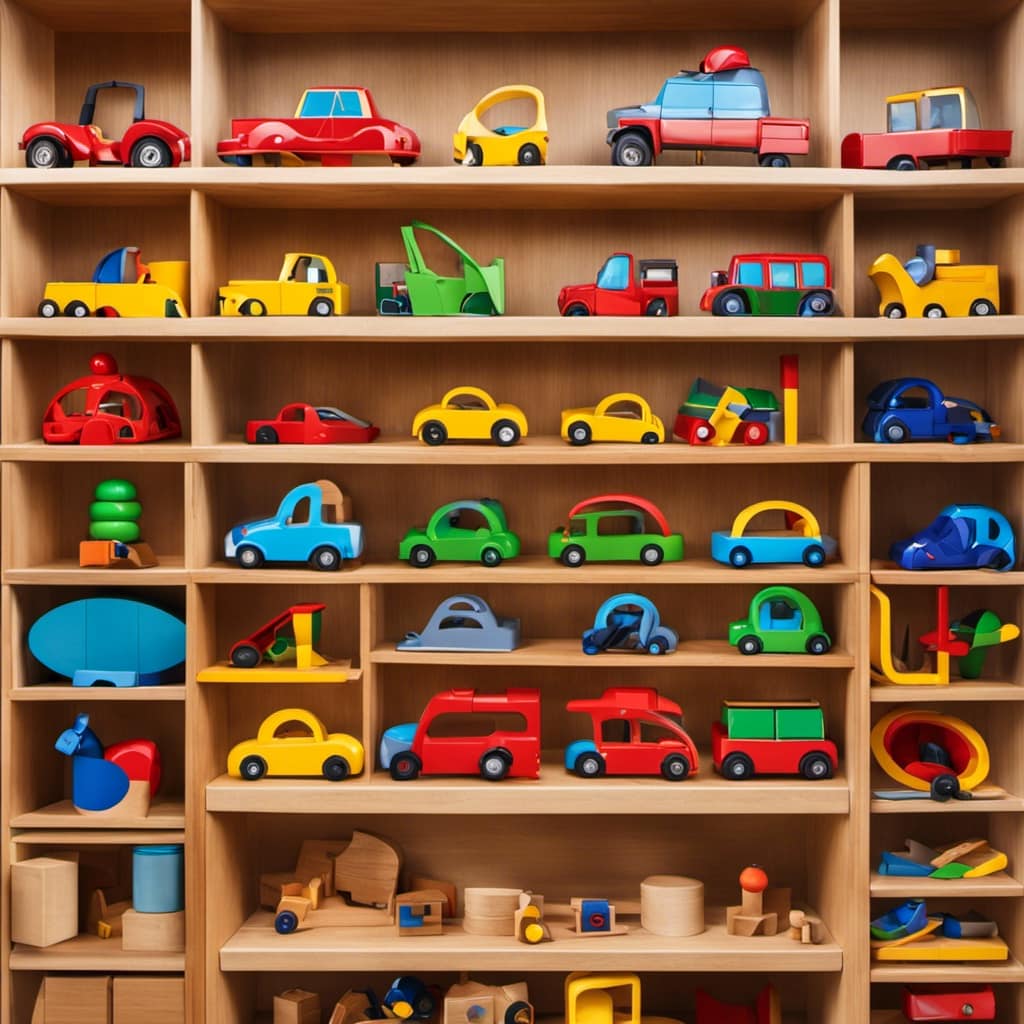
To build better toy shelves for preschoolers, opt for low, sturdy units with rounded edges and secure them to the wall for safety. Use open, accessible compartments with labeled bins or clear containers so they can quickly find and put away toys. Keep frequently used items within easy reach and leave space between shelves to prevent overcrowding. Regularly check for damage and update organization. If you keep exploring, you’ll discover even more ways to create a safe, organized play space.

Turn the school run and nap time into listening time
- Thousands of audiobooks, podcasts and originals
- Listen on your phone, tablet or Echo — also offline
- Cancel anytime
Key Takeaways
- Use low, open shelves with labeled bins for easy access and visibility of toys.
- Secure shelves to the wall and choose sturdy, child-safe materials to prevent tipping or accidents.
- Incorporate rounded edges and smooth surfaces to minimize bumps and injuries.
- Design shelves at child’s eye level to promote independence in cleanup and toy selection.
- Keep heavy or less-used items on higher shelves, and regularly inspect for safety and organization.
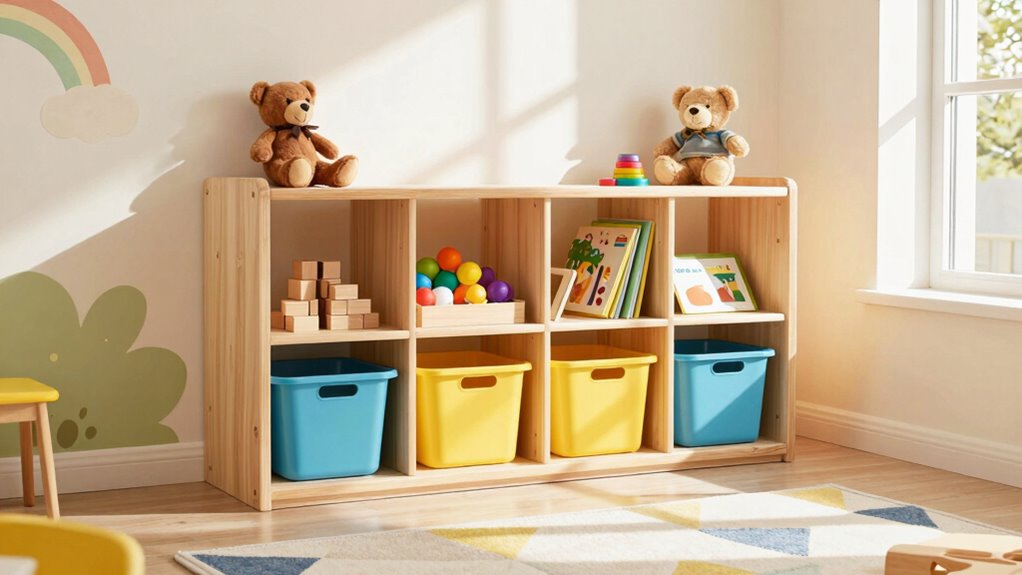
Have you ever noticed how cluttered toy shelves can make a preschooler’s space feel overwhelming? When toys are scattered and disorganized, it’s harder for your child to find what they want and easier for the room to feel chaotic. Building better toy shelves isn’t just about creating a tidy space; it’s about fostering independence and safety while making cleanup easier. The first step is to focus on effective storage organization. Use open shelves with low, accessible compartments so your preschooler can see all their toys at a glance and pick out what they want without rummaging through boxes. Incorporate labeled bins or baskets for different toy categories—like stuffed animals, building blocks, or art supplies—so your child can quickly learn where everything belongs. Clear containers are especially helpful because they allow your kid to see the contents without opening every box, making cleanup quicker and more intuitive. Additionally, choosing safe materials for your shelves helps ensure your child’s safety during play and cleanup.
When designing your shelves, consider safety considerations as a top priority. Choose sturdy, low-profile units that don’t tip easily, and secure taller shelves to the wall to prevent accidents. Avoid shelves with sharp edges or unstable bases, and opt for materials that are free from toxic paints or finishes. Keep sharp or small items out of reach to prevent choking hazards or injuries. Remember to leave enough space between shelves so your child can access toys comfortably without climbing or straining. Rounded edges and smooth surfaces are also essential to minimize the risk of bumps and scrapes. When installing shelves, double-check that they are anchored securely into the wall and that all hardware is tight. Never place heavy items on high shelves that could fall and cause injuries. Proper ventilation in the room also plays a role in maintaining a safe environment, ensuring fresh air circulation during playtime. Furthermore, understanding and implementing biodiversity principles in your home can contribute to creating a healthier indoor environment for your child.
Another safety tip is to organize toys in a way that encourages your preschooler to clean up independently. Lower shelves at your child’s eye level make it easy for them to put away toys without needing your help. Avoid overcrowding shelves, which can make it difficult for your little one to find and access toys safely. Keep frequently used toys within reach, and store less-used items higher up or in a dedicated storage closet. Regularly inspecting the shelves for loose parts or damage helps maintain safety over time. By combining smart storage organization with safety considerations, you create a space where a preschooler can happily play, learn, and clean up on their own while minimizing risks. This approach helps foster independence and keeps your home safe and organized.
child safety toy shelves for preschoolers
As an affiliate, we earn on qualifying purchases.
As an affiliate, we earn on qualifying purchases.
Frequently Asked Questions
What Safety Standards Should Toy Shelves Meet for Preschoolers?
You should guarantee your toy shelves meet safety regulations like stability standards to prevent tipping and sharp edges to avoid injuries. Check that the shelves are made from materials with proper certifications, such as non-toxic paints and durable, lead-free wood. Regularly inspect the shelves for loose parts or damage, and avoid shelves that are too tall or unstable. Following these safety standards helps keep your preschooler safe while they play and explore.
How Can I Personalize Toy Shelves for My Child’s Interests?
You can personalize your child’s toy shelf by adding custom paint in their favorite colors or themes, making it uniquely theirs. Incorporate themed decorations like cartoon characters, animals, or space motifs to reflect their interests. Use stencils or decals for detailed designs, and consider labeling sections with their name or favorite icons. This not only creates a fun, personalized space but also encourages your child to keep their toys organized and take pride in their special shelf.
What Are Eco-Friendly Materials Suitable for Toy Shelves?
You should consider eco-friendly materials like sustainable wood, which is responsibly harvested and durable, ensuring your toy shelves last. Biodegradable plastics are also a great option, as they break down naturally and reduce environmental impact. These materials are safe for your preschooler and eco-conscious, helping you create a sustainable, stylish, and functional toy storage solution. By choosing these options, you promote environmental responsibility from the very start.
How to Organize Toys for Easy Access and Cleanup?
Organizing toys is like creating a treasure map, making discovery easy and cleanup simple. Use storage bins for small toys and categorize items by type or frequency of use. Implement toy rotation so your preschooler always has fresh options, reducing clutter. Label bins clearly with pictures or words, and place frequently used toys at eye level. This approach helps your child access toys easily and keeps cleanup quick and manageable.
What Are Budget-Friendly Options for Building Toy Shelves?
You can create budget-friendly toy shelves through simple DIY projects using inexpensive materials like wooden crates, plastic bins, or repurposed furniture. These storage solutions are easy to assemble and customizable to fit your space. Consider building open shelving with inexpensive lumber or stacking storage bins for flexible organization. With a little creativity, you’ll develop effective, affordable toy storage that keeps preschoolers’ play areas tidy and accessible.
Conclusion
By creating sturdy, accessible toy shelves, you’re not just organizing a space—you’re shaping a child’s independence and joy. When shelves are designed with their reach and curiosity in mind, it’s as if you’re opening a door to endless possibilities. Remember, a well-crafted shelf isn’t just furniture; it’s a foundation for learning and growth. So, build with care and purpose, for in doing so, you’re planting seeds that will flourish for years to come.
Cold & flu season Picks
humidifiers
As an affiliate, we earn on qualifying purchases.