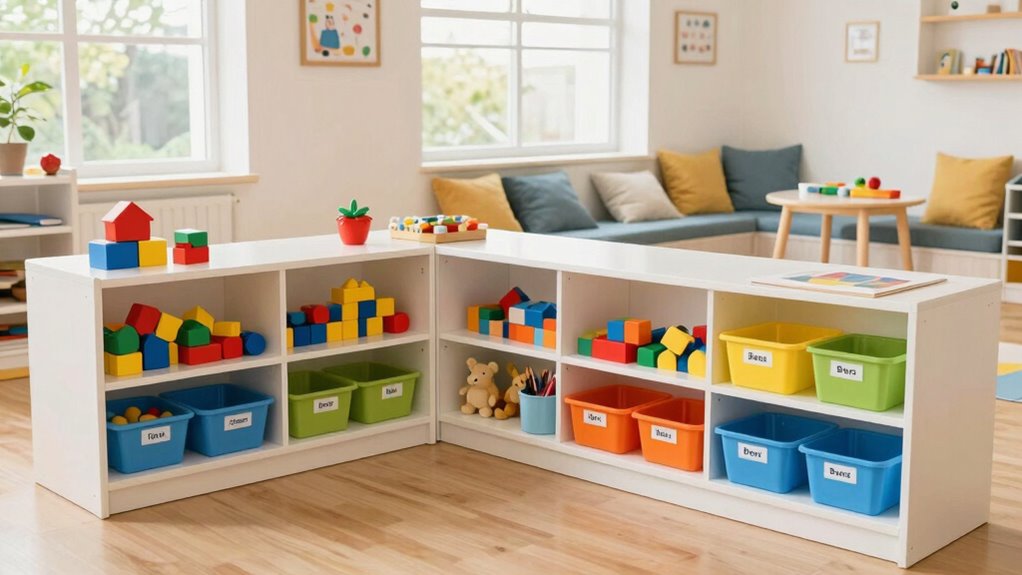

To organize preschool toys by skill and interest, create designated zones for different categories like building, art, and puzzles. Use clear, labeled storage containers and wall racks to keep toys accessible and tidy. Group toys that promote specific skills, such as sensory, cognitive, or imaginative play, and rotate them regularly to keep interest high. Making cleanup part of your routine and involving your child encourages independence. If you keep going, you’ll discover even more ways to make playtime both fun and educational.

Get baby and family essentials delivered free — and shop member deals
- Fast, free delivery on millions of items
- Access to Prime Big Deal Days deals on October 6–7
- Prime Video, Amazon Music and more included
Key Takeaways
- Categorize toys by developmental skills such as sensory, cognitive, and imaginative play for targeted organization.
- Use labeled bins and clear containers to easily identify and access toys by skill type.
- Create dedicated zones for different toy categories to promote exploration and structured play.
- Rotate toys regularly to maintain interest and prevent clutter, involving children in the process.
- Implement routines for cleanup that reinforce responsibility and make tidying part of daily activities.
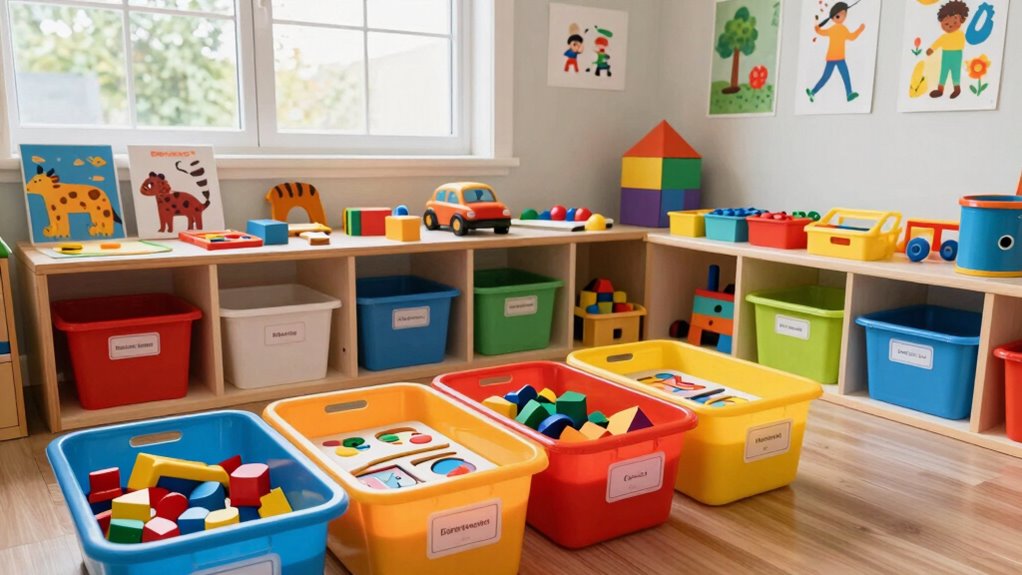
Have you ever struggled to find the right toy among a cluttered pile? If so, you’re not alone. Organizing preschool toys can feel overwhelming, but with a strategic approach, you can make playtime easier and more enjoyable. Start by creating designated zones for different developmental toy categories. For example, set aside a corner for building blocks, another for art supplies, and a separate space for puzzles and educational games. This not only helps you locate toys quickly but also encourages your child to explore different skills, from fine motor to problem-solving. Incorporating security strategies into your organization can also help protect your child’s toys from theft or damage, ensuring a safe play environment.
Creating designated zones for toy categories makes cleanup easier and encourages skill development.
Implementing creative storage solutions is key to maintaining order. Use clear bins or baskets labeled with pictures or words so your child can easily identify where each toy belongs. Consider using stackable containers or modular shelving units that fit into your space and can be expanded as your child’s collection grows. Hanging organizers or wall-mounted racks are excellent for small items like art supplies, building blocks, or small figurines. These solutions keep clutter off the floor and make toys accessible without taking up too much room. Additionally, ensuring proper indoor air quality in the play area can create a healthier environment for your child while they play and learn.
Sorting toys by developmental categories can streamline your organization process further. Group toys that promote specific skills, such as sensory play, cognitive development, or imaginative play. For instance, keep sensory bins and textured toys together to foster tactile exploration. Meanwhile, puzzles and matching games can be stored separately to encourage cognitive growth. When your child’s interests shift or new toys are added, you can easily reassign or rotate categories to keep things fresh and engaging. This approach also helps your child develop a sense of responsibility, as they learn where their toys belong and can participate in tidying up.
To keep your system effective, establish a routine for toy rotation and cleanup. Regularly go through your collection, discarding broken or unused items and swapping out toys that are less engaging. This prevents clutter from piling up and keeps your child’s play environment stimulating. Make tidying up a part of your daily routine, perhaps after playtime or before dinner. Involving your child in organizing helps them understand where things go and fosters independence.
Ultimately, organizing preschool toys by skill and interest makes tidy-up time less of a chore and more of a learning opportunity. It promotes development, sparks curiosity, and creates a more inviting play space. With creative storage solutions and thoughtful categorization, you’ll enjoy a clutter-free environment where play and learning flourish.
preschool toy storage bins with labels
As an affiliate, we earn on qualifying purchases.
As an affiliate, we earn on qualifying purchases.
Frequently Asked Questions
How Often Should I Rotate Preschool Toys?
You should rotate preschool toys every 2 to 4 weeks to keep your child’s interest fresh and encourage new skills. Use toy rotation alongside skill-based sorting to make it easier. When you switch toys, you help your preschooler explore different types of play, promoting development. Regular rotation prevents toys from becoming boring, and skill-based sorting guarantees your child continues learning while enjoying a variety of activities.
What Safety Considerations Are Important for Toy Storage?
Have you ever thought about what could happen if toys aren’t stored safely? You should prioritize toy safety by choosing storage options that are sturdy, non-toxic, and free of sharp edges. Follow storage guidelines that keep small parts out of reach of little ones and guarantee nothing tips over easily. Regularly inspect storage areas for hazards to prevent accidents, creating a safe, organized environment that encourages play without risks.
How Can I Encourage My Child to Clean up Toys?
To encourage your child to clean up toys, make it fun by turning toy sorting into a game or a race. Establish consistent cleanup routines so it becomes a habit, and praise their efforts to motivate them. Show them how to put toys back in designated bins or shelves, making the process clear and simple. Your enthusiasm and regular routines will help your child develop responsibility and enjoy tidying up.
Are There Eco-Friendly Storage Options for Preschool Toys?
You can absolutely find eco-friendly containers and sustainable storage options for preschool toys! These solutions are so environmentally friendly, they might even save the planet one toy at a time. Look for wooden bins, biodegradable baskets, or fabric totes made from organic cotton. Not only do they keep toys organized, but they also teach your child about caring for the Earth. Sustainable storage makes cleanup eco-fun and guilt-free!
How Do I Handle Toy Clutter in Small Spaces?
To handle toy clutter in small spaces, you should use creative storage solutions like multi-functional furniture, bins, and wall-mounted shelves. Incorporate clutter prevention techniques such as rotating toys regularly and establishing designated storage spots for each toy. This approach keeps the area organized, maximizes space, and makes cleanup easier for your preschooler. Consistent routines and involving your child in tidying up also help maintain a clutter-free environment.
Conclusion
By organizing your preschooler’s toys by skill and interest, you create a space that sparks curiosity and encourages development. It’s funny how a simple bin can suddenly become a treasure chest of learning adventures, just waiting to be discovered. When everything has a place, you’ll notice your little one reaching for the right toy at the right time—and maybe even finding a new favorite along the way. It’s these small moments that turn organizing into pure joy.
Fall Picks
fall essentials
As an affiliate, we earn on qualifying purchases.