To create better independent play stations, choose toys that foster sensory processing and fine motor skills, like stacking blocks or threading beads, and guarantee they’re safe and durable. Organize them on low shelves or bins within easy reach to promote independence and keep the area clutter-free. Design themed zones or stations to target specific skills and rotate toys regularly to keep kids engaged. Stay attentive to their preferences and progress, and you’ll discover more tips to optimize play spaces.

Turn the school run and nap time into listening time
- Thousands of audiobooks, podcasts and originals
- Listen on your phone, tablet or Echo — also offline
- Cancel anytime
Key Takeaways
- Incorporate sensory and fine motor toys to promote skill development and keep children engaged independently.
- Organize toys on accessible low shelves or bins to encourage autonomy and easy self-selection.
- Use durable, high-quality materials to ensure safety and longevity of toys during independent play.
- Design themed zones or stations to focus on specific skills, making play purposeful and structured.
- Rotate toys regularly and observe preferences to maintain interest and support ongoing developmental growth.
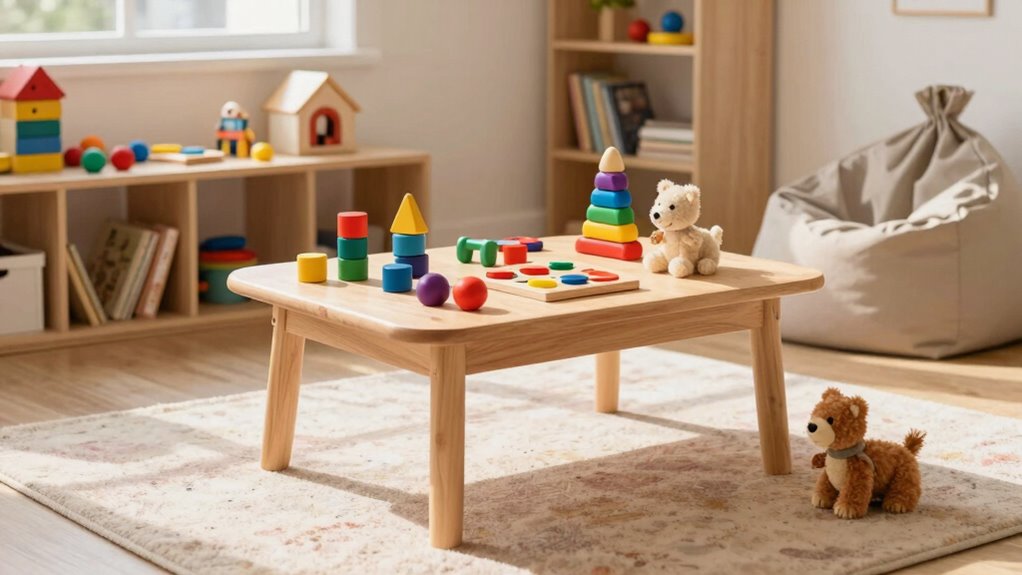
Additionally, including toys that support sensory processing can further enhance their ability to interpret sensory input, helping them build resilience and adaptability. Equally important is selecting toys that enhance fine motor skills. Fine motor skills involve the small muscles in the hands and fingers, and they’re fundamental for tasks like writing, buttoning, or using utensils. To promote this, include activities that require grasping, pinching, stacking, or threading. For example, stacking blocks, stringing beads, or using tweezers to pick up small objects can target these skills effectively. When your child practices these movements independently, they build strength, coordination, and hand-eye coordination—all essential for more complex tasks later on. Incorporating developmentally appropriate toys can further support their growth and confidence. Recognizing the importance of age-appropriate toys can ensure that your child is challenged without feeling overwhelmed, fostering positive learning experiences. Additionally, selecting toys that are safe and durable ensures a secure play environment, encouraging children to explore freely without unnecessary hazards. Incorporating quality materials can also contribute to the longevity and safety of the toys, providing peace of mind for caregivers.
When setting up the station, organize toys in an accessible way to encourage independence. Use low shelves or bins within your child’s reach, making it easy for them to select toys and put them away. Keep the area clutter-free to foster focus and avoid overwhelm. You want your child to feel empowered to choose activities without constant adult guidance, which nurtures decision-making and autonomy. Incorporate different stations or zones within their play area, each focused on specific skills or themes—like a sensory corner, a fine motor zone, or a pretend play area—to diversify their experiences.
The key is variety and balance. Mix toys that challenge their senses with those that develop fine motor skills, and rotate these regularly to maintain their interest. When you observe your child’s preferences and progress, you can adjust the setup accordingly, ensuring they’re always engaged and learning. Ultimately, creating a well-thought-out independent play station sets the foundation for your child’s development, helping them build confidence, skills, and a love for exploring the world around them.
Frequently Asked Questions
What Age Range Is Best for Independent Play Stations?
The best age range for independent play stations is typically from 6 months to 3 years old. During this time, kids develop key skills like fine motor skills and explore sensory activities that keep them engaged. You can tailor the station with age-appropriate toys that encourage grasping, stacking, and sensory exploration. As they grow, you can gradually introduce more complex activities to keep their curiosity and skills advancing.
How Do I Encourage My Child to Use the Play Station Independently?
You can encourage your child to use the play station independently by starting with short, engaging activities like interactive storytelling or sensory exploration. Show enthusiasm and join briefly to model how to explore the toys. Gradually, step back and give them time to play alone, praising their efforts. This builds confidence and independence, making them excited to explore the play station on their own.
How Often Should I Rotate Toys in the Play Station?
You should rotate toys every 1 to 2 weeks to keep your child’s interest alive—the excitement of discovering new toys is like uncovering hidden treasures! When you rotate, focus on toy organization and play area layout, making sure each toy gets a moment in the spotlight. This keeps the space fresh, engaging, and prevents clutter, encouraging your child to explore and play independently with renewed enthusiasm.
What Safety Precautions Are Necessary for DIY Play Stations?
To guarantee your DIY play station is safe, follow safety guidelines like securing heavy items, choosing non-toxic toys, and avoiding small parts that pose choking hazards. Practice toy organization to keep the area tidy, reducing clutter and accidents. Regularly inspect toys for damage, and supervise playtime. By adhering to safety guidelines and maintaining organized toys, you create a secure environment that encourages independent play while minimizing risks.
How Can I Customize Play Stations for Different Interests?
You can customize play stations by incorporating themed decor that matches your child’s interests, making the space more engaging. Add sensory elements like textured fabrics, sensory bins, or calming lights to stimulate different senses. Rotate decorations and toys regularly to keep their interest alive. Personalizing the stations with favorite colors, characters, or themes helps your child feel connected and excited to explore, encouraging independent play and curiosity.
Conclusion
By crafting play stations that invite curiosity and independence, you’re planting seeds of imagination that grow wild and free. Think of these spaces as miniature worlds where your child’s creativity dances like sunlight through leaves, each toy a stepping stone on their journey. With thoughtful design and a sprinkle of patience, you’re opening a treasure chest of discovery—where play blossoms into confidence and joy, turning everyday moments into magical adventures that bloom forever.
Halloween Picks
halloween
As an affiliate, we earn on qualifying purchases.