
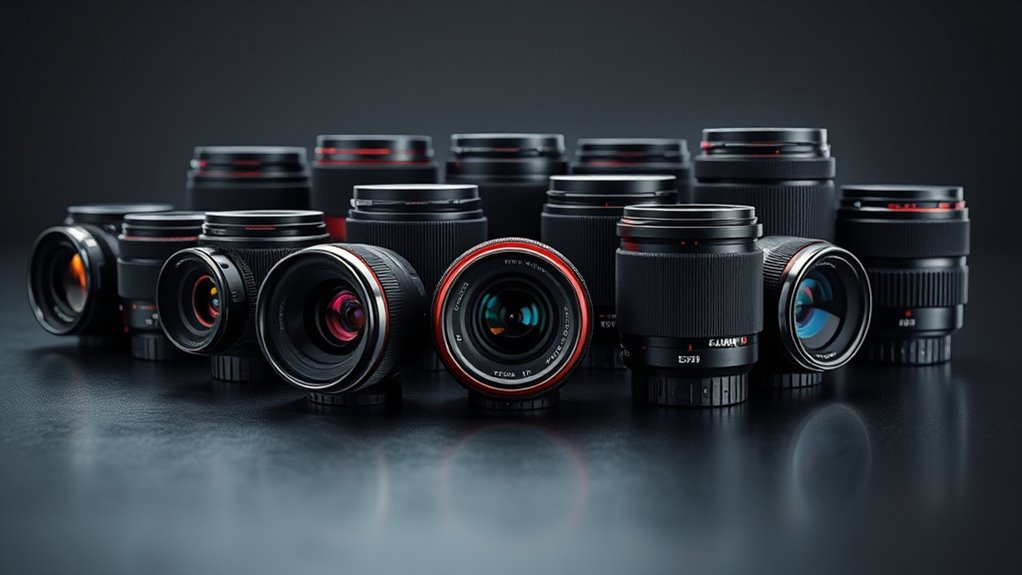

When it comes to professional DSLR photography, choosing the right lens can make a significant difference in image quality and versatility. The category of premium professional DSLR lenses is characterized by exceptional build quality, superior optics, and advanced features like image stabilization and fast apertures. The Canon EF 85mm f/1.4L IS USM stands out as the best overall thanks to its superb sharpness and low-light performance, while the Canon EF 70-200mm f/2.8L IS III USM offers incredible zoom flexibility for versatile shooting. Expect tradeoffs like higher costs and weight, which are common in this class. Continue reading for a detailed breakdown of the top options and what makes each unique.
Complete the kit


Key Takeaways
- The top picks balance exceptional image quality with durability and advanced features like stabilization and fast apertures.
- Prime lenses such as the 85mm f/1.4 outperform zooms in low-light and bokeh quality but sacrifice versatility.
- Zoom lenses like the 70-200mm f/2.8 offer flexibility but tend to be larger and more expensive.
- Renewed or used options can provide significant savings without much compromise in performance.
- Choosing the right lens depends heavily on your shooting style—portrait, wildlife, landscape, or event photography.
| Canon EF 85mm f/1.4L IS USM DSLR Lens with Image Stabilization |  | Best Overall for Portrait and Low-Light Photography | Lens Type: Prime | Focal Length: 85mm | Aperture: f/1.4 | VIEW ON AMAZON | See Our Full Breakdown |
| Canon EF 100-400mm f/4.5-5.6L IS USM Lens with Filter Kit |  | Best Versatile Telephoto Zoom for Wildlife and Sports | Focal Length: 100-400mm | Maximum Aperture: f/4.5-5.6 | Lens Mount: Canon EF | VIEW ON AMAZON | See Our Full Breakdown |
| Canon RF 800mm f/11 IS STM Lens Bundle |  | Best Super-Telephoto for Wildlife and Travel on a Budget | Lens Mount: Canon RF | Focal Length: 800mm | Aperture: f/11 | VIEW ON AMAZON | See Our Full Breakdown |
| Nikon AF-S FX NIKKOR 200-500mm f/5.6E ED VR Lens (Renewed) |  | Best Value for Long-Distance Telephoto Shooting | Focal Length: 200-500mm | Maximum Aperture: f/5.6 | Lens Mount: Nikon F | VIEW ON AMAZON | See Our Full Breakdown |
| Canon EF 75-300mm f/4-5.6 III Telephoto Zoom Lens for Canon SLR Cameras |  | Best Budget Telephoto Zoom for Entry-Level Professionals | Focal Length: 75-300mm | Maximum Aperture: f/4-5.6 | Closest Focusing Distance: 4.9 feet | VIEW ON AMAZON | See Our Full Breakdown |
| Canon EF 50mm f/1.8 STM Lens, Black, Compatible with Canon EOS DSLR Cameras |  | Best Overall for Versatile Prime Photography | Focal Length: 50mm | Maximum Aperture: f/1.8 | Lens Construction: 6 elements in 5 groups | VIEW ON AMAZON | See Our Full Breakdown |
| EF 85mm f1.8 Portrait Lens – MF for Canon EOS Rebel T8i/T7i/T7/T6i/T5/T3i/T3/T2i/XSi/XS/SL3/SL2/T100/90D/80D/70D/50D/5D Mark IV/6D II/7D II/1D X III II-Manual Focus DSLR Cameras Lenses(EF/EF-S Mount) |  | Best for Artistic Manual Focus Portraits | VIEW ON AMAZON | See Our Full Breakdown | |||
| Canon EF 16-35mm f/4L IS USM Lens |  | Best Wide-Angle Professional Zoom | Focal Length: 16-35mm | Maximum Aperture: f/4 | Lens Mount: Canon EF | VIEW ON AMAZON | See Our Full Breakdown |
| Nikon AF-S DX NIKKOR 55-300mm f/4.5-5.6G ED VR Lens for Nikon DSLR Cameras |  | Best Telephoto Zoom for Versatile Shooting | Focal Length Range: 55-300mm | Filter Thread: 58mm | Minimum Focus Distance: 4.6 ft (1.4 m) | VIEW ON AMAZON | See Our Full Breakdown |
| Canon EF 70-200mm f/2.8L IS III USM Lens for Canon Digital SLR Cameras (Renewed) |  | Best Professional Telephoto Zoom | Focal Length: 70-200mm | Maximum Aperture: f/2.8 | Image Stabilization: Yes, up to 3.5 stops | VIEW ON AMAZON | See Our Full Breakdown |
| premium professional dslr lense | Focal Length | Image Stabilization | Maximum Aperture |
|---|---|---|---|
| Canon EF 85mm f/1.4L IS USM DS | 85mm | Yes, up to 4 stops | — |
| Canon EF 100-400mm f/4.5-5.6L | 100-400mm | Yes | f/4.5-5.6 |
| Canon RF 800mm f/11 IS STM Len | 800mm | Yes | — |
| Nikon AF-S FX NIKKOR 200-500mm | 200-500mm | Yes | f/5.6 |
| Canon EF 75-300mm f/4-5.6 III | 75-300mm | — | f/4-5.6 |
| Canon EF 50mm f/1.8 STM Lens | 50mm | — | f/1.8 |
| EF 85mm f1.8 Portrait Lens | — | — | — |
| Canon EF 16-35mm f/4L IS USM L | 16-35mm | Yes | f/4 |
| Nikon AF-S DX NIKKOR 55-300mm | — | Nikon VR II | — |
| Canon EF 70-200mm f/2.8L IS II | 70-200mm | Yes, up to 3.5 stops | f/2.8 |
More Details on Our Top Picks
Canon EF 85mm f/1.4L IS USM DSLR Lens with Image Stabilization
This Canon EF 85mm f/1.4L IS USM stands out as the top choice for professionals focusing on portraiture and low-light scenarios. Its excellent image stabilization ensures sharp images even at wide apertures, surpassing the stability offered by the Canon EF 75-300mm f/4-5.6 III, which lacks stabilization altogether. The bright f/1.4 aperture enables beautiful background blur and superior low-light performance, but this comes with increased weight and cost. Compared to other primes like the EF 85mm f/1.8, this lens delivers exceptional sharpness and build quality, though at a significantly higher price point. It’s best suited for portrait shooters and event photographers who prioritize image quality over portability.
Pros:- Outstanding image stabilization up to 4 stops for razor-sharp photos
- Bright f/1.4 aperture perfect for low-light and creating subject separation
- Robust L-series build quality and advanced coatings
Cons:- Premium price may be prohibitive for some buyers
- Heavy and bulky design reduces portability during long shoots
Best for: Professional portrait photographers and low-light specialists needing sharpness and stability.
Not ideal for: Travel photographers seeking lightweight, budget-friendly options or those shooting casual snapshots.
- Lens Type:Prime
- Focal Length:85mm
- Aperture:f/1.4
- Image Stabilization:Yes, up to 4 stops
- Lens Elements:14
- Lens Groups:10
Our verdict“This lens is ideal for professionals who prioritize image quality and stabilization over size and cost.”
Canon EF 100-400mm f/4.5-5.6L IS USM Lens with Filter Kit
This Canon EF 100-400mm f/4.5-5.6L IS USM is a versatile zoom that balances flexibility and quality. Compared with the Nikon AF-S FX 200-500mm f/5.6E ED VR, it offers a slightly shorter reach but benefits from a more refined autofocus system and better build durability. Its optical stabilization and fast USM autofocus make it well-suited for handheld wildlife and sports shots, although its aperture range limits low-light capabilities compared to faster lenses like the Canon RF 800mm f/11. The inclusion of a filter kit adds value, but the lens’s weight and size remain challenging for extended handheld use. It’s best for photographers who need a reliable, professional telephoto zoom for active shooting environments.
Pros:- Versatile 100-400mm zoom range suitable for various subjects
- Effective optical image stabilization enhances handheld shots
- Fast, quiet autofocus with manual override and durable L-series construction
Cons:- Relatively heavy and bulky, less convenient for all-day carry
- Aperture limits low-light shooting compared to faster lenses
Best for: Wildlife and sports photographers who require a durable zoom with stabilization and fast autofocus.
Not ideal for: Casual photographers or those requiring low-light performance, due to limited aperture range and weight.
- Focal Length:100-400mm
- Maximum Aperture:f/4.5-5.6
- Lens Mount:Canon EF
- Image Stabilization:Yes
- Autofocus:Ring-type USM
- Includes:Filter kit, lens cap keeper
Our verdict“This lens is best for professionals needing a flexible, rugged telephoto zoom with stabilization for active shooting situations.”
Canon RF 800mm f/11 IS STM Lens Bundle
The Canon RF 800mm f/11 IS STM offers an impressive reach in a compact, lightweight package, making it a standout for wildlife and birding enthusiasts who value portability. Its fixed f/11 aperture limits low-light ability but keeps the lens affordable and manageable compared to larger telephotos like the Nikon AF-S FX 200-500mm. The optical stabilization and STM autofocus provide smooth, reliable performance for both photos and videos. Compared to larger, faster telephotos, this lens sacrifices some low-light flexibility but gains in size and weight, making it suitable for travel and outdoor adventures. It’s best for photographers who prioritize reach and convenience over fast apertures or extreme low-light performance.
Pros:- Long 800mm focal length perfect for distant subjects
- Compact, lightweight design enhances portability
- Optical Image Stabilization improves handheld image sharpness
- Smooth autofocus suitable for stills and videos
Cons:- Fixed f/11 aperture limits low-light versatility
- Retractable barrel requires careful handling to prevent damage
Best for: Wildlife and travel photographers seeking a long focal length in a portable, easy-to-carry package.
Not ideal for: Low-light or studio photographers needing wide apertures or shallow depth of field.
- Lens Mount:Canon RF
- Focal Length:800mm
- Aperture:f/11
- Image Stabilization:Yes
- Autofocus:STM
- Includes:Camera bag, filter kit, lens cap keeper
Our verdict“This lens excels for wildlife shooters prioritizing reach and portability over low-light performance.”
Nikon AF-S FX NIKKOR 200-500mm f/5.6E ED VR Lens (Renewed)
The Nikon AF-S 200-500mm f/5.6E ED VR provides a solid zoom range at a competitive price, making it a compelling alternative to Canon’s higher-priced options. Its constant f/5.6 aperture allows decent low-light performance and excellent background separation, comparable to the Canon EF 100-400mm f/4.5-5.6L, but with a longer reach. The built-in VR (Vibration Reduction) system is effective for handheld shooting, and the compatibility with teleconverters broadens its versatility. However, its bulk and weight can be fatiguing over extended periods, and as a renewed product, it may have limited warranty or minor cosmetic issues. This lens makes sense for budget-conscious professionals or serious hobbyists who need long reach without breaking the bank.
Pros:- Excellent 200-500mm zoom range for wildlife and sports
- Constant f/5.6 aperture supports decent low-light performance
- Effective VR system aids handheld shooting
- Compatibility with teleconverters extends reach
Cons:- Heavy and bulky design can cause fatigue
- Being a renewed product may have warranty or cosmetic limitations
Best for: Wildlife and sports enthusiasts wanting long zoom reach at a more accessible price point.
Not ideal for: Travelers seeking ultra-light gear or low-light shooters needing faster apertures.
- Focal Length:200-500mm
- Maximum Aperture:f/5.6
- Lens Mount:Nikon F
- Image Stabilization:Yes
- Focus Type:Auto Focus
- Includes:None specified
Our verdict“This lens offers a practical, budget-friendly long zoom for wildlife and sports photographers willing to manage its size and weight.”
Canon EF 75-300mm f/4-5.6 III Telephoto Zoom Lens for Canon SLR Cameras
This Canon EF 75-300mm f/4-5.6 III offers a basic telephoto zoom experience at an accessible price point, making it suitable for amateurs and hobbyists stepping into professional gear. Compared with the more expensive Canon EF 100-400mm, it lacks image stabilization, which can compromise sharpness at longer focal lengths without a tripod. Its variable aperture f/4-5.6 is standard for entry-level telephoto lenses and limits low-light use, but the improved zoom mechanism provides smooth operation. It’s a reasonable choice for those starting in telephoto photography who want decent reach without a hefty investment, though it’s not suited for demanding professional work or handheld shooting in low light.
Pros:- Affordable price makes it accessible for newcomers
- Smooth zoom mechanism enhances ease of use
- Decent close focusing distance for creative shots
Cons:- No image stabilization limits handheld versatility
- Limited maximum aperture reduces low-light capability
- Heavier for its class, making prolonged handheld shooting tiring
Best for: Beginners and hobbyists exploring telephoto photography on a budget.
Not ideal for: Professional photographers or those requiring stabilization and faster apertures for critical work.
- Focal Length:75-300mm
- Maximum Aperture:f/4-5.6
- Closest Focusing Distance:4.9 feet
- Diameter:2.8 inches
- Length:4.8 inches
- Weight:16.8 ounces
Our verdict“This lens suits beginners wanting a budget-friendly telephoto zoom, but it falls short for professional use requiring stabilization and low-light performance.”
Canon EF 50mm f/1.8 STM Lens, Black, Compatible with Canon EOS DSLR Cameras
This lens stands out for its combination of affordability, excellent low-light performance, and quiet autofocus, making it a top choice for professional photographers who need a reliable, all-around prime lens. Compared with the Canon EF 85mm f/1.4L IS USM, it offers a more accessible price point but with a narrower focal range. Its lightweight design and near-silent STM autofocus make it ideal for both stills and video, though its fixed 50mm focal length limits versatility for wide-angle or telephoto needs. The absence of image stabilization means you’ll need steady hands or a tripod in certain situations, but overall, this lens delivers sharp images with beautiful background blur. It’s perfect for portrait work, low-light shooting, and everyday professional use, especially when portability matters.
Pros:- Excellent low-light capability with f/1.8 aperture
- Near-silent STM autofocus ideal for video
- Compact and lightweight for easy carry
Cons:- Limited to 50mm focal length, reducing versatility
- No image stabilization, requiring steadiness in handheld shots
Best for: Professional portrait and low-light photographers who prioritize portability and affordability.
Not ideal for: Wide-angle landscape or telephoto wildlife shooters who need zoom flexibility or stabilization.
- Focal Length:50mm
- Maximum Aperture:f/1.8
- Lens Construction:6 elements in 5 groups
- Diagonal Angle of View:46°
- Closest Focusing Distance:1.15 ft / 0.35m
- Filter Size:49mm
- Max Diameter x Length:2.7 x 1.5 in / 69.2 x 39.3mm
- Weight:5.6 oz / 159g
Our verdict“This lens makes the most sense for professionals who want a sharp, portable prime for portraits and low-light scenarios without added complexity.”
EF 85mm f1.8 Portrait Lens – MF for Canon EOS Rebel T8i/T7i/T7/T6i/T5/T3i/T3/T2i/XSi/XS/SL3/SL2/T100/90D/80D/70D/50D/5D Mark IV/6D II/7D II/1D X III II-Manual Focus DSLR Cameras Lenses(EF/EF-S Mount)
This fully manual 85mm lens emphasizes artistic control and high-quality image output, making it ideal for photographers who want to refine their focusing skills and craft highly personalized portraits. Unlike the autofocus EF 50mm f/1.8 STM, this lens requires precise manual adjustment, which can be a learning curve but offers unmatched creative freedom. Its high-quality optics, including a hybrid aspherical lens and UMC coating, reduce aberrations and flare, resulting in dreamy bokeh and razor-sharp details. The absence of autofocus and electronic contacts means it’s best suited for experienced shooters comfortable with manual focus, particularly in controlled studio environments. While it’s not suited for fast-paced event shooting, it excels where deliberate focus and artistic expression are prioritized.
Pros:- High-quality optics with excellent aberration control
- Precise manual focus for creative control
- Beautiful, smooth bokeh with 6 rounded blades
Cons:- No autofocus, requiring skill and patience
- Limited versatility for dynamic or candid photography
Best for: Experienced portrait photographers seeking maximum control and artistic depth in their images.
Not ideal for: Photographers needing quick autofocus for fast-paced shoots or those unfamiliar with manual focus techniques.
Our verdict“This manual focus 85mm lens suits seasoned shooters committed to mastering focus for artistic portraiture, not fast-paced environments.”
Canon EF 16-35mm f/4L IS USM Lens
This lens offers a versatile zoom range suitable for landscape, architecture, and interior photography, with the advantage of image stabilization and excellent color accuracy. Its full-time manual focus feature allows for fine adjustments, which makes it comparable to the Canon EF 70-200mm f/2.8L IS III USM in terms of control, but with a wider focal spectrum. The f/4 aperture, however, could be limiting in low-light conditions compared to faster lenses, and its premium price reflects its professional-grade build and optical quality. The rounded 9-blade diaphragm ensures pleasing bokeh, while the high-quality coatings minimize flare and ghosting. This lens balances sharpness and color fidelity, making it suitable for professionals who need wide-angle flexibility without sacrificing image quality.
Pros:- Excellent image sharpness and color accuracy
- Full-time manual focus for precise control
- Effective image stabilization for handheld shooting
Cons:- F/4 aperture limits low-light capability
- Higher price point compared to non-L-series lenses
Best for: Landscape and architectural photographers seeking a durable, sharp wide-angle zoom with stabilization.
Not ideal for: Event or low-light photographers who require a larger aperture for better light gathering in dynamic settings.
- Focal Length:16-35mm
- Maximum Aperture:f/4
- Lens Mount:Canon EF
- Focus Type:USM (Ultrasonic Motor)
- Image Stabilization:Yes
- Diaphragm Blades:9 rounded blades
Our verdict“This lens is ideal for professionals prioritizing image quality and stabilization in wide-angle shooting, with some compromise in low-light performance.”
Nikon AF-S DX NIKKOR 55-300mm f/4.5-5.6G ED VR Lens for Nikon DSLR Cameras
This Nikon telephoto zoom provides a broad focal length range suitable for wildlife, sports, and portrait photography. Its Vibration Reduction system helps maintain sharpness in handheld shots, similar to the stabilization found in the Canon EF 70-200mm f/2.8L IS III, but with a much slower maximum aperture of f/4.5-5.6, which can hinder low-light performance. The Silent Wave Motor offers quiet autofocus, yet it’s less suited for fast-moving subjects compared to professional-grade telephotos. Its bulkier design makes it less convenient for portability, but it excels in offering a flexible zoom range at a more accessible price point. This lens is a strong choice for those needing reach and stabilization without the budget for higher-end professional telephotos, though it sacrifices speed and low-light capability.
Pros:- Wide focal length range for various subjects
- Effective vibration reduction for sharp handheld images
- Quiet autofocus with SWM technology
Cons:- Slow maximum aperture limits low-light shooting
- Bulkier and heavier than standard kit lenses
Best for: Amateur or semi-pro wildlife and sports photographers who need a versatile zoom and stabilization on a budget.
Not ideal for: Low-light event photographers or those needing fast autofocus for action sequences, due to its slow aperture and size.
- Focal Length Range:55-300mm
- Filter Thread:58mm
- Minimum Focus Distance:4.6 ft (1.4 m)
- Lens Elements:2 ED Elements, HRI Lens Element
- Image Stabilization:Nikon VR II
- Autofocus:Silent Wave Motor
Our verdict“This lens balances reach and stabilization for versatile shooting, but isn’t suited for fast action or low-light conditions.”
Canon EF 70-200mm f/2.8L IS III USM Lens for Canon Digital SLR Cameras (Renewed)
This lens is a staple for professional photographers needing a fast, versatile telephoto zoom. Its constant f/2.8 aperture rivals the 85mm f/1.8 in low-light performance but with the added flexibility of zooming from 70 to 200mm. The advanced coatings and optical elements, including fluorine on front and rear elements, significantly reduce flare and ghosting, akin to the coatings on the Canon EF 16-35mm f/4L IS USM. The image stabilization offers up to 3.5 stops of correction, making handheld shots across various conditions more reliable. Heavy and bulky, it demands careful handling, but it delivers consistent, sharp images with beautiful background separation. It’s the go-to lens for event, sports, and portrait work requiring both speed and reach.
Pros:- Constant f/2.8 aperture for low-light versatility
- Effective stabilization for handheld shots
- Advanced coatings reduce flare and ghosting
Cons:- Heavy and bulky for extended portability
- Premium price point may be prohibitive for some
Best for: Professional event, sports, and portrait photographers seeking a fast, reliable zoom with stabilization.
Not ideal for: Travel or street photographers who need lightweight, compact equipment, due to its size and weight.
- Focal Length:70-200mm
- Maximum Aperture:f/2.8
- Image Stabilization:Yes, up to 3.5 stops
- Coatings:Air Sphere Coating (ASC), Super Spectra
- Lens Elements:Fluorine Coating on front and rear elements
Our verdict“This lens is best suited for professionals who need a high-performance telephoto zoom capable of handling diverse shooting conditions, despite its size and cost.”

How We Picked
In selecting these lenses, I prioritized performance factors that matter most to professional photographers, such as optical quality, build durability, and usability. I also considered features like image stabilization, autofocus speed, and aperture size, which directly impact image sharpness and low-light capability. Cost was a factor but less so than value for money—premium lenses should deliver tangible benefits. I ranked lenses based on how well they balance these attributes, ensuring each offers a distinct advantage for different types of photography while maintaining consistent quality standards across the board.
| premium professional dslr lense | Image Stabilization | Maximum Aperture |
|---|---|---|
| Canon EF 85mm f/1.4L IS USM DS | Yes, up to 4 stops | — |
| Canon EF 100-400mm f/4.5-5.6L | Yes | f/4.5-5.6 |
| Canon RF 800mm f/11 IS STM Len | Yes | — |
| Nikon AF-S FX NIKKOR 200-500mm | Yes | f/5.6 |
| Canon EF 75-300mm f/4-5.6 III | — | f/4-5.6 |
| Canon EF 50mm f/1.8 STM Lens | — | f/1.8 |
| EF 85mm f1.8 Portrait Lens | — | — |
| Canon EF 16-35mm f/4L IS USM L | Yes | f/4 |
| Nikon AF-S DX NIKKOR 55-300mm | Nikon VR II | — |
| Canon EF 70-200mm f/2.8L IS II | Yes, up to 3.5 stops | f/2.8 |
Factors to Consider When Choosing Premium Professional Dslr Lenses
Choosing a premium DSLR lens involves more than just looking at specs; understanding your specific needs and how each lens’s features align with them is key. Beyond the initial investment, consider how the lens feels in hand, the quality of the glass, and how well it performs in real-world conditions. There are common mistakes to avoid, such as overspending on features that won’t be used or neglecting compatibility issues. Making an informed decision means weighing the tradeoffs between size, weight, aperture, and zoom range to find a lens that complements your workflow.
Performance and Image Quality
In the premium segment, sharpness, contrast, and color rendition are non-negotiable. Prime lenses like the 85mm f/1.4 deliver outstanding subject isolation and clarity, especially in low light, but limit framing options. Zooms such as the 70-200mm f/2.8 provide flexibility without sacrificing much image quality, making them ideal for dynamic shooting situations. Be mindful that higher-end lenses often cost more but offer superior glass coatings and elements to reduce aberrations and flare, which are vital for professional work.
Build Quality and Durability
Professional lenses are expected to withstand rigorous use, so look for weather sealing, robust construction, and high-quality materials. A lens with a solid metal mount and sealed joints will last longer and resist dust and moisture. Cheaper or less durable models may be tempting due to price but could require more maintenance or replacement over time. The added weight of premium materials can be a downside, but it reflects greater durability and stability in the field.
Aperture and Low-Light Performance
Fast apertures like f/1.4 or f/2.8 are hallmarks of premium lenses, enabling better low-light performance and more creative control over depth of field. Larger apertures also facilitate quicker shutter speeds, reducing motion blur in handheld shots. However, lenses with wider apertures tend to be more expensive and sometimes larger. If your work involves a lot of indoor or night photography, prioritizing a fast aperture is advisable, but for landscape or studio work, slightly narrower apertures may suffice.
Size, Weight, and Portability
While premium lenses often come with a sturdy build, their size and weight can impact your shooting experience. Larger, heavier lenses like the 70-200mm f/2.8 require more effort to carry and maneuver, which could be a drawback for travel or event photography. Conversely, compact prime lenses such as the 85mm f/1.8 offer easier handling but may lack the flexibility of zooms. Balancing portability with performance is essential, especially if you’ll be shooting on the move frequently.
Cost and Value
Premium lenses command significant investment, but their durability and optical excellence justify the price for professionals. Beware of inflated prices and consider whether a slightly older or renewed model offers comparable performance at a lower cost. Also, factor in the potential need for accessories like filters or lens caps. The best value lenses deliver high performance without unnecessary extras, but sometimes paying more upfront results in fewer replacements and repairs down the line.
Frequently Asked Questions
Is it worth investing in a prime lens over a zoom in this category?
Prime lenses in the premium segment often provide superior optical quality, larger apertures, and better low-light performance, making them ideal for portrait work or artistic shots. However, they sacrifice versatility since you can’t zoom in or out. If your photography requires quick framing adjustments or diverse focal lengths, a zoom lens might be more practical, even if it slightly compromises on optical perfection. Ultimately, the choice depends on your shooting style and specific needs.
Should I buy a new or renewed lens for professional work?
Renewed lenses can offer substantial savings and typically undergo thorough testing and certification, making them a reasonable choice for professionals looking to optimize budget without sacrificing quality. However, it’s important to buy from reputable sellers that provide warranties and return policies. While new lenses come with maximum assurance and the latest updates, renewed options can be nearly as reliable if sourced carefully, offering good value for high-end gear.
How much should I expect to spend on a truly premium DSLR lens?
In the premium category, prices generally start around $1,000 and can exceed $2,500 for flagship models with advanced features like fast apertures and weather sealing. The most affordable options often compromise on features or build quality, so investing in a lens that offers a balance of performance and durability is wise. For critical professional use, spending more ensures better optical performance, longevity, and resale value down the line.
Are larger apertures necessary for all types of professional photography?
Fast apertures like f/1.4 or f/2.8 are especially valuable for portrait, event, and low-light photography, where they help isolate subjects and reduce noise. However, for landscape or commercial work, slightly narrower apertures such as f/4 or f/5.6 can still deliver excellent results, often with increased depth of field and sharper images across the frame. The choice depends on your typical shooting conditions and desired creative effects.
How important is lens compatibility with my DSLR body?
Ensuring compatibility is critical because different brands and models use distinct mount systems and electronic interfaces. A lens designed for Canon EF mount won’t fit Nikon F-mount bodies, and even within brands, newer lenses may require specific camera firmware. Compatibility also affects autofocus performance and feature access. Always verify your camera model and mount type before purchasing a premium lens to avoid costly mismatches or performance issues.
Conclusion
For those seeking the best overall performance and versatility, the Canon EF 70-200mm f/2.8L IS III USM remains the top choice, especially for professionals needing zoom flexibility. Beginners or hobbyists focused on portraiture may find the Canon EF 85mm f/1.4L IS USM ideal due to its superb optical qualities and low-light capabilities. For photographers prioritizing premium build quality and maximum image quality, the Canon EF 16-35mm f/4L IS USM offers excellent wide-angle performance. Cost-conscious professionals should consider renewed or used options like the Nikon AF-S FX NIKKOR 200-500mm to balance performance with budget. Ultimately, your specific shooting style and needs will determine the best lens in this highly capable lineup.