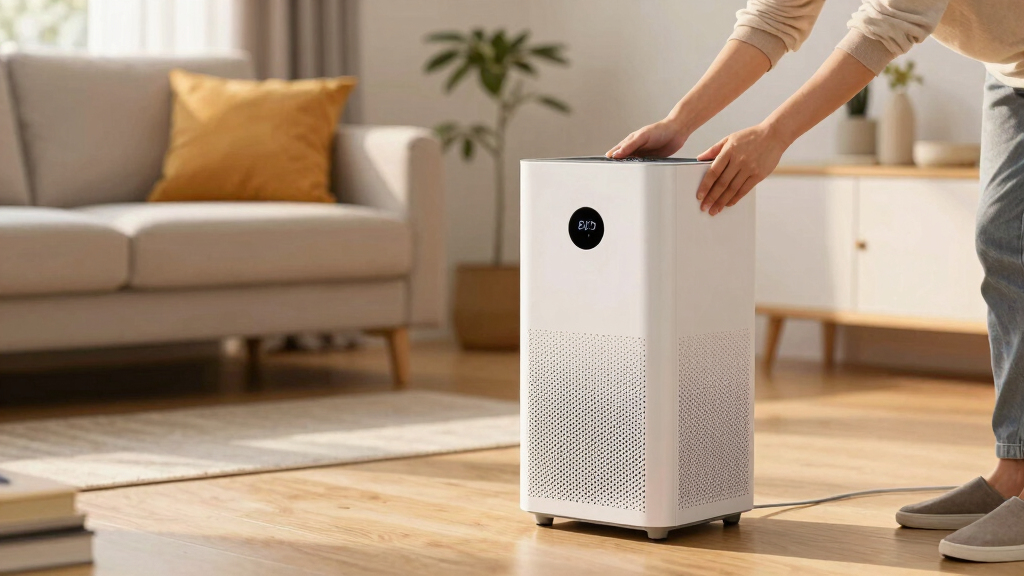
The best air purifier overall is the Levoit Core 400S-P because it pairs broad room coverage with automatic air-quality control, useful smart features, and a manageable footprint. The Coway Airmega AP-1512HH(W) is my pick for buyers who prefer straightforward automation, while the Shark model offers a more premium approach to particle and odor control. The main tradeoffs are realistic room coverage, filter costs, noise at useful fan speeds, and whether smart controls add enough value for the price. Large coverage claims can be tempting, but filtration speed and replacement-filter access often matter more than the biggest number on the box. Continue reading for the full breakdown of all 15 models and the buyer each one suits best.

Turn the school run and nap time into listening time
- Thousands of audiobooks, podcasts and originals
- Listen on your phone, tablet or Echo — also offline
- Cancel anytime
Complete the kit


Key Takeaways
- Levoit Core 400S-P leads the roundup because its combination of room capacity, automatic sensing, WiFi control, and everyday usability is more balanced than the more specialized alternatives.
- Coway Airmega AP-1512HH(W) favors simplicity, making it a stronger match than the Core 400S-P for buyers who want responsive automatic operation without relying on an app.
- Levoit 200S-P is the large-room specialist; I rank its washable pre-filter and pet-friendly intake design above less-established models that compete mainly through larger coverage claims.
- Levoit Core 300-P offers the clearest value tradeoff, while the smaller Core 200S-P and Blueair Blue Pure 511i Max make more sense when bedroom-friendly size matters more than maximum airflow.
- Pet hair, smoke, and odors call for different strengths: MOOKA PR1 emphasizes pet-focused upkeep, Winix 5520 adds substantial particle-and-carbon filtration, and Shark places greater emphasis on odor treatment.
| ECOSELF Air Purifier for Large Rooms |  | Best for Open-Plan Spaces | Coverage area: Up to 1,800 sq ft | Air intake: 360 degrees | Automatic mode: Yes | VIEW LATEST PRICE | See Our Full Breakdown |
| Shark HP152 Air Purifier |  | Best for Odor Control | Model: HP152 | Coverage area: Up to 650 sq ft | Filter type: HEPA-exceeding NeverChange filter | VIEW LATEST PRICE | See Our Full Breakdown |
| Levoit Core 400S-P Air Purifier |  | Best Overall | Coverage area: Up to 1,733 sq ft | Filter type: 3-in-1 HEPA | Smoke CADR: 231 CFM | VIEW LATEST PRICE | See Our Full Breakdown |
| Coway Airmega AP-1512HH(W) |  | Best Energy-Saving Pick | Room size: Up to 361 sq ft | Filtration stages: Pre-filter, deodorization filter, True HEPA, and ion stage | Particle capture: 99.97% claimed | VIEW LATEST PRICE | See Our Full Breakdown |
| Levoit Core 200S-P Air Purifier |  | Best Compact Smart Pick | Room size: Up to 140 sq ft | Filter system: 3-in-1 | Particle filter: HEPA | VIEW LATEST PRICE | See Our Full Breakdown |
| 1500 Ft² True HEPA Air Purifier |  | Best for Quiet, Simple Coverage | Coverage Area: Up to 1500 sq ft | Filtration: 3-stage True HEPA | Particle Capture: 99.97% | VIEW LATEST PRICE | See Our Full Breakdown |
| MOOKA PR1 |  | Best for Pet Owners | Coverage Area: Up to 2200 sq ft | Filtration: Washable 4-stage system | Air-Quality Sensor: PM2.5 sensor with display | VIEW LATEST PRICE | See Our Full Breakdown |
| Levoit Vital 200S-P |  | Best Smart Pick for Allergy Management | Coverage Area: Up to 1875 sq ft | Filtration Efficiency: 99.97% for 0.1–0.3 μm particles | Smoke CADR: 250 CFM | VIEW LATEST PRICE | See Our Full Breakdown |
| Winix 5520 |  | Best Overall | Room Coverage: Up to 1882 sq ft | HEPA Filter: True HEPA | Allergen Capture: 99.99% | VIEW LATEST PRICE | See Our Full Breakdown |
| Levoit Core 300-P |  | Best Value for Bedrooms | Coverage Area: Up to 1073 sq ft | Power: 56W | Smoke CADR: 143 CFM | VIEW LATEST PRICE | See Our Full Breakdown |
| Blueair Blue Pure 511i Max |  | Best Compact Smart Purifier | Coverage Area: Up to 1,138 sq ft | Filtration Technology: HEPASilent dual filtration | Particle Removal Efficiency: 99.97% down to 0.1 microns | VIEW LATEST PRICE | See Our Full Breakdown |
| Levoit Vital 100S-P |  | Best for Pet Owners | Room Coverage: Up to 1,073 sq ft | Filtration Efficiency: 99.97% for particles from 0.1 to 0.3 μm | Minimum Noise Level: 25 dB in Sleep Mode | VIEW LATEST PRICE | See Our Full Breakdown |
| KNKA Air Purifier for Large Rooms |  | Best for Open-Plan Rooms | Coverage Area: Up to 1,695 ft² | Smoke, Dust and PM2.5 CADR: 226 CFM | Pollen CADR: 244 CFM | VIEW LATEST PRICE | See Our Full Breakdown |
| PuroAir 240 |  | Best Warranty-Backed Pick | Coverage Area: Up to 1,000 sq ft | Filtration System: Pre-filter, HEPA and activated carbon | Particle Removal Efficiency: Up to 99.9% | VIEW LATEST PRICE | See Our Full Breakdown |
| 2,400 ft² Large-Room Air Purifier |  | Best Maximum-Coverage Pick | Coverage Area: 2,400 sq ft in 30 minutes | Filtration: Three-stage True HEPA | Airflow: 360° | VIEW LATEST PRICE | See Our Full Breakdown |
| air purifier | Coverage area |
|---|---|
| ECOSELF Air Purifier for Large | Up to 1,800 sq ft |
| Shark HP152 Air Purifier | Up to 650 sq ft |
| Levoit Core 400S-P Air Purifie | Up to 1,733 sq ft |
| Coway Airmega AP-1512HH(W) | — |
| Levoit Core 200S-P Air Purifie | — |
| 1500 Ft² True HEPA Air Purifie | Up to 1500 sq ft |
| MOOKA PR1 | Up to 2200 sq ft |
| Levoit Vital 200S-P | Up to 1875 sq ft |
| Winix 5520 | — |
| Levoit Core 300-P | Up to 1073 sq ft |
| Blueair Blue Pure 511i Max | Up to 1,138 sq ft |
| Levoit Vital 100S-P | — |
| KNKA Air Purifier for Large Ro | Up to 1,695 ft² |
| PuroAir 240 | Up to 1,000 sq ft |
| 2,400 ft² Large-Room Air Purif | 2,400 sq ft in 30 minutes |
More Details on Our Top Picks
ECOSELF Air Purifier for Large Rooms
I rank the ECOSELF Air Purifier as the strongest fit for open-plan living areas because its 1,800-square-foot coverage and 360-degree intake are built around broad air circulation. The automatic fan response also suits households that want filtration to react without constant adjustment. Compared with the Levoit Core 400S-P, though, ECOSELF provides less performance detail: there are no published CADR figures or stated filter-life estimates, making long-term costs and cleaning speed harder to judge. Its 20 dB sleep setting is quieter on paper, while the 24-hour timer offers more scheduling flexibility. I place it behind Levoit overall because verified airflow data carries more weight than coverage alone, but ECOSELF makes sense for buyers prioritizing reach and simple automation over app control and detailed performance metrics.
Pros:- 360-degree intake draws air from every side
- Automatic mode responds to measured pollution levels
- 20 dB sleep mode is suited to overnight use
- PM2.5 readings provide immediate air-quality feedback
Cons:- No CADR ratings are supplied for judging cleaning speed
- Filter lifespan and replacement costs are unspecified
- Large-room feature set may carry a higher upfront price
Best for: Owners of open-plan living rooms who want wide coverage, automatic fan adjustment, and very quiet overnight operation
Not ideal for: Buyers who want published CADR figures or clear replacement-filter intervals before calculating ownership costs
- Coverage area:Up to 1,800 sq ft
- Air intake:360 degrees
- Automatic mode:Yes
- Air-quality display:PM2.5 reading and color indicator
- Sleep-mode noise:20 dB
- Timer range:1–24 hours
Our verdict“I recommend ECOSELF for large, shared spaces when broad intake and quiet automation matter more than app features or published airflow data.”
Shark HP152 Air Purifier
The Shark HP152 earns its place through a useful pairing: particle filtration and a dedicated odor-neutralizing cartridge. That makes it better suited to kitchens, pet areas, and shared rooms than the Coway Airmega AP-1512HH, whose deodorization filter is less central to its design. Shark also claims 99.98% capture of micropollutants, while CleanSense IQ gives buyers visible feedback instead of leaving fan changes unexplained. I rank it below the Levoit Core 400S-P because its 650-square-foot reach is much smaller and no CADR values are provided. The washable debris screen may reduce buildup on the main filter, but it still needs routine cleaning, and the higher initial price works against budget shoppers. For odor-prone medium rooms, however, Shark offers the most targeted feature set in this group.
Pros:- Dedicated cartridge targets household odors
- HEPA-exceeding filter claims 99.98% micropollutant capture
- CleanSense IQ displays current air quality
- Washable debris screen can help protect the main filter
Cons:- Coverage is modest beside the large-room options
- Washable components require periodic hands-on cleaning
- Higher upfront cost than basic HEPA models
Best for: Pet owners and home cooks seeking particle filtration plus dedicated odor treatment in a bedroom or medium-size living area
Not ideal for: Owners of open-plan rooms above 650 sq ft who need documented CADR performance and wider coverage
- Model:HP152
- Coverage area:Up to 650 sq ft
- Filter type:HEPA-exceeding NeverChange filter
- Claimed capture rate:99.98% of micropollutants
- Air-quality system:CleanSense IQ
- Odor treatment:Odor Neutralizer cartridge
- Operating features:Eco mode and dimmable lights
- Included components:Washable Debris Defense filter, HEPA filter, and odor cartridge
Our verdict“I would choose the Shark HP152 for a pet area, kitchen-adjacent room, or bedroom where odor control carries as much weight as particle capture.”
Levoit Core 400S-P Air Purifier
I give the Levoit Core 400S-P the top position because it combines large-room reach with the most useful performance evidence in this batch. Its published 231–259 CFM CADR ratings let buyers compare actual smoke, dust, and pollen cleaning rather than relying only on a maximum-area claim. The ECOSELF model covers a slightly larger stated area and runs quieter in sleep mode, but Levoit adds Wi-Fi control and clearer airflow data. Compared with the compact Core 200S-P, it is far better matched to living rooms and open layouts, though it costs more and occupies a larger role than many bedrooms require. Full control also leans on the app, and its 120V limitation rules out straightforward international use. I rank it first because its balance of measurable output, automation, and smart control serves the widest range of buyers.
Pros:- Published CADR ratings support meaningful performance comparisons
- Covers large rooms up to 1,733 sq ft
- Wi-Fi control adds remote scheduling and monitoring
- 24 dB sleep mode suits overnight operation
Cons:- Full feature access depends on using an app
- 120V design is intended for United States use
- Costs more than smaller, non-connected purifiers
Best for: Households needing documented large-room performance for smoke, pollen, dust, or pet dander alongside remote app control
Not ideal for: International buyers with non-120V power or people who do not want key controls tied to a phone app
- Coverage area:Up to 1,733 sq ft
- Filter type:3-in-1 HEPA
- Smoke CADR:231 CFM
- Dust CADR:240 CFM
- Pollen CADR:259 CFM
- Connectivity:Wi-Fi
- Automatic features:Auto mode and air-quality monitoring
- Sleep-mode noise:24 dB
- Voltage:120V
Our verdict“I recommend the Core 400S-P as the best all-round choice for buyers who want large-room filtration backed by published airflow figures and smart controls.”
Coway Airmega AP-1512HH(W)
The Coway Airmega AP-1512HH is my energy-conscious choice because its Eco mode can stop the fan when pollution remains low, rather than running continuously at a fixed speed. Its four-stage filtration also gives allergy-focused buyers a washable pre-filter, deodorization layer, True HEPA filter, and optional ion stage in one compact unit. Against the Shark HP152, Coway covers less space and lacks a dedicated odor cartridge; against the Levoit Core 200S-P, it offers stronger onboard automation but no app or voice control. The listed room figures are modest, so I would not choose it for an open-plan floor. Replacement filters add recurring expense, and the top fan setting reaches 53.8 dB. Still, physical controls and automatic energy management make this a practical middle ground for buyers who prefer standalone operation over connected features.
Pros:- Eco mode reduces unnecessary fan operation when air is clean
- Four-stage system handles particles, larger debris, and odors
- Built-in air-quality monitoring supports automatic adjustment
- Compact depth makes placement easier in smaller rooms
Cons:- Room coverage trails every other model in this batch except the Core 200S-P
- Replacement filters create ongoing ownership costs
- Maximum noise of 53.8 dB may be intrusive in a bedroom
Best for: Allergy-sensitive buyers furnishing a small or medium bedroom who want automatic air-quality response without relying on an app
Not ideal for: Open-plan households needing coverage beyond 361 sq ft or buyers seeking remote and voice controls
- Room size:Up to 361 sq ft
- Filtration stages:Pre-filter, deodorization filter, True HEPA, and ion stage
- Particle capture:99.97% claimed
- Power consumption:77 W
- Noise range:24.4–53.8 dB
- Dimensions:16.8 x 18.3 x 9.7 inches
- Color:White
- Control modes:Automatic, timer, and Eco modes
- Warranty:1 year for internal parts; 3 years for motor and electronic parts
Our verdict“I favor the Coway for smaller allergy-focused rooms where energy-saving automation and direct controls matter more than wide coverage or Wi-Fi.”
Levoit Core 200S-P Air Purifier
I place the Levoit Core 200S-P in the compact-smart slot because it brings app and voice control to spaces where a large purifier would waste floor area. Its 3-in-1 filter targets common bedroom irritants and adds activated carbon for everyday odors, while AHAM verification gives its modest coverage claim more context. Compared with the Coway Airmega AP-1512HH, it is easier to control remotely and better suited to dorm-room routines, but Coway covers a larger area and has automatic air-quality sensing. The Core 400S-P is the clear Levoit choice for a living room; this model’s 140-square-foot limit makes it a personal-room appliance, not a whole-home solution. At 27 dB, it is also slightly louder on paper than the other sleep-focused picks. I recommend it when small size and connected convenience outweigh raw capacity.
Pros:- Compact footprint fits desks, nightstands, and tight rooms
- App and voice controls support hands-free adjustments
- Three-stage filtration addresses particles and everyday odors
- AHAM verification adds confidence to the stated performance
Cons:- 140 sq ft coverage is too limited for most shared living areas
- 27 dB rating is higher than several competing sleep modes
- Genuine replacement filters add recurring cost
Best for: Students, apartment residents, and smart-home users filtering a single small bedroom, nursery, dorm room, or home office
Not ideal for: Buyers trying to clean a living room or any space larger than 140 sq ft with one unit
- Room size:Up to 140 sq ft
- Filter system:3-in-1
- Particle filter:HEPA
- Odor filter:Activated carbon
- Pre-filter:Included
- Noise level:27 dB
- Controls:Smart app and voice control
- Night operation:Sleep mode
- Certification:AHAM Verified
Our verdict“I recommend the Core 200S-P for one small room when voice control and compact placement matter more than coverage.”
1500 Ft² True HEPA Air Purifier
I rank this as the best choice for quiet, straightforward large-room purification. Its 360-degree intake can pull air from every side, while the claimed 20dB minimum noise level is lower than the Levoit Core 300-P’s 24dB sleep setting. That makes it better suited to light sleepers who do not need app controls or automatic air-quality adjustments. The four fan speeds and flexible timer provide more manual control than the Core 300-P, and daily power use is modest. Still, the lack of a sensor, auto mode, and published CADR figures makes performance harder to judge than with the Winix 5520. I place it below those smarter models because filter availability and three-to-six-month replacement intervals may raise ownership costs, while its broad housing can crowd a small bedroom.
Pros:- 360-degree intake draws air from all sides
- 20dB minimum noise level suits nighttime operation
- Four fan speeds and four timer choices provide flexible manual control
- Low stated daily energy consumption
Cons:- No air-quality sensor or automatic mode
- Replacement filters may be needed every three to six months
- No published CADR ratings, making direct performance comparisons difficult
Best for: Light sleepers who want manually controlled HEPA filtration for a large bedroom or pet area without app setup
Not ideal for: Buyers who want verified CADR data, automatic air-quality adjustment, or a compact purifier for a tight room
- Coverage Area:Up to 1500 sq ft
- Filtration:3-stage True HEPA
- Particle Capture:99.97%
- Noise Level:20dB
- Power Consumption:0.35kWh per day
- Fan Speeds:4
- Timer Options:2, 4, 6, or 8 hours
- Certifications:ETL, FCC, EPA, and CARB
Our verdict“This is my pick for quiet manual operation in a roomy bedroom, provided smart sensing and verified CADR figures are not priorities.”
MOOKA PR1
The MOOKA PR1 earns my pet-focused recommendation because its dedicated Pet mode, washable filtration stage, and 2200-square-foot claim directly address hair, dander, and recurring odors. It covers more stated area than the Levoit Vital 200S-P, while the PM2.5 display makes changes in air quality visible rather than leaving owners to guess. Auto mode also gives it a clear usability advantage over the manually controlled Levoit Core 300-P. The compromise is refinement: its 26dB sleep setting is louder on paper than the Winix 5520’s 23.5dB minimum, and the sensor requires an initial preheating period. A washable filter does not remove replacement costs, since the main filter still needs changing. I would treat the aroma-pad feature as optional, not as a reason to choose an air purifier.
Pros:- Dedicated Pet mode targets the needs of homes with cats or dogs
- PM2.5 sensor and display provide real-time air-quality feedback
- Auto mode can adjust operation without constant manual input
- Washable filtration stage helps manage visible pet hair
Cons:- 26dB sleep mode is louder on paper than several competing models
- Main filters still require replacement every three to six months
- Sensor preheating creates a delay before readings stabilize
Best for: Pet-owning households that need wide coverage, visible PM2.5 readings, and a mode dedicated to hair and odor management
Not ideal for: Very light sleepers or buyers who expect a washable stage to eliminate recurring filter purchases
- Coverage Area:Up to 2200 sq ft
- Filtration:Washable 4-stage system
- Air-Quality Sensor:PM2.5 sensor with display
- Minimum Noise:26dB in Sleep mode
- Operating Modes:Sleep, I, II, III, Auto, and Pet
- Certifications:CARB, ETL, DOE, and FCC
Our verdict“I would choose the MOOKA PR1 for a pet-heavy living area where automatic control and visible pollution readings matter more than the lowest possible sleep noise.”
Levoit Vital 200S-P
I place the Levoit Vital 200S-P near the front of this group because it combines documented CADR ratings, fine-particle filtration, and useful automation in one allergy-focused package. Its pollen CADR of 289 CFM is the strongest published figure among these five, making it a more evidence-backed choice than the generic 1500-square-foot model. Compared with the Winix 5520, the Vital offers more flexible scheduling through VeSync plus Pet, Auto, Sleep, and custom operation, though the Winix counters with a high-deodorization carbon filter and AHAM verification. The tradeoffs are cost and dependence on connected features: replacement filters can be expensive, and Wi-Fi is required to access its full control set. Its large footprint also makes little sense beside the Levoit Core 300-P in a small bedroom. I favor it for buyers managing pollen, dust, and dander.
Pros:- Strong published CADR ratings for smoke, dust, and pollen
- VeSync app supports remote control and custom schedules
- Auto, Pet, and Sleep modes adapt to different household needs
- Ambient-light sensor adjusts display brightness
Cons:- Wi-Fi is required for the complete smart-control experience
- Replacement filters may cost more than those for simpler purifiers
- Large body is excessive for compact bedrooms
Best for: Allergy-prone households that want strong published airflow ratings, automatic sensing, and app-based schedules for a large room
Not ideal for: Small-room users or buyers who do not want Wi-Fi dependence and higher-priced replacement filters
- Coverage Area:Up to 1875 sq ft
- Filtration Efficiency:99.97% for 0.1–0.3 μm particles
- Smoke CADR:250 CFM
- Dust CADR:254 CFM
- Pollen CADR:289 CFM
- Modes:Auto, Sleep, Pet, and custom schedules
- Connectivity:Wi-Fi via VeSync with voice compatibility
- Light Sensor:Automatic display-brightness adjustment
Our verdict“The Vital 200S-P is my smart allergy pick for buyers who value documented airflow and scheduling enough to accept higher filter costs.”
Winix 5520
The Winix 5520 takes my Best Overall spot because it balances particle capture, odor control, verified performance credentials, and automatic operation without leaning on a single niche. Its True HEPA filter carries a 99.99% capture claim, while the high-deodorization carbon filter makes it better suited to smoke, cooking smells, and pet odors than the more particle-focused Levoit Vital 200S-P. Smart sensors, Auto mode, and Wi-Fi control also put it well ahead of the manual Levoit Core 300-P. I rank it above the MOOKA PR1 because AHAM verification adds useful third-party context, and its 23.5dB minimum is quieter on paper. Buyers pay for that balance: the unit is bulky, the initial price is higher, and ongoing filter replacements remain part of ownership. For mixed household pollutants, though, it has the fewest major compromises.
Pros:- True HEPA filtration carries a 99.99% allergen-capture claim
- High-deodorization carbon filter targets household odors
- Smart sensors and Auto mode reduce manual adjustment
- AHAM Verified and UL Certified
Cons:- Higher purchase price than simpler large-room models
- Bulky design can dominate a small space
- HEPA and carbon filters require recurring replacement
Best for: Large-room households dealing with a mix of allergens, smoke, cooking smells, and pet odors that want automatic control
Not ideal for: Budget-focused buyers, small apartments, or anyone unwilling to budget for recurring HEPA and carbon filter replacements
- Room Coverage:Up to 1882 sq ft
- HEPA Filter:True HEPA
- Allergen Capture:99.99%
- Odor Filter:High Deodorization Carbon Filter
- Minimum Noise:23.5dB
- Air-Quality Monitoring:Smart sensors with LED indicator
- Connectivity:Wi-Fi app control
- Certifications:AHAM Verified and UL Certified
Our verdict“I recommend the Winix 5520 as the most balanced choice for large rooms where both airborne particles and stubborn odors need attention.”
Levoit Core 300-P
I see the Levoit Core 300-P as the value-minded bedroom pick, especially for buyers who want recognized CADR ratings without paying for Wi-Fi or an air-quality sensor. Its 24dB Sleep mode is quiet enough for nighttime use, and the compact 1073-square-foot coverage claim is more sensible for bedrooms than the oversized Winix 5520 or MOOKA PR1. The three published CADR figures also make its expected airflow easier to compare than that of the generic 1500-square-foot purifier. Simplicity creates the main drawback: there is no Auto mode, so owners must choose fan speeds themselves, and no display reports changing particle levels. Coverage and airflow are also lower than the Levoit Vital 200S-P, making this a weaker fit for open-plan living areas. Its 120V-only electrical design further limits it to compatible markets.
Pros:- Published CADR ratings provide clear airflow comparisons
- 24dB Sleep mode is well suited to bedrooms
- Compact format is easier to place than larger-room competitors
- AHAM Verified and backed by multiple safety certifications
Cons:- No Auto mode or air-quality sensor
- Lower airflow and coverage than larger models in the lineup
- 120V specification limits use to compatible regions
Best for: Bedroom users and allergy sufferers who want quiet, certified HEPA filtration with straightforward manual controls
Not ideal for: Open-plan homes, overseas users, or buyers who want automatic sensing, app control, and live air-quality readings
- Coverage Area:Up to 1073 sq ft
- Power:56W
- Smoke CADR:143 CFM
- Dust CADR:153 CFM
- Pollen CADR:167 CFM
- Filter Type:3-in-1 HEPA filter
- Sleep-Mode Noise:24dB
- Voltage:120V
- Certifications:AHAM Verified, FCC Certified, ETL Listed, and CARB Compliant
Our verdict“I would buy the Core 300-P for a bedroom where quiet, proven basics matter more than automation or maximum-room coverage.”
Blueair Blue Pure 511i Max
I rank the Blueair Blue Pure 511i Max as the compact choice because its 360-degree intake and 19 dB minimum noise suit bedrooms, nurseries, and tight offices. Compared with the Levoit Vital 100S-P, it occupies less visual space and runs more quietly at its lowest setting, while the app and automatic sensor offer more control than a basic purifier. Its HEPASilent system targets particles down to 0.1 microns, making it a strong fit for dust, smoke, and allergy management. The stated 1,138-square-foot reach sounds generous, but I would still treat this primarily as a small-room model, since maximum coverage does not indicate rapid cleaning throughout that entire area. It also costs more than simpler units, reserves full functionality for app users, and brings recurring filter expenses.
Pros:- 19 dB minimum noise is well suited to sleeping spaces
- HEPASilent filtration captures 99.97% of particles down to 0.1 microns
- Automatic sensing and app control support hands-off operation
- Compact design and 360-degree intake simplify placement
Cons:- Costs more than many basic small-room purifiers
- Full feature access depends on the mobile app
- Replacement filters add an ongoing expense
Best for: Bedroom and home-office users who want quiet automatic cleaning, app control, and a small footprint
Not ideal for: Buyers furnishing an open-plan living area or anyone who does not want core controls tied to a mobile app
- Coverage Area:Up to 1,138 sq ft
- Filtration Technology:HEPASilent dual filtration
- Particle Removal Efficiency:99.97% down to 0.1 microns
- Minimum Noise Level:19 dB
- App Control:Yes
- Automatic Operation:Sensor-based auto adjustment
- Air Intake:360°
- Design:Compact, Scandinavian-inspired
Our verdict“I recommend this for smart, quiet bedroom cleaning, but not as the primary purifier for a sprawling shared space.”
Levoit Vital 100S-P
I place the Levoit Vital 100S-P in the pet-focused role because its washable pre-filter can catch fur and larger debris before they load the HEPA stage. That makes upkeep more manageable than with the non-washable filter in the 2,400 ft² Large-Room Air Purifier. Its AHAM VERIFIDE status also gives its performance claims more grounding than the less-documented KNKA model, while WiFi and VeSync controls support schedules and remote adjustments. The 1,073-square-foot rating suits a living room or generous bedroom, though buyers seeking wider open-plan reach may prefer the KNKA or Levoit Vital 200S-P. Sleep Mode drops to 25 dB, but the Blueair Blue Pure 511i Max is quieter on paper. I see the main compromises as app setup complexity, reliance on official replacement filters, and recurring filter costs.
Pros:- Washable pre-filter helps manage pet hair and larger debris
- AHAM VERIFIDE certification adds confidence in rated performance
- WiFi and VeSync controls allow remote operation and scheduling
- 25 dB Sleep Mode supports overnight use
Cons:- Setup may feel involved for buyers new to smart appliances
- Official Levoit replacement filters are recommended
- Ongoing filter purchases raise long-term ownership cost
Best for: Pet-owning households that need a washable first-stage filter, verified performance, and scheduled smart operation
Not ideal for: People who want app-free simplicity or need one purifier for a space much larger than 1,073 square feet
- Room Coverage:Up to 1,073 sq ft
- Filtration Efficiency:99.97% for particles from 0.1 to 0.3 μm
- Minimum Noise Level:25 dB in Sleep Mode
- Pre-Filter:Washable
- Wireless Control:WiFi
- Mobile App:VeSync
- Air Quality Monitor:Included
- Certification:AHAM VERIFIDE
Our verdict“I would choose this for a pet-heavy room where washable pre-filtration and dependable smart controls matter more than maximum coverage.”
KNKA Air Purifier for Large Rooms
I give the KNKA Air Purifier the open-plan role because it pairs a 1,695-square-foot rating with disclosed 226 CFM smoke, dust, and PM2.5 CADR and 244 CFM pollen CADR. Those airflow figures are more useful for comparing cleaning speed than coverage alone. It reaches farther than the Levoit Vital 100S-P and adds dedicated pet, eco, and sleep modes, while its washable pre-filter helps control debris before it reaches the HEPA layer. The 2,400 ft² Large-Room Air Purifier claims broader reach, but KNKA supplies clearer CADR data. I would pick this for a large shared room where real-time AQI feedback matters. Still, the three-to-six-month replacement schedule could become expensive, and the many modes may feel busy beside PuroAir 240’s simpler controls. Its 22–24 dB Sleep Mode is quiet, though not the lowest figure here.
Pros:- High disclosed CADR ratings provide a clearer measure of cleaning speed
- Large 1,695-square-foot stated coverage suits open-plan rooms
- Pet, eco, and sleep modes adapt operation to different needs
- Washable pre-filter reduces buildup on the main filter
Cons:- Main filter may require replacement every three to six months
- Multiple filters and modes create a steeper learning curve
- Replacement frequency may raise yearly operating costs
Best for: Households cleaning a large open living and dining area that want disclosed CADR ratings, pet controls, and live AQI feedback
Not ideal for: Buyers who prefer a minimal control scheme or want filters that typically last longer than six months
- Coverage Area:Up to 1,695 ft²
- Smoke, Dust and PM2.5 CADR:226 CFM
- Pollen CADR:244 CFM
- Filtration System:Three-stage pre-filter, HEPA and activated carbon
- Sleep Mode Noise:22–24 dB
- Air Quality Display:Real-time AQI
- Operating Modes:Sleep, pet and eco
- Filter Replacement Interval:Every 3–6 months
Our verdict“I favor the KNKA for large shared rooms where measurable airflow and flexible modes outweigh simpler operation.”
PuroAir 240
I select the PuroAir 240 for buyers who value documented safeguards and support: it carries CARB, ETL, ISO, and UL credentials plus a two-year warranty. Its pre-filter, HEPA layer, and activated carbon address particles and gaseous pollutants, giving it a broader target than particle-only designs. Compared with the Levoit Vital 100S-P, PuroAir offers slightly less stated coverage and no listed WiFi control, but its straightforward auto and sleep modes better suit someone who does not want another app. Smart sensors adjust power as conditions change, which makes continuous use less demanding. I would not choose it ahead of the KNKA for a 1,500-square-foot open plan, and its larger physical presence may be awkward in a bedroom. The other concern is unclear replacement-filter pricing, which makes lifetime cost harder to predict.
Pros:- HEPA and activated carbon layers target particles, odors, smoke, and VOCs
- Automatic sensors adjust cleaning power without manual input
- CARB, ETL, ISO, and UL credentials support safety-conscious buying
- Two-year warranty is longer than basic one-year coverage
Cons:- Large housing may be difficult to place in a tight room
- No WiFi or mobile-app control is listed
- Replacement-filter pricing and ownership cost are unclear
Best for: Buyers who want automatic three-layer filtration, multiple safety credentials, and a two-year warranty without app dependence
Not ideal for: Small-room users with limited floor space or budget planners who need clear replacement-filter pricing before purchase
- Coverage Area:Up to 1,000 sq ft
- Filtration System:Pre-filter, HEPA and activated carbon
- Particle Removal Efficiency:Up to 99.9%
- Particle Size Claim:Filters particles 700 times smaller than a human hair
- Automatic Operation:Smart sensor and Auto Mode
- Night Operation:Sleep Mode
- Certifications:CARB, ETL, ISO and UL
- Warranty:2 years
Our verdict“I recommend the PuroAir 240 for buyers who prioritize certified, automatic operation and warranty coverage over connected features.”
2,400 ft² Large-Room Air Purifier
I assign the 2,400 ft² Large-Room Air Purifier the maximum-coverage role because its headline claim exceeds every other model in this batch. The combination of 360-degree airflow and real-time PM2.5 feedback is useful in broad rooms where air approaches the unit from several directions, while the touch panel keeps core controls on the machine. Compared with the KNKA Air Purifier, it promises more reach and a quieter 20 dB sleep setting, but it does not provide CADR figures, so buyers have less evidence for direct speed comparisons. Its non-washable filter also trails the Levoit Vital 100S-P for pet-hair upkeep. I would reserve this model for buyers who place coverage above brand familiarity and verified ratings. The three-to-six-month filter cycle may be costly, and heavy pet-hair homes will need frequent external cleaning.
Pros:- Largest stated coverage in this five-product batch
- 360-degree airflow supports flexible placement in open spaces
- Real-time PM2.5 display makes air-quality changes visible
- 20 dB Sleep Mode is the lowest stated night setting in this group
Cons:- No CADR figure or third-party certification is provided
- Non-washable filter requires replacement every three to six months
- Design may struggle with substantial pet-hair accumulation
Best for: Buyers with a very large open room who want on-device PM2.5 readings, broad intake, and quiet overnight operation
Not ideal for: Heavy-shedding pet households or shoppers who require published CADR and third-party certification before buying
- Coverage Area:2,400 sq ft in 30 minutes
- Filtration:Three-stage True HEPA
- Airflow:360°
- Sleep Mode Noise:20 dB
- Controls:Touch display
- Air Quality Monitoring:Real-time PM2.5 sensor and display
- Fan Control:Adjustable speeds and Auto Mode
- Filter Replacement:Every 3–6 months
Our verdict“I would pick this for maximum stated reach and quiet operation, provided published CADR data and washable pet-hair filtration are not priorities.”

How We Picked
I ranked these air purifiers by comparing particle filtration, realistic room suitability, fan and intake design, automatic sensing, noise-management features, and ease of control. I gave extra weight to models that combine useful airflow with clear filter information, since a large coverage claim means little if the purifier cleans the room too slowly or becomes difficult to maintain. Sleep modes, washable pre-filters, air-quality displays, timers, and app controls earned credit only when they improved daily use. My evaluation is based on the stated specifications and comparative buyer value, not hands-on performance measurements.
The Levoit Core 400S-P ranks first because it makes the fewest major compromises across performance, usability, and room fit. Coway follows closely for simple automatic operation, while Shark earns the premium role through its filtration and odor-focused feature set but carries a more involved ownership proposition. Specialized models rank according to their strongest use case: the Levoit 200S-P for larger shared rooms, the Core 300-P for value, the Core 200S-P for beginners, and the Blueair 511i Max for compact spaces. Products built around ambitious square-footage claims moved lower when brand support, filter access, or long-term value appeared less clear.
Factors to Consider When Choosing Best Air Purifiers
I would choose an air purifier by matching its airflow, filtration system, maintenance demands, and controls to the room rather than chasing the largest advertised coverage figure. The right model should clean the intended space repeatedly, remain tolerable at an effective fan speed, and use filters that are practical to replace. These five factors help separate a strong long-term purchase from a purifier that looks better on paper than it performs in daily life.
Match Coverage to Air Changes, Not Floor Area Alone
I start with room volume and cleaning frequency, not the largest square-footage number printed on the listing. Coverage claims may describe one air change per hour, which is less useful for allergies or smoke than several complete room cleanings during the same period. A purifier rated for a very large area can work well in a smaller room because it can run at a quieter middle speed while still moving enough air. For allergy control, I would size up rather than expect a compact bedroom unit to handle an open-plan living area. Ceiling height, doorways, and room shape also affect how quickly polluted air reaches the intake. An honest smaller-room rating paired with strong airflow can be a better buy than an ambitious claim with little supporting detail.
Choose Filters for the Pollutants You Actually Have
I separate particle removal from odor control because one filter cannot perform both jobs equally well. A HEPA-style particle filter targets dust, pollen, smoke particles, and pet dander, while activated carbon is responsible for trapping many gases and household odors. Thin carbon sheets may help with mild smells, but cooking fumes, tobacco smoke, and persistent pet odors call for more carbon material and frequent replacement. A washable pre-filter adds value in homes with shedding pets because it catches hair before it loads the main filter. I would be cautious about extra ionizing or plasma features if the manufacturer does not give clear operating and certification information. Buyers focused only on seasonal pollen can often skip elaborate odor systems and put that money toward stronger airflow.
Decide Whether Automatic and Smart Controls Earn Their Cost
An air-quality sensor can make a purifier easier to live with by raising the fan when pollution rises and reducing it when the air clears. Models such as the Core 400S-P pair sensing with app control, schedules, and remote status checks, which can help in busy homes. The Coway AP-1512HH(W) takes a simpler route with automatic and eco modes that do not depend on WiFi. Voice control is convenient, but it does not improve filtration and should not outweigh airflow or filter quality. I would pay extra for connected features only if scheduling, remote control, or historical readings will change how the purifier is used. For a bedroom that runs on one steady setting, physical controls may be the better fit.
Calculate Ownership Cost Beyond the Purchase Price
The initial price can hide the real expense, so I compare filter price, replacement frequency, and availability before choosing a model. Washable pre-filters reduce the amount of hair and dust reaching the main filter, but they do not make a purifier maintenance-free. Combination filters are convenient to swap, yet they may force buyers to replace carbon and particle media at the same time even when one layer still has useful life. Odor-neutralizing systems can also add another recurring item to the maintenance list. Less-established brands may offer attractive specifications, but future replacement-filter access can be harder to predict. I treat a widely available filter as part of the purifier’s value because an inexpensive machine becomes wasteful if compatible replacements disappear.
Account for Noise, Placement, and Daily Habits
A quiet sleep setting sounds appealing, but noise at an effective cleaning speed matters more than the lowest published sound level. The softest mode may move too little air to handle smoke, pollen, or a large bedroom quickly. A 360-degree intake offers flexible placement, though it still needs open space around the body rather than being wedged beside furniture. Front- or side-intake models can work closer to a wall when their outlet remains unobstructed. Compact picks such as the Blueair 511i Max are easier to position in bedrooms, while larger models need enough floor space to circulate air throughout shared rooms. I favor a purifier that can stay in a sensible location and run consistently over a stronger unit that gets switched off because it is intrusive.
Frequently Asked Questions
Can I Trust the Square-Footage Claim on an Air Purifier?
I treat a square-footage claim as a starting point rather than a direct measure of cleaning speed. That figure may describe coverage at only one air change per hour, while allergy and smoke control usually benefit from several changes. For a bedroom or office, I would choose a purifier with enough capacity to clean the room while running below its loudest setting. Open layouts, tall ceilings, and doors leading to other rooms increase the workload. A published CADR or air-change rate gives me more useful context than maximum coverage alone.
Do I Need Both a HEPA Filter and an Activated Carbon Filter?
I recommend both when the goal includes particles and odors. HEPA filtration handles pollen, dander, fine dust, and airborne smoke particles, but it does little for many gases or smells. Activated carbon targets those gaseous pollutants, although performance depends heavily on how much carbon the filter contains. Buyers dealing mainly with pollen may place more weight on airflow and particle filtration. Homes affected by cooking fumes, tobacco smoke, or pet odors should favor a model with more substantial carbon treatment.
Are Smart Air Purifiers Worth Paying More For?
I find smart controls worthwhile when they support schedules, remote adjustments, or useful air-quality tracking. They can help buyers run a purifier before arriving home or check whether cooking and cleaning caused a pollution spike. An app cannot compensate for weak airflow, expensive filters, or poor room sizing. Buyers who leave a purifier in automatic mode may get nearly the same benefit from a sensor-equipped model without WiFi. I would choose the Core 400S-P for connected control and the Coway AP-1512HH(W) for simpler automation.
How Often Will I Need to Replace the Filter?
Replacement timing depends on fan use, pollution levels, pets, smoke exposure, and the filter’s size. A home with shedding animals or frequent wildfire smoke can load a filter much faster than a low-dust bedroom. I would inspect the filter periodically instead of relying only on a calendar or indicator light. Cleaning a washable pre-filter can protect the main filter, but the HEPA layer itself usually should not be washed unless the maker explicitly allows it. Before buying, I check replacement cost and local availability so routine maintenance does not become a surprise.
Should I Buy One Large Purifier or Several Smaller Units?
I prefer several appropriately sized purifiers when closed doors divide the home. Air cleans most effectively in the room where the purifier is running, so one hallway unit cannot reliably serve multiple bedrooms. A single large model makes more sense for an open living and dining area where air can circulate freely. Multiple compact units also let buyers run quieter settings near beds and desks, though they create more filters to replace. For a mixed layout, I would place a large-room model in the shared space and a smaller purifier in the most frequently occupied bedroom.
Conclusion
The Levoit Core 400S-P is my best overall pick because it offers the most convincing balance of room coverage, automatic sensing, connected control, and everyday usability. Value-focused buyers should choose the Levoit Core 300-P, which gives up WiFi and an air-quality display in exchange for a simpler ownership proposition. The Shark air purifier is my premium choice for buyers who want added emphasis on odor treatment, though its specialized system may bring higher upkeep and will not appeal to everyone. Beginners and dorm-room buyers should start with the Levoit Core 200S-P, while the Blueair 511i Max fits buyers who want a compact smart model. For specific needs, I favor the Levoit 200S-P for large rooms, the MOOKA PR1 for pet-heavy homes, and the Winix 5520 for a particle-and-carbon approach to smoke and odors. Buyers who prefer straightforward automatic operation without app dependence should choose the Coway Airmega AP-1512HH(W).
Cold & flu season Picks
humidifiers
As an affiliate, we earn on qualifying purchases.