If you’re looking to boost your brainpower in 2025, I recommend exploring top executive function games and tools. They build skills like focus, emotional regulation, and social interaction through engaging activities suitable for different ages and needs. From card games like Taco Cat to puzzle-based activities like Mental Blox, there’s something for everyone. Keep exploring these options, as they can markedly enhance daily cognitive and emotional skills for kids and adults alike.
Key Takeaways
- The list features engaging games that improve focus, impulse control, emotional regulation, and social skills for children and teens.
- Many games, like Taco Cat and Power Cubik, promote quick thinking, memory, and cognitive flexibility in fun, portable formats.
- Resources such as the Executive Functioning Workbook include activities and worksheets tailored for home, school, and therapy use.
- Games like Da Vinci’s Room and Head Rush support emotional awareness and mindfulness, essential for boosting brainpower.
- The selection emphasizes practical, adaptable tools suitable for neurodivergent children and those with ADHD to enhance daily skills.
Executive Functioning Workbook for Kids


If you’re looking for an engaging way to help children improve their executive functioning skills, the Executive Functioning Workbook for Kids is a fantastic choice. It features 40 activities designed to boost memory, flexible thinking, and self-control. Organized for both school and home use, it’s easy for kids to understand and work through with parental support. This workbook is especially helpful for neurodivergent children, including those with ADHD. It provides practical tools and strategies to overcome challenges, encouraging real-life application and growth. Many parents and professionals find it a valuable resource for fostering cognitive development in a fun, supportive way.
Best For: children, especially neurodivergent kids and those with ADHD, who need engaging activities to develop executive functioning skills with parental or professional support.
Pros:
- Provides 40 well-organized, easy-to-understand activities that promote practical skill-building.
- Suitable for use at home and school, encouraging collaboration between children and caregivers.
- Supports cognitive growth and daily application, making it a versatile resource for families, educators, and therapists.
Cons:
- Some users suggest adding features like a “read to me” option to increase engagement for younger children.
- The content may be less suitable for independent use by older children or teenagers.
- Visual and format enhancements could make activities more engaging, as current organization is straightforward but simple.
Zippy Visual Brain Game for Kids and Adults

Looking for a game that sharpens your pattern recognition and quick thinking skills while being fun for all ages? Zippy is an award-winning visual brain game perfect for kids and adults. It’s portable, easy to learn, and turns mental skills into a fast-paced race to match shapes. Players flip two cards and race to find a shape that appears the same number of times on both. No reading is needed—if you can count to seven, you’re set. With simple rules and quick rounds, Zippy boosts reflexes, estimation, and pattern recognition. It’s ideal for families, classrooms, or travel, making learning engaging and dynamic for everyone.
Best For: families, educators, and individuals seeking a fun, fast-paced game that enhances pattern recognition, counting, and quick thinking skills across all age groups.
Pros:
- Easy to learn with simple rules that can be taught in less than a minute
- Portable and suitable for travel, classroom, or family game nights
- Boosts cognitive skills such as reflexes, estimation, and pattern recognition while providing entertainment
Cons:
- May become repetitive for players seeking more complex gameplay
- Requires at least two players for competitive rounds, limiting solo play options
- Might be challenging for very young children who are still developing counting skills beyond seven
Da Vincis Room Dont Go Bananas – Kids CBT Therapy Game

Wondering how to help children aged 6-12 manage strong emotions effectively? Da Vinci’s Room Don’t Go Bananas is a CBT-based game designed for this purpose. It helps kids handle anger, sadness, worry, fear, and jealousy through interactive, engaging gameplay. Played with 2-4 players, it encourages social skills, emotional awareness, and conversation by guiding children through thought-provoking questions tailored to different emotional situations. The game teaches coping strategies by helping kids identify triggers, analyze beliefs, and explore alternative thoughts. It’s a practical, fun tool for parents, teachers, and therapists to foster emotional regulation and communication in young children, making therapy more approachable.
Best For: children aged 6-12, parents, teachers, and therapists seeking an engaging way to teach emotional regulation and social skills through CBT principles.
Pros:
- Encourages emotional awareness, regulation, and communication in a fun, interactive manner.
- Suitable for diverse settings including home, classroom, and therapy sessions.
- Helps children recognize emotional triggers and develop coping strategies effectively.
Cons:
- Rules may lack clarity, requiring house rules or adult guidance for smooth gameplay.
- Some questions can become repetitive, reducing engagement over time.
- Not ideal for children with trauma, ASD, PDA, or those sensitive to confrontation, as it may be confrontational or aversive.
Taco Cat Goat Cheese Pizza Card Game for Families
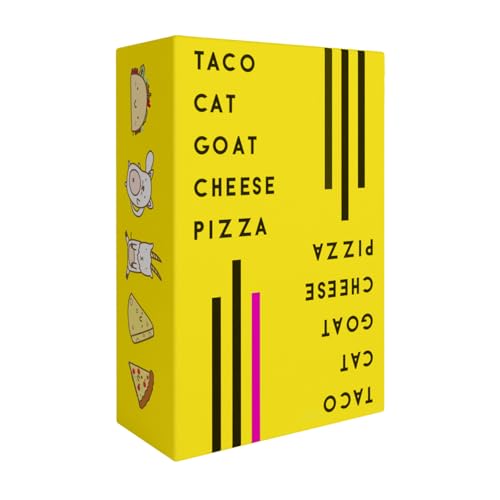
The Taco Cat Goat Cheese Pizza card game stands out as an excellent choice for families seeking to boost their reaction times and quick thinking skills. It’s fast-paced, simple to learn, and perfect for all ages, with rounds lasting just 10-15 minutes. Players race to slap matching cards based on spoken words or special cards, creating chaotic, hilarious moments. Its quick setup and portable design make it ideal for travel or quick get-togethers. The game’s emphasis on rapid reflexes and sharp observation helps develop executive functions like attention, impulse control, and mental agility—all while providing loads of laughter and fun for everyone involved.
Best For: families, friends, and groups seeking a quick, energetic, and humorous card game that enhances reaction skills and promotes lively social interaction.
Pros:
- Easy to learn with minimal setup, making it accessible for all ages
- Promotes quick reflexes, observation, and impulse control in a fun way
- Highly portable and suitable for travel, parties, and casual gatherings
Cons:
- Can become chaotic or overly competitive, potentially leading to frustration
- Might result in accidental hand smacks or injuries if not played carefully
- Short rounds may require multiple games to satisfy more strategic players
Briarpatch I Spy Dig In Game for Kids

If you’re searching for a game that combines fun with skill-building for children, the Briarpatch I Spy Dig In Game stands out as an excellent choice. Designed for kids aged 5 and up, it encourages observation, quick thinking, and fine motor skills through colorful miniature objects and engaging clues. Players dig in with both hands, find matching items, and race against each other, promoting strategic matching and decision-making. Suitable for 2 to 4 players, it fosters social interaction and friendly competition. With vibrant components and educational benefits, it’s a perfect blend of entertainment and cognitive development for family, classroom, or playdate fun.
Best For: families, educators, and children aged 5 and up who enjoy engaging, educational, and interactive tabletop games that promote observation, quick thinking, and fine motor skills.
Pros:
- Encourages cognitive development through pattern recognition and problem-solving.
- Suitable for multiple players, fostering social interaction and friendly competition.
- Compact design and vibrant components make it engaging and easy to store.
Cons:
- Limited to 2-4 players, which may not accommodate larger groups.
- Small miniature objects could be a challenge for very young children or those with fine motor difficulties.
- Requires quick decision-making, which might be stressful for some children.
EXECUTIVE FUNCTIONING WORKBOOK FOR KIDS AGES 7–11

Parents and educators seeking practical tools to develop executive functioning skills in children aged 7 to 11 will find this workbook especially valuable. It features 44 engaging activities targeting time management, impulse control, focus, and emotional regulation. The straightforward structure includes short chapters, helpful tips, and downloadable worksheets, making it easy to implement immediately. Designed for flexibility, it applies well at home, in homeschooling, or in classroom settings. Kids find the activities fun and effective, leading to noticeable improvements in focus, listening, and emotional awareness. Overall, this open-and-go resource builds confidence and resilience while fostering essential skills for everyday success.
Best For: parents, teachers, and caregivers seeking practical, engaging activities to help children aged 7–11 improve executive functioning skills in daily routines and educational settings.
Pros:
- Includes 44 proven activities designed to boost focus, impulse control, and emotional regulation.
- Features a straightforward structure with short chapters, helpful tips, and downloadable worksheets for easy implementation.
- Adaptable for use at home, in homeschooling environments, or in classrooms, making it versatile for various settings.
Cons:
- Lacks dedicated space for children to reflect on their experiences and emotions, which could deepen learning.
- Some users may find the activities require extra adult guidance to maximize benefits.
- Limited information on how to modify activities for children with specific learning or behavioral challenges.

For those seeking to improve mindfulness and communication skills in a supportive setting, Head Rush Social Skills & Therapy Games stands out as an effective tool. It’s designed to foster self-awareness, social interaction, and open conversations, making it ideal for group therapy, individual sessions, or casual play. Recommended for ages 12 and up, the game features thought-provoking questions that help reduce social anxiety and encourage meaningful dialogue. Players enjoy engaging, fun activities that promote self-expression, even around tough topics. Despite some repetitive questions, most users find it a valuable resource for building social skills and emotional connection, especially in therapy or educational settings.
Best For: individuals, therapists, and educators seeking to enhance social skills, mindfulness, and communication in group or one-on-one settings, especially with teens and young adults.
Pros:
- Promotes meaningful conversations and self-awareness through engaging questions.
- Versatile for use in therapy, education, or casual social settings.
- Encourages social interaction and reduces anxiety, making it suitable for shy or reserved participants.
Cons:
- Cards can become repetitive after multiple plays, leading to memorization.
- Instructions may be difficult for children to understand without guidance.
- The small size of the cards might be less practical for some users.
ThinkPsych Roll with It CBT Coping Skills Kit for Kids

The ThinkPsych Roll with It CBT Coping Skills Kit for Kids stands out as an excellent choice for children aged 5 to 12 who need engaging, research-backed tools to manage their emotions. Designed by psychologists, it includes feelings cards, sensory mats, stress balls, and interactive dice that help kids identify and cope with emotions like anger, anxiety, and sadness. The kit offers over 50 proven strategies for immediate stress relief and emotional regulation, making it suitable for home, therapy, or school. Its durable, portable design makes it an accessible, fun way for children to develop resilience and healthy emotional expression. It’s trusted by professionals and highly effective in fostering emotional intelligence.
Best For: children aged 5-12 who need engaging, research-backed tools to develop emotional regulation, resilience, and healthy expression.
Pros:
- Psychologist-designed with over 50 research-supported strategies for emotional regulation
- Interactive and engaging tools like dice, stress balls, and sensory mats that make learning fun
- Durable, portable, and suitable for use at home, in therapy, or in school settings
Cons:
- Some users suggest adding more dice to cover a broader range of emotions
- May require adult guidance for younger children to maximize effectiveness
- The kit’s comprehensive nature might be overwhelming for very young children or those with limited attention spans
Ravensburger Thats Not A Hat Party Game for All Ages

Ravensburger’s “That’s Not A Hat” Party Game stands out as an excellent choice for groups seeking quick, engaging fun that sparks laughter and social interaction. It’s perfect for all ages, challenging players’ memory and bluffing skills in a fast-paced, hilarious setting. With 110 beautifully illustrated cards, players pass them around, trying to recall objects or bluff convincingly to avoid penalties. The game’s simple rules and brief rounds make it accessible and perfect for family gatherings, parties, or travel. Its durable, high-quality components ensure repeated fun, making it a versatile game that encourages social bonding, laughter, and mental agility in every session.
Best For: families, friends, and party-goers seeking quick, humorous, and engaging group games suitable for all ages to promote laughter, memory, and social interaction.
Pros:
- Easy to learn with simple, clear instructions suitable for children and adults alike
- High-quality, durable components that ensure long-lasting fun
- Compact and portable design ideal for travel, parties, and casual gatherings
Cons:
- Limited to up to 8 players, which may not suit very large groups
- Short game rounds of about 15 minutes might require multiple rounds for extended entertainment
- Some players may prefer more complex or strategic gameplay over quick, bluffing-based fun
Learning Resources Mental Blox Critical Thinking Game
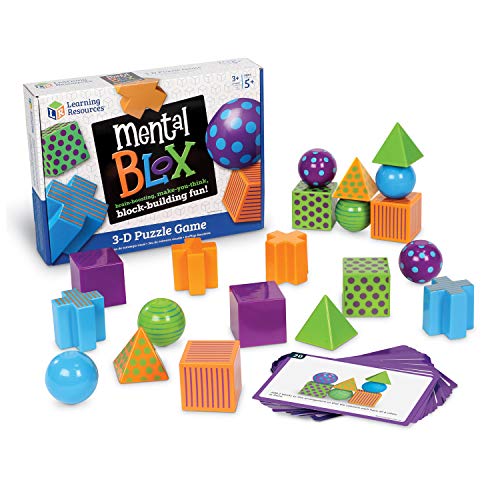
Designed for children ages 5 and up, the Learning Resources Mental Blox Critical Thinking Game offers an engaging way to develop essential executive function skills. I love how it combines colorful, chunky blocks with activity cards to challenge kids’ pattern recognition, matching, and strategic thinking. The game encourages children to follow verbal instructions, ask questions, and recreate hidden structures, boosting their logical reasoning and problem-solving abilities. Whether playing alone or in teams, kids practice communication and planning while having fun. It’s a versatile, educational toy that’s perfect for at-home learning, and its positive reviews highlight its effectiveness and appeal for young learners.
Best For: children aged 5 and up who want to enhance their critical thinking, pattern recognition, and strategic problem-solving skills through engaging, hands-on play.
Pros:
- Promotes development of analytical, logical, and critical thinking skills.
- Includes diverse shapes and attributes to encourage creative and strategic building challenges.
- Suitable for solo or team play, fostering communication and cooperation.
Cons:
- May require adult supervision for younger children to fully understand instructions.
- Limited to specific age range; older children might find it less challenging.
- Some users might find the activity cards repetitive after extended use.
Power Your Fun Cubik LED Flashing Cube Memory Game

If you’re looking for an engaging way to boost your memory, coordination, and focus, the Power Your Fun Cubik LED Flashing Cube Memory Game is an excellent choice, especially for kids and teens. This handheld device offers five brain and memory games that challenge pattern recognition, sequence memorization, and speed, all with flashing LEDs, sounds, and music. Its portable design, including a carry pouch and carabiner, makes it perfect for travel or on-the-go fun. Suitable for ages 6 and up, it also promotes stress relief and sensory stimulation. With auto high score tracking and adjustable volume, it’s a versatile, award-winning STEM toy that combines learning and entertainment seamlessly.
Best For: kids, teens, and adults seeking a fun, educational, and stress-relieving handheld game that enhances memory, coordination, and sensory skills.
Pros:
- Engaging five brain and memory games with flashing lights, sounds, and music for diverse play options
- Portable design with a carry pouch and carabiner, ideal for travel and on-the-go entertainment
- Recognized as an award-winning STEM toy that promotes learning, cognitive development, and stress relief
Cons:
- Minor usability issues such as finicky buttons or power button malfunctions reported by some users
- Battery life around one hour may require frequent replacements or recharges
- Some users noted cracked battery compartments or durability concerns over time
SET Enterprises SET – The Family Card Game of Visual Perception

For families and educators seeking a quick, engaging game that sharpens visual perception and pattern recognition, SET Enterprises’ SET is an excellent choice. This award-winning card game challenges players to identify “SETs” among 81 cards by matching colors, shapes, shadings, or numbers—either all the same or all different. It’s easy to learn, requires no setup, and promotes quick thinking and focus. Suitable for ages 8 and up, it’s perfect for family nights, classrooms, or travel. With fast-paced gameplay lasting less than 30 minutes, SET encourages social interaction, cognitive skills, and lifelong enjoyment in a compact, portable package.
Best For: families, educators, and individuals aged 8 and up seeking a quick, engaging game to enhance visual perception, pattern recognition, and social interaction.
Pros:
- Easy to learn with no setup required, making it accessible for all players
- Promotes cognitive skills like pattern recognition, quick thinking, and focus
- Highly portable and suitable for travel, classroom, or small table spaces
Cons:
- Potential tension among tired players during racing gameplay
- Packaging quality may be subpar, with crumpled boxes or difficulty fitting sleeved cards
- Color blindness may affect some players’ ability to distinguish certain patterns
Potato Tomato Quick Card Game for Families
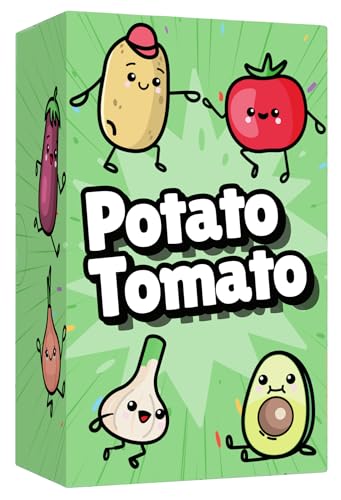
Potato Tomato Quick Card Game for Families stands out as an excellent choice for lively family gatherings and travel, thanks to its fast-paced, engaging gameplay that appeals to both kids and adults. In this game, players race to match vegetable and color patterns on their tiles by quickly grabbing vegetables from the center. Reaction speed, observation, and memory are key as players compete to complete their patterns first and shout “Potato Tomato!” to win. Suitable for 2-4 players aged 6 and up, it keeps everyone on their toes for about 30 minutes, making it a perfect game to boost executive functioning skills in a fun, interactive way.
Best For: families and groups seeking a quick, engaging, and interactive card game suitable for children and adults aged 6 and up.
Pros:
- Fast-paced gameplay that keeps players engaged and excited
- Enhances reaction speed, observation, and memory skills
- Perfect for family gatherings and travel due to its portability and short duration
Cons:
- May be too simple or quick for players seeking longer, more strategic games
- Limited to 2-4 players, which might not suit larger groups
- Requires quick reflexes, which could be challenging for some younger children or players with slower reaction times
Factors to Consider When Choosing Executive Function Games

When selecting executive function games, I focus on several key factors to guarantee they’re effective and enjoyable. Things like age appropriateness, skill development, and how engaging the game is all matter, along with how easy it is to use and whether it fits the setting. Keeping these points in mind helps me choose games that truly boost brainpower and suit different needs.
Age Appropriateness
Choosing executive function games that match a child’s age is crucial to guarantee they are both challenging and achievable. I always check the manufacturer’s age recommendations to ensure the game’s complexity fits the child’s developmental and cognitive abilities. It’s important that the activities are engaging and match the child’s current skill level, promoting learning without frustration. I also consider whether the content and themes are appropriate for their maturity and social-emotional development. Sometimes, games designed for older kids or adults can be too complex or not engaging enough, which can affect motivation. By selecting age-appropriate games, I help ensure the experience is both fun and beneficial, encouraging growth without overwhelming the child. This balance is key to fostering their executive function skills effectively.
Skill Focus
Selecting the right executive function games involves focusing on specific skills to meet individual needs. I recommend choosing games that target core areas like working memory, cognitive flexibility, or inhibitory control, depending on what needs strengthening. Look for activities that incorporate problem-solving, planning, and sequencing, which boost organizational and strategic thinking. It’s important to select games that gradually increase in difficulty to challenge skills without causing frustration or boredom. Clear, age-appropriate instructions are essential so children can understand and participate confidently. Additionally, prioritize games with engaging, multisensory components that motivate learners and reinforce skills through active involvement. By aligning game choices with specific skill targets, you ensure a tailored approach that effectively enhances executive functioning.
Engagement Level
Engagement is a essential factor when picking executive function games because it directly influences a child’s ability to stay focused and motivated throughout play. An engaging game should quickly capture a child’s interest with vibrant visuals, interactive elements, or fast-paced activities that make learning fun. When children find the game rewarding and receive immediate feedback, it boosts their motivation and encourages them to keep practicing. The game’s rules and complexity should match the child’s age and skill level to prevent frustration or boredom. A highly engaging game promotes active mental involvement, which helps children develop critical executive skills like planning, flexibility, and self-control. Ultimately, an engaging game makes the learning process enjoyable and effective, increasing the likelihood of lasting skill development.
Ease of Use
When evaluating executive function games, ease of use is crucial because it determines how quickly children can start benefiting from the activity. Games with clear instructions and simple rules allow kids to understand and get started without confusion. Intuitive gameplay mechanics mean less supervision and make independent use easier. A user-friendly design often includes visual cues, minimal setup, and straightforward objectives, helping seamlessly incorporate the game into daily routines. Immediate feedback or progress tracking helps players grasp concepts quickly without complex explanations. Additionally, choosing games with adaptable difficulty levels ensures they stay manageable and engaging for children with different skills and learning needs. Overall, easy-to-use games maximize engagement and effectiveness, making them an essential factor in selecting the right tools for boosting executive function.
Setting Compatibility
Choosing the right executive function game involves making certain it fits seamlessly into the child’s primary environment, whether at home, school, or during therapy. I consider the space constraints and portability needs, selecting games that are compact and easy to carry for on-the-go use. Matching the game’s complexity and rules to the setting’s typical age group and attention span helps maintain engagement and guarantees the child can participate comfortably. I also check if the themes and activities align with the environment’s goals—whether promoting emotional regulation in therapy or focus in classroom routines. Finally, I make sure the game’s materials and design are appropriate for the setting, minimizing disruptions and prioritizing safety. This careful evaluation helps maximize the game’s effectiveness and relevance.
Frequently Asked Questions
Which Executive Function Games Are Best for Teenagers?
I believe the best executive function games for teenagers are those that challenge planning, organization, and impulse control. Games like “Simon Says” help with inhibitory control, while strategy-based games like chess or “Rush Hour” boost planning skills. Digital apps such as Lumosity or CogniFit also offer tailored exercises. These activities make improving executive functions fun, engaging, and effective for teenagers looking to enhance their mental agility.
How Do I Select Age-Appropriate Cognitive Games?
To select age-appropriate cognitive games, I consider the game’s complexity and themes, making certain they match the player’s developmental level. I look for games that are engaging, challenging but not frustrating, and promote critical thinking, memory, or problem-solving skills. Reading reviews and checking recommended age ranges help me guarantee the game is suitable. I also observe how the person interacts with the game to ensure it’s both fun and beneficial.
Can Executive Function Games Improve Academic Performance?
Yes, executive function games can improve academic performance. I’ve seen how these games enhance skills like memory, attention, and problem-solving, which are vital for learning. When I play these games regularly, I notice better focus during studies and improved organization. They challenge my brain to think critically and manage tasks efficiently. Incorporating them into your routine can boost confidence and help you perform better academically.
Are Digital or Physical Games More Effective?
Digital games are generally more effective for boosting executive functions. Studies show that 78% of digital game players notice improvements in skills like planning, focus, and problem-solving. I’ve found that digital platforms offer immediate feedback and adaptive challenges, which keep me engaged and motivated. While physical games are beneficial too, I believe the interactive nature of digital games makes them more efficient for enhancing cognitive skills quickly and consistently.
How Often Should Children Play These Executive Function Games?
I believe children should play executive function games about 3 to 4 times a week for 20 to 30 minutes each session. Regular, consistent play helps strengthen skills like planning, memory, and self-control without overwhelming them. I recommend balancing game time with other activities to keep their brains engaged and avoid burnout. This way, they get the maximum benefit while still having time for fun and learning.
Conclusion
Did you know that engaging in regular brain-training games can boost executive functions by up to 20%? By choosing the right games for your age and needs, you’re not just having fun—you’re sharpening your planning, memory, and problem-solving skills. Remember, consistency is key. So, pick a game that excites you, and make it a part of your routine. Your brain will thank you for it!