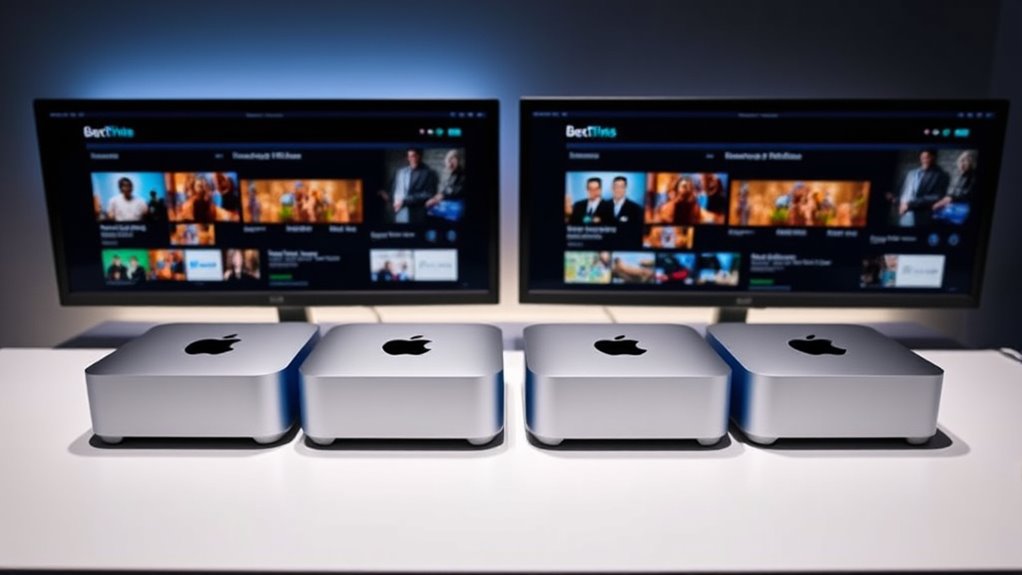

Choosing a Mac mini as a media server is only part of the setup: mounting, cooling, connections, and room to grow can shape how well it fits a rack-based system. I’d shortlist the Sonnet RackMac mini 2U for housing one to three newer Mac mini computers, and the Sonnet xMac mini Server 1U when PCIe expansion matters more than multi-Mac capacity. Their central tradeoff is straightforward: the RackMac organizes compact systems, while the xMac adds expansion capabilities to a single compatible Mac mini.

Turn the school run and nap time into listening time
- Thousands of audiobooks, podcasts and originals
- Listen on your phone, tablet or Echo — also offline
- Cancel anytime
These are enclosures, not media servers in their own right. You still need a Mac mini, storage, and the server software that suits your library and playback devices. I rank the RackMac first for its ability to accommodate multiple 2024-or-newer systems in one rack enclosure. The xMac is the more specialized pick for a Thunderbolt 3 Mac mini that needs cards such as 10 Gigabit Ethernet or fiber channel. If you want a simple desktop setup rather than rack hardware, either enclosure may add complexity you don’t need.
Complete the kit


Key Takeaways
- Best for a multi-Mac rack: RackMac mini 2U can mount one to three 2024-or-newer Mac mini computers, which suits separate server duties or planned capacity growth.
- Best for PCIe expansion: xMac mini Server adds two PCIe slots through Thunderbolt 3 for supported networking, storage, or pro video cards.
- Check compatibility before choosing: RackMac is specified for Mac mini models from 2024 onward; xMac requires a Mac mini with Thunderbolt 3.
- Plan storage separately: RackMac leaves space for a USB SSD beneath each computer, but the SSDs are not included.
- The core choice is expansion versus density: choose xMac for add-in cards in one Mac mini, or RackMac for fitting multiple newer minis into a 2U rack space.
| Sonnet RackMac mini 2U Rackmount Enclosure for 1–3 Mac mini (2024+) |  | Best for a multi-Mac media-server rack | Rack height: 2U | Capacity: 1–3 Mac mini computers | Compatibility: Apple Mac mini (2024+) | VIEW ON AMAZON | See Our Full Breakdown |
| Sonnet xMac mini Server 1U Rackmount Thunderbolt 3 PCIe Expansion Chassis |  | Best for PCIe expansion around one Mac mini | Form factor: 1U rackmount | Expansion slots: 2 PCIe | Host connection: Thunderbolt 3 | VIEW ON AMAZON | See Our Full Breakdown |
| mac mini as a media server | Weight | Rack height | Capacity | Compatibility |
|---|---|---|---|---|
| Sonnet RackMac mini 2U Rackmou | 6 lb | 2U | 1–3 Mac mini computers | Apple Mac mini (2024+) |
| Sonnet xMac mini Server 1U Rac | 19.2 pounds | — | — | — |
More Details on Our Top Picks
Sonnet RackMac mini 2U Rackmount Enclosure for 1–3 Mac mini (2024+)
RackMac mini 2U is my lead pick when the plan involves more than one Mac mini, or when keeping a newer mini securely mounted matters more than adding PCIe cards. Its 2U steel enclosure holds one to three Mac mini computers from 2024 onward, creating a compact way to organize separate server tasks in a standard rack. For example, a buyer could allocate systems to different services or keep one unit available for a distinct workload. The enclosure provides the physical organization; the minis, storage, and software remain separate purchases.
Compared with the xMac mini Server, this model favors capacity and tidy placement over host expansion. It does not add two PCIe slots, so it is not the pick for a Mac mini that needs a specialized network or video card. Instead, its design includes space beneath each computer for a USB SSD, front and rear port access, and front-panel power buttons. The SSDs are sold separately, so buyers should account for external storage when planning a media library.
Its front-to-back airflow suits a rack arrangement, while cushioned support helps keep the computers in place during transport, including in portable or shallow racks. At six pounds, the enclosure is also much lighter than the 19.2-pound xMac chassis, though the full installed system will weigh more. Compatibility is narrower than a generic Mac mini mount: the stated fit is for 2024-or-newer Mac mini models. I’d verify the exact computer generation before ordering rather than assume an older unit will fit.
This is the clearest choice for building a multi-Mac installation in limited rack height, and it leaves room to expand from one system to three. A buyer with just one Mac mini and a need for add-in cards should look at the xMac instead. Someone who wants a desk-side, plug-and-play media server may find a rack enclosure unnecessary, especially if they do not need centralized rack mounting or multiple computers.
Pros:- Holds up to three compatible Mac mini computers in a 2U rack enclosure.
- Front and rear port access plus front-panel power buttons support rack-side operation.
- Front-to-back airflow is designed for rack placement.
- Cushioned support helps secure computers during transport.
Cons:- Compatible devices are limited to Mac mini models from 2024 onward.
- USB SSDs for the dedicated spaces are sold separately.
- Does not provide the PCIe expansion slots found in the xMac.
Best for: People building a rack-based media setup around one to three 2024-or-newer Mac mini computers, especially those who value organized mounting and room to add systems.
Not ideal for: Owners of older Mac mini generations, buyers who need PCIe card expansion for one host, or anyone seeking a complete server with storage included.
- Rack height:2U
- Capacity:1–3 Mac mini computers
- Compatibility:Apple Mac mini (2024+)
- Mounting:Standard rack mount
- Enclosure material:Stainless steel
- Dimensions:5.2 in D × 19 in W × 3.4 in H
- Weight:6 lb
- Warranty:2-year limited warranty
Our verdict“I’d choose the RackMac mini 2U for a multi-system media rack built around newer Mac minis, but not for PCIe expansion or a storage-included setup.”
Sonnet xMac mini Server 1U Rackmount Thunderbolt 3 PCIe Expansion Chassis
Sonnet xMac mini Server suits a different media-server problem: a compatible Mac mini that needs more than its built-in connections. The 1U steel enclosure connects over Thunderbolt 3 and provides two PCIe expansion slots. That gives a specialized system a path to add cards for uses such as 10 Gigabit Ethernet, fiber channel, or pro video. For a server that needs a particular high-speed network or workflow card, that expansion can matter more than fitting several Macs into a rack.
Compared with the RackMac mini 2U, the xMac is a one-host expansion chassis rather than a multi-computer organizer. It does not offer space for up to three Mac minis, and it is much heavier at 19.2 pounds. In return, it supplies a more substantial set of expansion options for one Thunderbolt 3 Mac mini. Its rear passthrough connections include Gigabit Ethernet, HDMI, and USB 3.0, with additional USB ports at the front and rear. Those ports help preserve access when the computer sits inside the enclosure, though they should not be mistaken for the benefits of a dedicated expansion card.
Two quiet fans support operation inside the rack, and the user-replaceable 150W power supply gives the unit a maintenance feature the RackMac description does not list. The catch is the host requirement: a Mac mini without Thunderbolt 3 is not compatible according to the supplied details. The enclosure’s weight also makes it less appealing for portable installations than the six-pound RackMac, particularly when the full system includes the computer and any installed cards.
I’d rank this second because its strengths are narrower but valuable. It is the better choice when PCIe capability is the deciding factor; the RackMac is more practical when the goal is to mount multiple newer systems. Buyers who only need a single Mac mini and ordinary media-server connections may get little benefit from the added chassis and expansion slots. Check the Mac mini’s Thunderbolt 3 compatibility and the intended PCIe card before making this the foundation of a server build.
Pros:- Adds two PCIe expansion slots through Thunderbolt 3.
- Supports compatible cards for 10 Gigabit Ethernet, fiber channel, and pro video.
- Provides front and rear USB 3.0 access plus HDMI and Gigabit Ethernet passthrough.
- Includes two quiet fans and a user-replaceable 150W power supply.
Cons:- Requires a Mac mini with Thunderbolt 3 connectivity.
- Weighs 19.2 pounds, making it considerably heavier than the RackMac enclosure.
- Designed around one Mac mini rather than housing multiple systems.
Best for: Media-server builders with a Thunderbolt 3 Mac mini who need two PCIe slots for compatible networking, fiber-channel, or pro video cards.
Not ideal for: People who want to mount multiple Mac minis, have a host without Thunderbolt 3, or prefer a lighter and simpler enclosure without PCIe expansion.
- Form factor:1U rackmount
- Expansion slots:2 PCIe
- Host connection:Thunderbolt 3
- USB ports:3 total; USB 3.0
- Rear connectivity:Gigabit Ethernet, HDMI, USB 3.0
- Power supply:150W, user-replaceable
- Cooling:2 fans
- Weight:19.2 pounds
Our verdict“I’d select the xMac when a Thunderbolt 3 Mac mini needs PCIe cards, while choosing the RackMac for multi-Mac capacity and lighter rack organization.”

How We Picked
I compared these two enclosures by how directly they solve common rack-based media-server needs: securing the Mac mini, giving useful access to connections, supporting airflow, and allowing a setup to grow or adapt. Because neither product supplies a Mac mini or media-storage drive, I treated those as separate parts of the system rather than suggesting either enclosure is a complete server.
Rack capacity and expansion drove the ranking. The RackMac mini 2U places up to three compatible Mac minis in one rack enclosure, so it takes the lead for a buyer building a multi-system setup. The xMac earns its place for a different job: two PCIe expansion slots can accommodate cards for functions such as 10 Gigabit Ethernet, fiber channel, or pro video. That makes it more capable for a specialized single-host system, but less suited to someone whose main goal is to house multiple Macs.
I also weighed model compatibility, physical handling, access, and maintenance. The RackMac’s front and rear access, power buttons, and front-to-back airflow help when the enclosure sits in a rack. The xMac offers passthrough connections, quiet fans, and a user-replaceable power supply, but its Thunderbolt 3 requirement and 19.2-pound weight are meaningful constraints. I rank by fit for media-server use, not by assuming every buyer needs the same level of expansion or rack density.
Factors to Consider When Choosing Mac Mini As A Media Server
I’d choose between these enclosures by starting with the server architecture, then checking compatibility and the rack environment. Neither one supplies the Mac mini or the media library storage, so those decisions remain part of the build.Decide whether you need more Macs or more capability from one Mac
The clearest split is multi-system mounting versus PCIe expansion. RackMac mini 2U holds up to three compatible computers, which helps when separate server roles or future additions are part of the plan. The xMac is for one Mac mini that needs two PCIe slots. If the goal is simply to run one media library with standard connections, the xMac’s extra slots may add hardware you do not need; if your workload calls for a supported add-in card, RackMac does not provide that expansion.
Check your Mac mini generation and connection
Compatibility can rule out a product before rack fit becomes relevant. RackMac is specified for Mac mini models from 2024 onward. The xMac requires a host with Thunderbolt 3. Confirm the exact model and connection on the computer you own or plan to buy. Don’t assume that a physical fit, similar port, or product name means a particular Mac mini generation is supported.
Plan storage and server software separately
An enclosure organizes equipment; it does not provide a media library by itself. RackMac leaves room beneath each Mac mini for a USB SSD, but the drives are sold separately. The xMac description does not include dedicated library storage either. Work out how much space your media needs, how the drive connects, and whether you want local or networked storage. Then choose the media-server software and playback devices that match your household or workflow.
Match the enclosure to its rack location
RackMac has a 2U height, front-to-back airflow, and cushioned computer support intended to help during transport. Its six-pound listed weight makes it lighter than the xMac enclosure, though installed computers and accessories add weight. The 1U xMac weighs 19.2 pounds and includes two quiet fans. Consider the rack’s available height, depth, ventilation, and whether the equipment will remain stationary or travel. A rack chassis may be needless bulk for a desk-side server.
Prioritize access, service, and expansion
RackMac provides front and rear port access and front-panel power buttons, useful when a rack makes a Mac mini’s own controls awkward to reach. The xMac adds HDMI, Gigabit Ethernet, and USB passthrough, along with a user-replaceable power supply. Its standout advantage remains PCIe support, but check that your intended card fits the job and is compatible with the host. For a basic media server, easy access and storage planning may matter more than expansion capacity.
Frequently Asked Questions
Can either enclosure run a media server without a Mac mini?
No. Both products are enclosures for Mac mini computers, not standalone computers or media-server software. You need a compatible Mac mini and must set up the storage and server application separately. I’d treat the enclosure as a way to mount, connect, or expand the computer rather than as the server itself.
Which enclosure is better for more than one Mac mini?
The Sonnet RackMac mini 2U is the choice for a multi-Mac setup: it is specified to hold one to three Mac mini computers from 2024 onward. The xMac is designed around a single host with PCIe expansion. If you want several systems in one rack unit, RackMac’s capacity is the decisive difference.
When does the xMac’s PCIe expansion matter for a media server?
PCIe expansion matters when a compatible add-in card is part of the plan, such as a card for 10 Gigabit Ethernet, fiber channel, or pro video. The xMac connects to the host over Thunderbolt 3 and provides two PCIe slots. If your media server only needs ordinary connections and storage, those slots may not justify choosing it over the RackMac’s multi-computer capacity.
Do either of these products include media storage?
The supplied product details do not list a media drive as included. RackMac provides space beneath each computer for a USB SSD, but the SSDs are sold separately. The xMac adds PCIe expansion and passthrough ports rather than a stated built-in library drive. Buyers should plan capacity, drive connection, and backup separately from the enclosure.
Can I use the RackMac with an older Mac mini?
The listed compatibility is for Apple Mac mini models from 2024 onward, so I would not assume an older Mac mini is supported. The xMac has a different compatibility condition: it requires a Mac mini with Thunderbolt 3. Check the exact computer model against the enclosure requirements before building around either product.
Conclusion
For a buyer who wants to mount one to three newer Mac mini computers, I recommend the Sonnet RackMac mini 2U. Its multi-system capacity, front and rear access, and rack-focused airflow make it the more flexible choice for a growing media setup, though you must supply compatible computers and USB SSD storage. For someone building around one Thunderbolt 3 Mac mini that needs PCIe cards, the xMac is the better fit, with two slots and useful passthrough connections. I would skip both if a simple desktop Mac mini setup meets your needs: rack hardware adds bulk without replacing the computer, storage, or software your media server still requires.
Cold & flu season Picks
humidifiers
As an affiliate, we earn on qualifying purchases.