To develop your balance and pedal control, start on flat, open spaces without distractions. Stand over your bike to get comfortable and then sit on the saddle, pushing off with pedals to build confidence. Practice gliding with one foot on a pedal and the other on the ground, focusing on steady, smooth pedaling. Maintain relaxed posture and keep your eyes forward. Keep practicing these skills, and you’ll find more tips to help you ride confidently.
Key Takeaways
- Practice on flat, open spaces to develop steady balance before introducing pedals.
- Sit on the saddle, push off with one foot, and glide to build confidence.
- Use one foot on a pedal and the other on the ground to simulate pedaling motion while balancing.
- Focus on maintaining relaxed posture and looking ahead to improve stability.
- Gradually incorporate slow pedaling, lifting one foot onto the pedal to transition from balancing to pedaling.
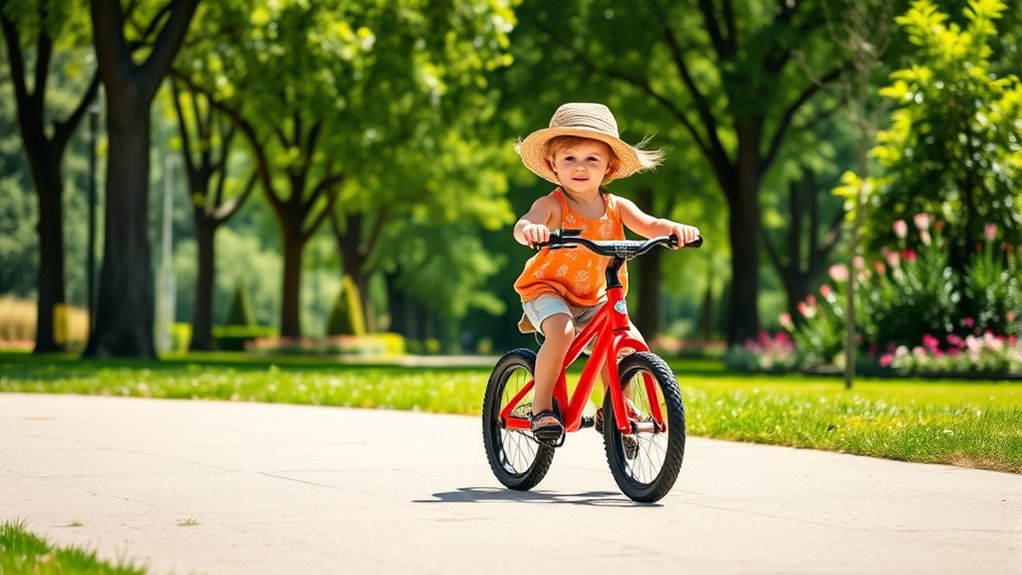
Are you new to biking and wondering how to get started safely? The first step is mastering the basics of balance and pedal control, which are essential for any type of cycling, especially mountain biking. When you’re just beginning, focus on developing a steady sense of balance on your bike. Find a flat, open space where you can practice without distractions or obstacles. Stand over your bike to get comfortable with its size and feel, then try sitting on the saddle and pushing off with your pedals. It may feel awkward at first, but with time, your body will learn to balance naturally. Remember, mountain biking adds extra challenges like uneven terrain, so building a solid foundation now will make later rides smoother and safer.
Before heading out on trails, you should also get familiar with bike maintenance. Knowing how to check your bike’s condition helps prevent accidents and keeps your ride smooth. Regularly inspect your tires for proper inflation and any signs of wear or damage. Keep your brakes responsive by testing them before each ride, and ensure your chain is properly lubricated and free of debris. Adjust your gears so that shifting feels smooth, especially if you plan to venture onto mountain trails. Maintaining your bike isn’t just about safety; it also boosts your confidence and enjoyment. A well-maintained bike responds better to your inputs, making balancing and pedaling easier. Additionally, understanding proper bike cleaning and maintenance techniques can prolong the lifespan of your equipment and ensure optimal performance.
As you practice balancing, start with simple drills like gliding with one foot on the pedal and the other on the ground. Once you’re comfortable, try to lift your other foot onto the pedal and maintain your balance while rolling. It’s normal to wobble initially—this is part of the learning process. Focus on keeping your eyes ahead and your body relaxed, which helps stabilize your movements. When it comes to pedaling, start with slow, steady strokes. Don’t rush; getting comfortable with the motion takes time. As your confidence grows, you can experiment with shifting gears to find what feels most natural. Mountain biking often requires quick adjustments, so practicing gear changes early on prepares you for more challenging terrains.
Frequently Asked Questions
How Do I Teach a Child to Start Pedaling Independently?
To teach a child to start pedaling independently, first, guarantee their initial stance is comfortable and balanced on the bike. Hold the bike steady as they push off with their feet, then encourage them to lift their feet onto the pedals. Guide them to focus on pedal coordination, starting with slow, controlled rotations. Praise their efforts, and gradually reduce your support, so they gain confidence in pedaling on their own.
What if My Child Is Afraid of Falling?
If your child fears falling, don’t rush the process. Instead, gently introduce them to gradual exposure—start with a safe, soft surface and hold the bike steady. Encourage small, confident steps, celebrating each success. Over time, this builds trust and reduces their fear of falling. Stay patient and supportive, and remind them that falling is part of learning, not failure. Soon, they’ll pedal with confidence and joy.
How Can I Improve My Child’s Confidence on the Bike?
You can improve your child’s confidence on the bike by focusing on bike handling skills and gradual practice. Encourage them to start with easy, flat surfaces and celebrate small successes to boost their confidence. Use positive reinforcement, keep sessions short and fun, and let them control the pace. As they master basic skills, their confidence will grow naturally, making bike riding an enjoyable and empowering experience.
When Should My Child Transition From Training Wheels to Two-Wheel Riding?
Think of this as your child’s “eureka” moment. Usually, when they can confidently coast without wobbling and their balance progression improves, it’s time for wheel removal. Watch for steady riding on two wheels with minimal help. Once they’re comfortable, shift from training wheels to two-wheel riding. This process varies, but when they’re ready physically and mentally, they’ll master it with a little patience and encouragement.
What Are the Best Safety Gear Essentials for Beginners?
You should prioritize helmet safety and knee protection as essential safety gear for beginners. Always make certain your child wears a well-fitted helmet to protect their head during falls, and knee pads to prevent scrapes and bruises. Consider additional gear like elbow pads for extra safety. These essentials help build confidence and keep your child safe as they learn to ride, making the experience enjoyable and injury-free.
Conclusion
Mastering balance and pedaling is your first step toward confident biking. Did you know that nearly 50% of new riders feel more secure after just a few practice sessions? Keep practicing those skills steadily, and you’ll soon enjoy smooth rides and new adventures. Remember, every expert was once a beginner—trust the process, stay patient, and you’ll be pedaling with ease before you know it!