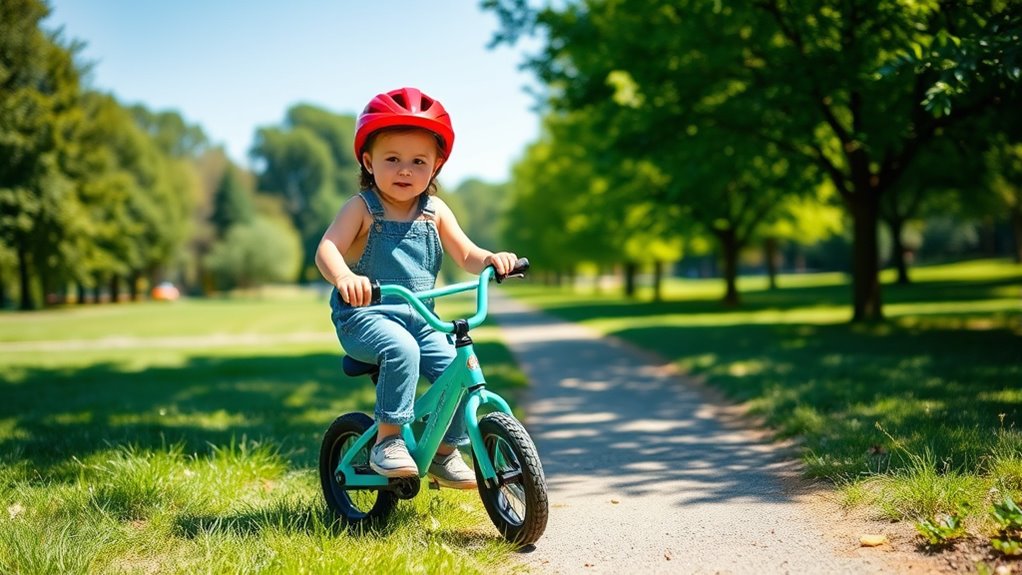

To move from balancing to pedaling, focus on maintaining a straight back, relaxed shoulders, and a slight bend in your knees. Start on flat, smooth surfaces, pushing off with one foot and then placing both feet on the pedals while keeping your posture steady and helmet securely fastened. Practice consistently to build confidence and improve your balance, all while mastering safety basics. Keep going, and you’ll discover more tips to make your progression smoother.
Key Takeaways
- Start on flat, smooth surfaces to practice maintaining balance before pedaling.
- Keep your back straight, shoulders relaxed, and look ahead to improve stability.
- Push off with one foot while keeping the other on the ground to find your balance.
- Once steady, lift both feet onto the pedals and maintain an upright posture.
- Regular practice builds confidence, enhances balance, and prepares you for pedaling smoothly.
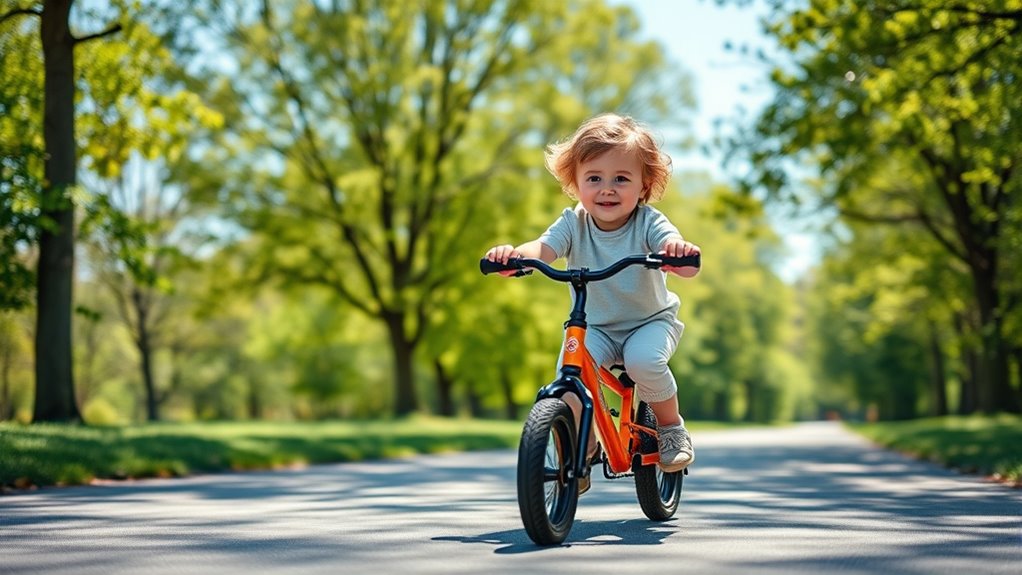
Learning to ride a bike can be both exciting and challenging, but starting with the right skills makes all the difference. One of the first things to focus on is your riding posture. Maintaining a proper riding posture not only helps you stay balanced but also reduces fatigue and prevents injuries. Keep your back straight, shoulders relaxed, and look ahead rather than down at your wheels. Your hands should grip the handlebars firmly but gently, allowing for smooth steering. Position your seat so that your legs have a slight bend at the knee when the pedal is at its lowest point. This setup gives you better control and comfort, making it easier to balance and pedal effectively. Remember, a good riding posture is the foundation for developing confidence and mastering more advanced skills later on.
Equally important is helmet safety. Before you even start practicing, make certain you’re wearing a properly fitted helmet. A helmet protects your head from potential falls or accidents, which are common when learning to balance on two wheels. Make sure your helmet sits snugly on your head, covering your forehead without tilting back or forward. Adjust the straps so they form a V-shape just below your ears, and tighten them until they’re snug but comfortable. Wearing a helmet every time you get on your bike isn’t just a safety measure; it’s a habit that can save you from serious injury. Many beginners overlook this, but it’s vital to build the right safety habits from the start.
When you begin practicing, focus on maintaining a steady riding posture while trying to keep your balance. Start on a flat, open surface like a smooth driveway or empty parking lot. Keep your hands on the handlebars, look ahead, and gently push off with one foot while the other remains on the pedal or ground for support. As you gain confidence, try to lift both feet onto the pedals, keeping your body upright and relaxed. Your core strength and proper posture will help you stay balanced longer. It’s normal to wobble or feel unsure at first—what matters is staying centered and consistent with your posture and helmet safety. Practicing regularly will help reinforce these skills and improve your balance over time. As your balance improves, you’ll find it easier to pedal smoothly and steer confidently, setting a strong foundation for more advanced riding skills.
Frequently Asked Questions
How Do I Choose the Right Size Bike for Beginners?
To choose the right bike size for beginners, focus on bike frame fitting and wheel size selection. Make sure the frame height allows you to stand over it comfortably with a slight bend in your knees. For wheel size, beginners often start with 24-inch or 26-inch bikes, which provide better control and stability. Test ride different sizes to find one that feels comfortable, balanced, and easy to maneuver.
What Safety Gear Is Essential for New Cyclists?
You should always wear a helmet to guarantee safety and prevent head injuries. Additionally, don’t forget reflective gear like vests or stickers to increase visibility, especially in low-light conditions. Wearing proper safety gear helps protect you and makes riding safer and more enjoyable. Make sure your helmet fits well, and choose reflective gear that’s comfortable and visible from all angles. Stay safe and ride confidently!
How Can I Improve My Confidence While Learning?
To boost your confidence, try mental strategies like positive self-talk and visualization. Focus on your progress and celebrate small wins. Gradual exposure is key—start riding in safe, familiar places and increase difficulty gradually. Remember, every ride improves your skills. Stay patient and consistent, and you’ll build confidence over time. Trust in your abilities and enjoy the learning process; confidence comes with practice and persistence.
When Should I Start Practicing on Different Terrains?
You should start practicing on different terrains once you’ve comfortably mastered basic skills like balance and pedaling. Incorporate terrain variety gradually to boost your skill progression and build confidence. Begin with flat, smooth surfaces before trying gentle slopes or gravel paths. As you improve, challenge yourself with more varied terrains. This steady progression helps you adapt to different conditions safely and enhances your overall riding ability.
How Do I Maintain and Clean My Bike?
Did you know regular bike maintenance extends your bike’s lifespan by up to 30%? To keep your bike in top shape, regularly clean it with gentle soap and water, focusing on the chain, gears, and brake components. Use a soft brush for stubborn dirt and dry everything thoroughly. Follow cleaning tips like lubricating the chain after cleaning, and check tire pressure often to guarantee safe, smooth rides.
Conclusion
Now that you’ve mastered balancing and pedaling, you’re ready to ride with confidence. Think of these skills as the foundation of your biking journey—like the roots of a strong tree supporting every branch. Keep practicing, stay patient, and enjoy the ride ahead. Before you know it, you’ll be cruising smoothly, embracing the wind like a bird in flight. Remember, every pedal stroke brings you closer to the adventure that awaits just beyond the horizon.