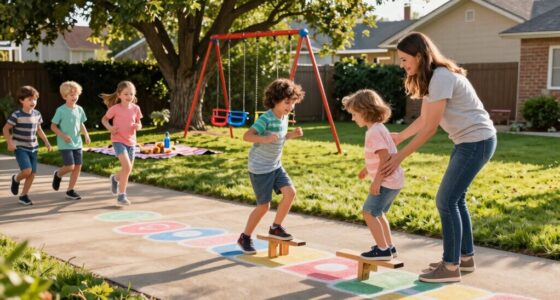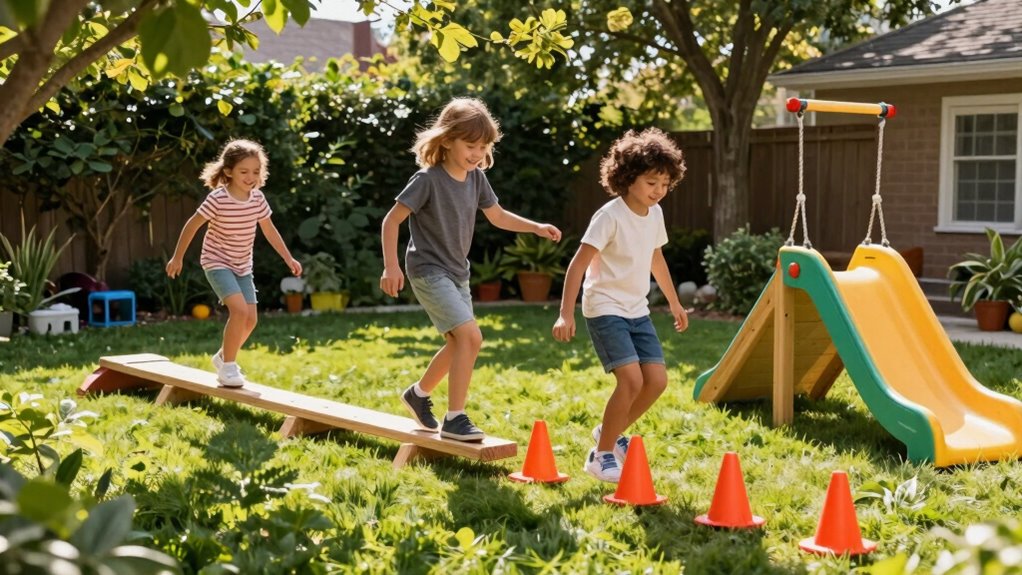
You can create a fun backyard obstacle course with simple ideas like using cardboard tunnels, balancing on painted planks, or hopping over hurdles made from broomsticks and cones. Incorporate themes like jungle adventures or superheroes to spark imagination. Make sure to use soft materials for safety and keep obstacles age-appropriate. Arrange everything with enough space to prevent accidents. Keep exploring for more creative tips to design a safe and exciting play area your kids will love.

Turn the school run and nap time into listening time
- Thousands of audiobooks, podcasts and originals
- Listen on your phone, tablet or Echo — also offline
- Cancel anytime
Key Takeaways
- Use everyday items like cardboard tunnels, broomstick hurdles, or painted planks for quick, easy obstacle setups.
- Incorporate themed elements such as jungle vines or superhero challenges to boost imaginative play.
- Ensure safety with soft ground coverings, sturdy equipment, and adequate space between obstacles.
- Involve children in designing and customizing the course to increase engagement and ownership.
- Keep obstacles simple, adjustable, and age-appropriate to promote confidence and safe fun.
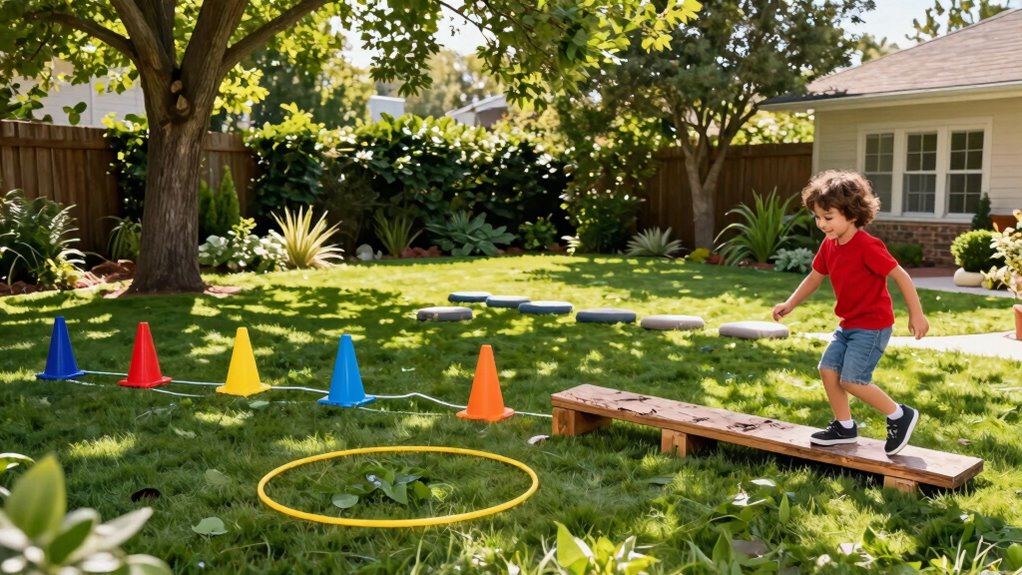
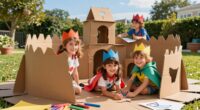
Creating a backyard obstacle course is a fun and engaging way to keep kids active and entertained. When planning your course, think about incorporating creative obstacle themes that spark imagination and make playtime even more exciting. You might design a jungle adventure with vines and hidden treasures or a superhero training course with challenges that require agility and strength. These themes not only make the course more appealing but also inspire kids to use their imagination as they navigate through each obstacle.
Create themed obstacle courses like jungle adventures or superhero training to boost imagination and make playtime more exciting.
While getting creative, you must guarantee safety considerations at the forefront. Use soft materials like foam mats or rubber mulch under and around obstacles to cushion falls. Ascertain that any equipment, like balance beams or tunnels, is sturdy and age-appropriate. Avoid sharp edges or small parts that could pose choking hazards. It’s also wise to check the ground where you set up the course—level terrain reduces the risk of trips and falls. If you’re using items like hula hoops or cones, secure them well to prevent slipping or tipping over during active play.
Designing simple obstacles allows for quick setup and easy adjustments based on your child’s age and skill level. For example, a makeshift tunnel can be created with a large cardboard box or a flexible play tunnel. Balance beams can be as simple as a painted plank of wood or a sturdy piece of guttering laid flat on the ground. Jumping hurdles can be made from broomsticks resting on cinder blocks or low plastic cones. These straightforward setups make it easier to change the course frequently, keeping play fresh and challenging for your kids. Remember to arrange obstacles with enough space between them for safety and to prevent collisions. Incorporating safety precautions into your planning can further ensure a secure environment for active fun. Including age-appropriate challenges helps keep the course suitable for all skill levels and encourages confidence building.
Encourage your children to participate in the design process. This way, they’ll be more excited about the course and more likely to use it regularly. Plus, involving them helps teach safety rules and proper use of equipment. You can also create a scoring system or themed challenges to add an extra layer of fun. For example, time each run through the course or add riddles to solve at certain checkpoints. Just keep the focus on safety and fun—avoid overcrowding or overly complex setups that could lead to accidents. Additionally, incorporating elements that promote biodiversity into the backyard can help foster an appreciation for nature even during playtime.
kids backyard obstacle course kit
As an affiliate, we earn on qualifying purchases.
As an affiliate, we earn on qualifying purchases.
Frequently Asked Questions
How Can I Ensure the Safety of Children’s Obstacle Courses?
To guarantee kids’ safety on obstacle courses, always supervise closely and use safety gear like helmets and knee pads. Check the course regularly for hazards such as sharp edges or loose parts, and make sure the surface underneath is soft, like grass or mats. Use supervision tips like setting clear rules and encouraging safe play. By staying vigilant and prepared, you create a fun, secure environment for kids to enjoy.
What Age Range Is Suitable for These Obstacle Course Ideas?
Think of your backyard as a blank canvas waiting for your creative designs. For obstacle courses, kids aged 3 to 8 are generally in the sweet spot, but you can adapt ideas for older children too. These courses are great as cost-effective solutions, offering safe, engaging fun. Just make certain obstacles are age-appropriate, sturdy, and supervised to keep the adventure safe and enjoyable for every young explorer.
How Do I Customize Obstacles for Different Skill Levels?
You can customize obstacles for different skill levels by adjusting obstacle difficulty to match each child’s abilities. Incorporate skill variation by adding challenges like softer mats for beginners or more complex tasks like balancing beams for advanced kids. Use adjustable elements, such as height or speed, allowing you to modify the course as kids improve. This way, everyone stays engaged and challenged, promoting growth and confidence at every skill level.
What Materials Are Best for Weather-Resistant Obstacles?
You should choose weatherproof materials like plastic, treated wood, or rust-resistant metal for your obstacles to withstand the elements. These materials guarantee durability and safety, even after rain or sun exposure. Opt for durable construction by securely fastening parts and using corrosion-resistant hardware. By selecting weatherproof materials and focusing on sturdy building techniques, your obstacle course will stay safe, functional, and enjoyable year-round, no matter the weather conditions.
How Much Space Is Needed to Set up These Courses?
Setting up a backyard obstacle course is like fitting puzzle pieces together—you need the right space for effective obstacle design and space optimization. Aim for at least 15-20 feet in length and 8-10 feet in width for a basic course, ensuring kids have enough room to run, jump, and climb safely. Adjust based on obstacle complexity, but always prioritize clear pathways and safety zones.
Conclusion
Ready to turn your backyard into an epic adventure zone? With just a few simple obstacle course ideas, you’ll transform ordinary days into legendary quests that could rival any adventure movie! Imagine your kids conquering towering tunnels, hopping over giant logs, or racing through maze-like challenges—all in your own backyard. It’s not just play; it’s a journey to the center of fun, where giggles echo through the yard and every obstacle becomes a stepping stone to greatness!
Cold & flu season Picks
humidifiers
As an affiliate, we earn on qualifying purchases.