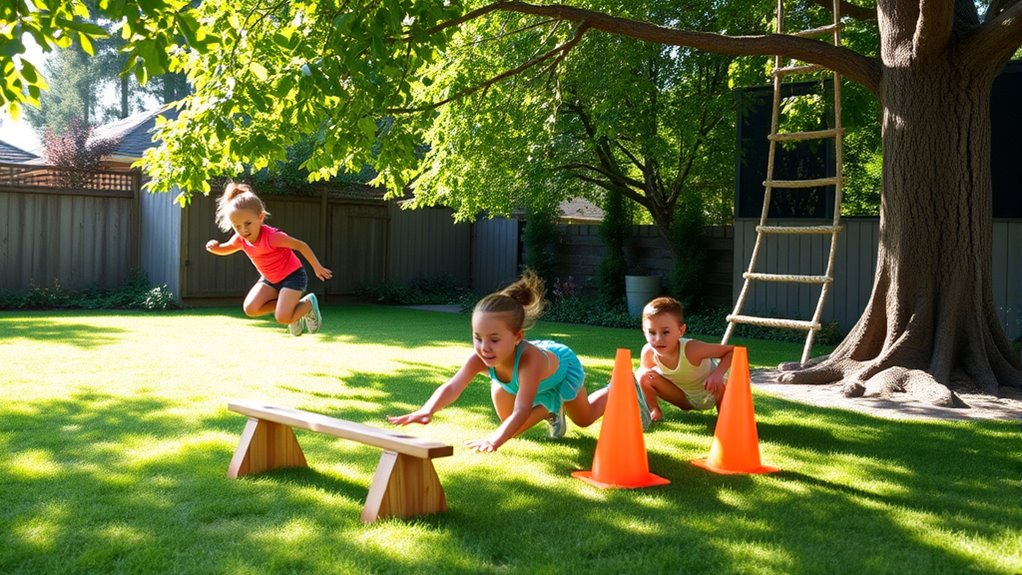

To build strength with a backyard obstacle course, pick age-appropriate, sturdy obstacles that challenge kids to climb, crawl, and jump. Regularly check the equipment for safety and use soft ground covers to cushion falls. Encourage proper techniques and gradually increase difficulty to boost confidence and muscle development. Keep the course fun and safe with supervision and routine maintenance. If you continue exploring, you’ll discover more tips to create an engaging, safe strength-building setup.
Key Takeaways
- Incorporate climbing walls and cargo nets to develop upper body and grip strength.
- Use balance beams and stepping stones to enhance core stability and leg strength.
- Include monkey bars and pull-up stations to boost arm and shoulder muscle development.
- Design swinging and jumping obstacles to improve coordination and explosive power.
- Progressively increase obstacle difficulty to challenge strength and build confidence safely.

Creating a backyard obstacle course is a fun and engaging way to keep kids active and entertained. As you design the course, it’s vital to focus on safety and effective training tips to assure your kids get the most out of the experience without risking injuries. Start by choosing age-appropriate obstacles that challenge your children’s strength and coordination without overwhelming them. For example, sturdy climbing frames, low balance beams, or soft tunnels are great options. Make sure every element is securely anchored and constructed from safe, durable materials. Regular inspections are key to identify any wear and tear that could cause accidents.
Choose age-appropriate, sturdy obstacles and regularly inspect for safety to ensure a fun, secure backyard course.
When incorporating training tips, emphasize gradual progression. Don’t expect your kids to master the entire course on their first try. Instead, guide them to focus on mastering individual obstacles before linking them together. Encourage proper techniques—like using hands and feet correctly on climbing structures or maintaining balance on beams—to build strength and confidence. Reinforcing good form helps prevent injuries and develops healthier movement habits. You can also incorporate fun challenges, such as timed runs or relay races, that motivate your children to improve their strength and agility over time.
Safety precautions should always be at the forefront of your planning. Clear the area of any sharp objects, rocks, or debris that could cause injuries if fallen on. Use soft ground cover such as mulch, sand, or grass to cushion any falls. Ensure there’s sufficient space between obstacles so kids don’t accidentally bump into each other or trip. Supervision is vital—stay nearby, especially when your children are trying new or more difficult elements. Teach them to listen to their bodies and stop if they feel pain or excessive fatigue. Remember, the goal is to promote physical activity and strength development without pushing them beyond their limits.
In addition to setting up a safe environment, consider creating a routine that encourages consistency. Regularly practicing the course helps build strength, coordination, and confidence. Mix up the challenges to keep things interesting and prevent boredom. You might add new obstacles or modify existing ones as your kids grow stronger and more skilled. Always prioritize safety by adjusting difficulty levels and ensuring proper equipment use. By combining these training tips with sound safety precautions, you help your children develop stronger muscles, better motor skills, and a healthy attitude toward physical activity—all while having a blast in your backyard.
Additionally, using waterproofing treatments on outdoor equipment can help prolong the lifespan of your obstacle course elements, especially if exposed to weather conditions.
Frequently Asked Questions
What Safety Precautions Should I Take During Installation?
When installing your obstacle course, you should prioritize safety by wearing appropriate safety gear like gloves and helmets. Always follow an installation checklist to ensure all components are secure and properly assembled. Check for stability, sharp edges, and loose parts before allowing kids to use it. Taking these precautions minimizes risks and guarantees a safe, fun experience for everyone. Remember, safety comes first to prevent injuries during installation and play.
How Do I Customize Courses for Different Age Groups?
To customize courses for different age groups, you should incorporate age-appropriate challenges that match their skill levels. Use safety modifications like softer landing surfaces and lower heights for younger children, and add more complex obstacles for older kids. Always supervise closely and adjust the difficulty to prevent injuries. By tailoring the course to each age group, you guarantee a fun, safe experience that promotes strength and confidence.
Are There Budget-Friendly DIY Obstacle Course Ideas?
Sure, you can create an obstacle course without breaking the bank—who knew? Use affordable options like old tires, ropes, and plywood for DIY materials. You can turn a pile of crates into a climbing station or use garden hoses for slalom runs. With a little creativity, your backyard becomes an adventure zone, proving that fun and fitness don’t need expensive equipment. Just gather some basic supplies and start building!
How Often Should I Update or Rotate Obstacles?
You should update or rotate obstacles every 2 to 4 weeks to keep your course exciting and safe. Consider obstacle durability and material selection when making changes; durable materials like treated wood or heavy-duty ropes last longer, reducing frequent replacements. Rotating obstacles prevents wear and tear from compromising safety, ensuring your course remains challenging and safe for everyone. Regular updates also keep kids engaged and motivated to improve their skills.
Can These Courses Be Used Indoors During Bad Weather?
Yes, you can use your obstacle course indoors during bad weather. Consider indoor options like foam mats, sturdy furniture, or designated play areas to create a safe environment. Weather considerations include ensuring ample space and proper padding to prevent injuries. You might need to modify some obstacles for indoor use, but with the right setup, your course remains fun and effective regardless of outdoor conditions.
Conclusion
Building a backyard obstacle course isn’t just about fun; it’s a gentle way to help your little one grow stronger and more confident. As they navigate each challenge, they’ll develop skills without even realizing it. Plus, you get to enjoy watching them conquer new heights and celebrate small victories. So, embrace the playful chaos—every tumble and giggle is just a sign they’re blossoming in their own special way.