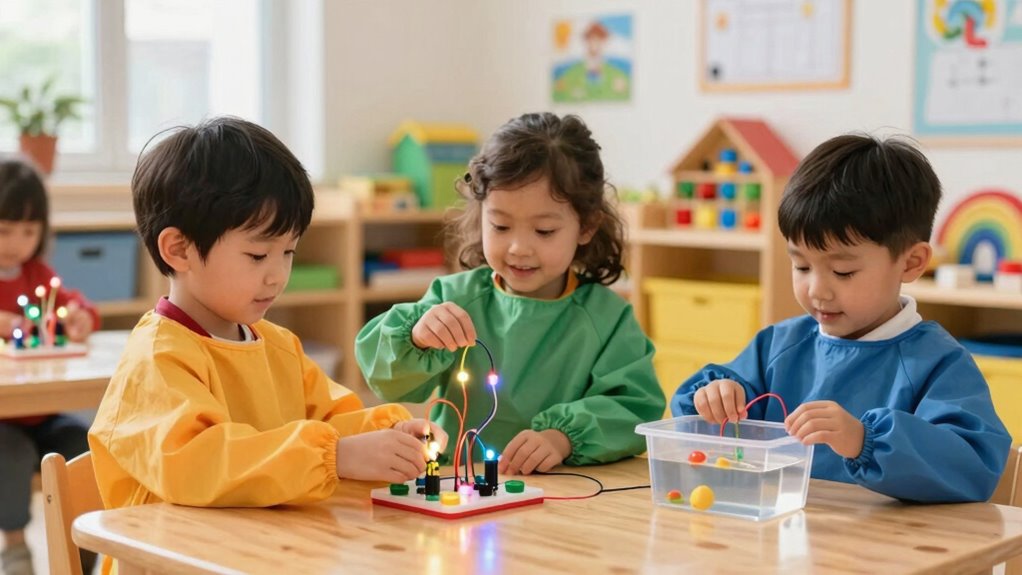

To make STEM play feel natural for preschoolers, incorporate it into everyday routines and outdoor activities. Use daily moments like cooking, building, or exploring nature as opportunities for curiosity and discovery. Engage children with sensory exploration, asking open-ended questions that spark their thinking. Be present as a facilitator, showing enthusiasm and supporting their natural curiosity. By weaving STEM into familiar experiences, you create a fun, meaningful learning environment that fosters lifelong interest. Keep exploring to find more tips!
Key Takeaways
- Incorporate STEM activities into daily routines like cooking, gardening, and nature walks to make learning seamless and relevant.
- Use natural materials and sensory experiences to engage preschoolers and connect STEM concepts to their environment.
- Act as a facilitator by asking open-ended questions to encourage curiosity and exploration during play.
- Highlight environmental themes through activities like observing wildlife or planting to foster natural interest in biodiversity.
- Create a supportive, patient atmosphere that allows children to lead their own discovery and develop a love for STEM.
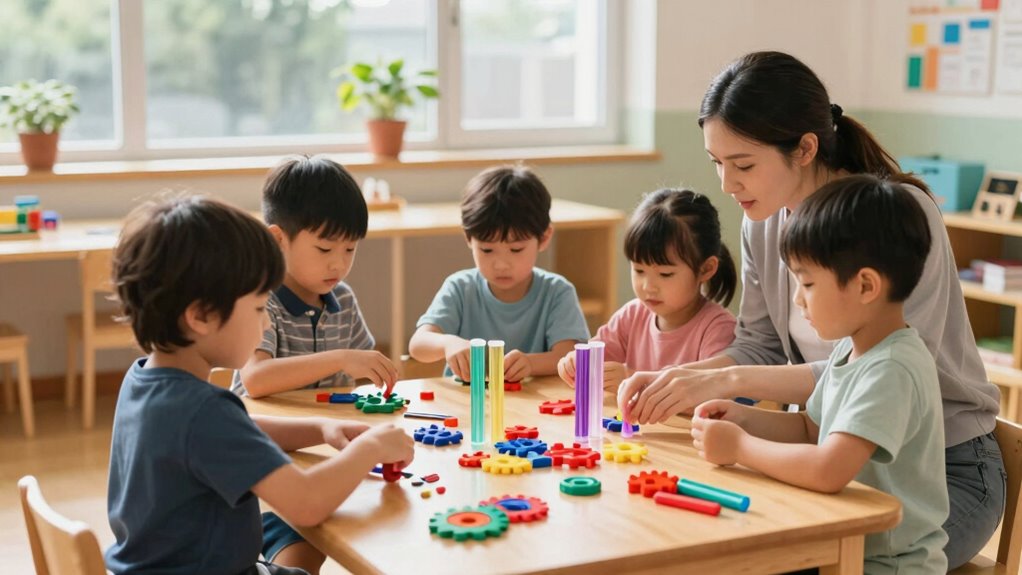
Introducing STEM play to preschoolers can feel like a challenge, but it doesn’t have to be complicated or forced. The key is to weave it naturally into their daily routines and surroundings, making it a seamless part of their exploration. As a parent, your involvement plays an essential role in this process. When you show curiosity and participate alongside your child, you encourage their interest and confidence. Instead of setting up formal lessons, think of yourself as a facilitator, providing opportunities for them to discover and learn through hands-on activities.
Incorporate STEM naturally through everyday activities, encouraging curiosity and hands-on discovery without formal lessons.
Sensory exploration is a fundamental component of making STEM engaging and accessible. Young children learn best when they can touch, see, and manipulate objects. Incorporate activities that stimulate their senses—like exploring different textures, listening to sounds, or observing various colors and shapes. For example, you could gather natural materials like leaves, rocks, and flowers for your child to examine, or set up simple experiments with water and sand. These activities not only foster curiosity but also develop their understanding of scientific concepts in an intuitive way. Connecting these experiences to their natural environment helps children develop a sense of biodiversity and an appreciation for the world around them. Additionally, understanding the natural environment can lay the foundation for early scientific thinking and environmental responsibility. You can further support this by encouraging children to observe patterns and changes in nature, which enhances their understanding of scientific processes and natural phenomena.
Your role in guiding your child’s sensory exploration is to encourage open-ended play. Instead of giving them strict instructions, ask questions that prompt thinking and curiosity. “What do you notice about this?” or “How does this feel?” invites them to observe and analyze their environment. As they manipulate objects and experiment, they develop critical thinking skills and learn to make connections between cause and effect. Being present during play shows that their exploration is valued, boosting their enthusiasm and willingness to try new things.
Making STEM feel natural also involves integrating it into everyday situations. Cooking together provides opportunities to explore measurements, observe chemical reactions, and understand sequences. Building with blocks teaches about balance and structure. Even taking a walk and discussing the different plants and insects you see can spark scientific curiosity. When you approach these activities as fun and exploratory rather than structured lessons, your child is more likely to develop a genuine interest in STEM subjects. Incorporating hands-on activities into daily routines helps children gain confidence in their abilities and see learning as a natural part of life. Creating a learning-rich environment at home encourages continuous curiosity and discovery.
Additionally, incorporating environmental awareness can deepen their understanding of biodiversity and the importance of conservation from an early age. When children observe and appreciate the variety of living things around them, they develop a sense of responsibility toward protecting our natural world. This awareness can be cultivated through simple activities like planting a garden or observing wildlife, which also reinforce their connection to the environment.
Ultimately, the goal is to create an environment where curiosity is nurtured and learning is driven by their natural desire to explore. Your involvement, combined with sensory-rich experiences, helps demystify STEM and makes it a part of their world. When you approach play with patience and enthusiasm, you foster a love of discovery that can last a lifetime. Keep it simple, show your interest, and let your child lead the way—STEM becomes a natural, enjoyable part of childhood.
STEM sensory play kits for preschoolers
As an affiliate, we earn on qualifying purchases.
As an affiliate, we earn on qualifying purchases.
Frequently Asked Questions
What Are the Best STEM Toys for Preschoolers?
The best STEM toys for preschoolers promote creative building and sensory exploration. Consider colorful building blocks, magnetic tiles, or simple engineering kits that allow kids to construct and experiment freely. Sensory bins with gears, pipes, or textured materials also spark curiosity. These toys encourage hands-on learning, helping children develop problem-solving skills while having fun. Look for options that are safe, age-appropriate, and open-ended to foster natural STEM play.
How Can Parents Encourage Curiosity During STEM Play?
You can encourage curiosity during STEM play by actively engaging with your preschooler and showing enthusiasm for their ideas. Your parental involvement reassures them that exploring is valuable, fostering curiosity nurturing. Ask open-ended questions, praise their efforts, and explore new concepts together. By participating and expressing genuine interest, you help your child develop a love for discovery, making STEM play a natural and exciting part of their learning journey.
What Safety Precautions Are Needed for STEM Activities?
You should always prioritize safety by ensuring your child wears appropriate safety gear, like goggles or gloves, during STEM activities. Supervised activities are essential; stay close to guide them and prevent accidents. Check that all tools and materials are age-appropriate and in good condition. Create a safe play environment by removing hazards and teaching your child about safe handling. This approach keeps learning fun and secure for your preschooler.
How to Integrate STEM Play Into Daily Routines?
Imagine turning everyday moments into exciting learning adventures. You can seamlessly integrate STEM play into routines by organizing your playroom with age-appropriate tools, making them easily accessible. Incorporate simple activities like counting blocks during cleanup or exploring magnets while tidying up. These natural, spontaneous opportunities foster curiosity and learning without extra effort, helping preschoolers see STEM as part of their daily lives, not just structured lessons.
When Should Children Be Introduced to More Complex STEM Concepts?
You should introduce more complex STEM concepts when your preschooler shows developmental readiness, usually around ages 4 or 5. Early exposure is key, but it’s important to observe their curiosity and understanding. When they demonstrate interest and can grasp basic ideas, you can gradually challenge them with more advanced concepts. Keep activities playful and hands-on, ensuring they feel excited rather than overwhelmed as they explore these new ideas.
Conclusion
By integrating STEM play into everyday activities and keeping it fun, you’ll help preschoolers see learning as an exciting adventure. Some might worry it’s too complex or structured, but remember, playful discovery is all about curiosity and exploration. If you stay flexible and encourage questions, you’ll create a natural, joyful environment where little ones develop critical skills without even realizing it. With patience and enthusiasm, STEM becomes a seamless part of their world.